Since the United States and Israel launched their war against Iran in late February, Iran has retaliated by effectively shutting down the Strait of Hormuz. Commercial ships have been targeted. Oil and gas shipments have been disrupted. A global fuel crisis has followed . President Donald Trump has given Iran an ultimatum to fully reopen the waterway and has called on NATO allies to help. Yet weeks into the conflict, the strait remains contested. The question is obvious: if the strait is so important to global energy markets, why has the US not used its military power to secure it? The answer lies in geography, military strategy, and the calculus of risk. Securing the strait is not a simple naval operation. It would require controlling land on both sides of the waterway, deploying ground forces, conducting coastal raids, and exposing warships to Iran’s drones and missiles . This investigation examines the military challenges of reopening the Strait of Hormuz, why the US has not yet attempted it, and what it would take to succeed.
What Makes the Strait So Difficult to Secure?
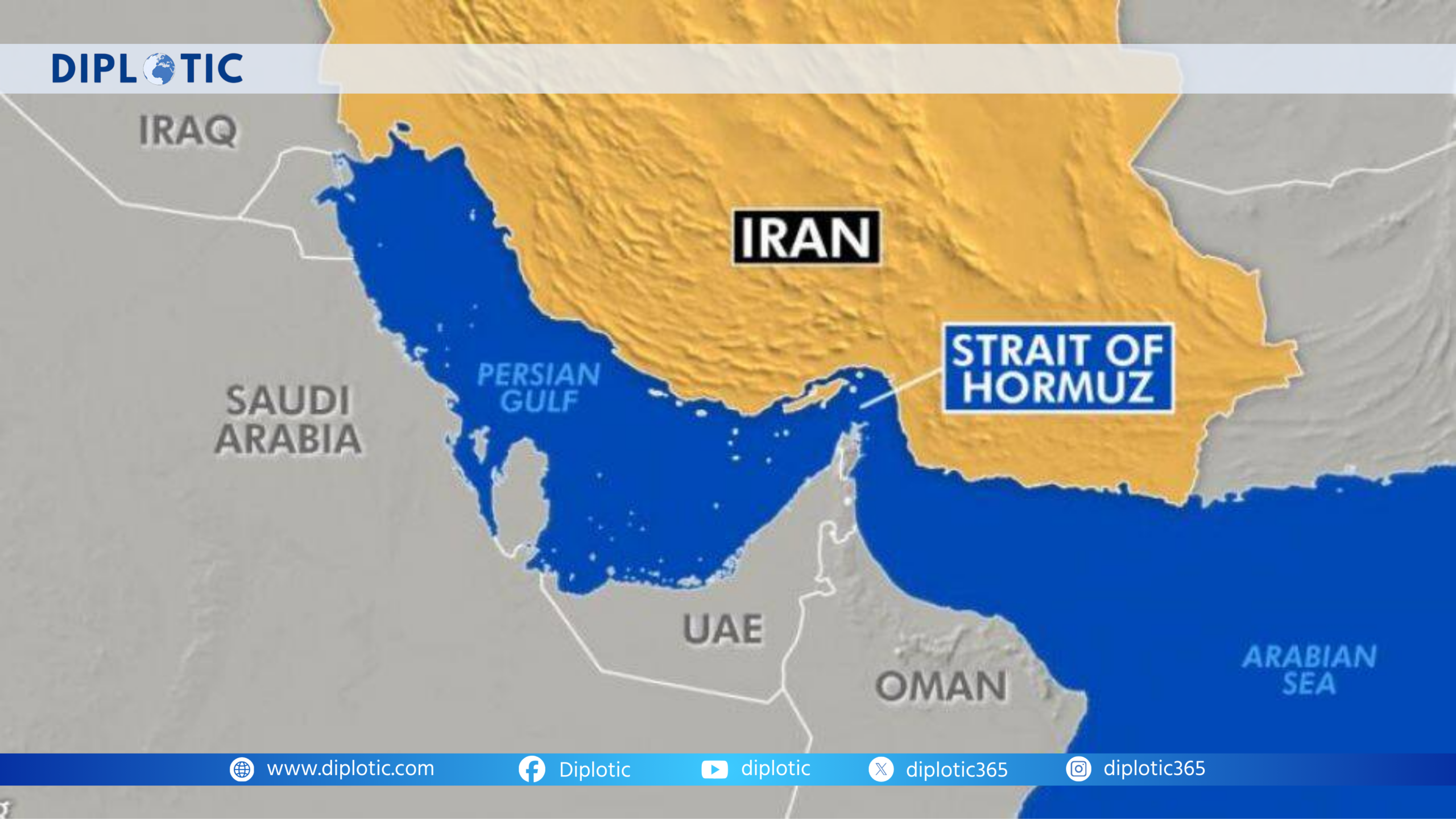
The geography of the region is the first obstacle. Iran dominates the northern part of the Persian Gulf, the Strait of Hormuz, and the Gulf of Oman . Its coastline runs along the entire northern shore of the strait, giving it proximity that no amount of naval power can erase. From this position, Iran can use relatively cheap weapons—drones, missiles, and uncrewed surface vessels—to target commercial shipping . Defending against such attacks is not impossible, but it requires a level of sustained presence that is difficult to maintain.
Creating conditions safe enough for merchant shipping to resume would require a two-phase campaign . The first phase is taking out Iran’s ability to target ships. This means destroying radar facilities, command and control structures, and weapons bunkers along the coast. The US has the air power, intelligence, surveillance, and reconnaissance capabilities to identify and destroy most of these targets. But locating and destroying Iran’s stockpiles of drones is harder, because drones can be stored almost anywhere and launched from improvised sites . Intelligence becomes crucial, and intelligence is never perfect.
The second phase is a reassurance campaign. Once the threat is reduced, getting ships back through the strait requires airborne early warning aircraft and maritime patrol aircraft to monitor the strait, the Gulf of Oman, the Persian Gulf, and Iran’s coastline . Fighter aircraft would need to be stationed above the strait as combat air patrol. Helicopters would need to be ready to deploy against attacks. Warships would need to provide occasional escorts. If mines are confirmed or even suspected, an extensive and time-consuming mine clearance operation would be required, involving divers or remote-controlled vehicles launched from ships, taking weeks or months .
Each of these elements requires military assets. Aircraft needed for strait security are the same aircraft needed for other war objectives. Warships stationed to provide escorts are warships that cannot be used elsewhere. The demands of securing the strait would compete directly with the demands of destroying Iran’s nuclear and ballistic missile capabilities, which the Trump administration has identified as its primary military objectives .
Why Can’t the US Simply Blast Its Way Through?
The idea that American military power can simply blow through any obstacle overlooks the nature of the Strait of Hormuz. To make the strait safe for shipping, the US would need to secure not just the water but the land on either side of it . This would likely require ground forces or raiding parties on Iran’s coastline—operations that would be complicated and risky. Ground forces inserted into hostile territory would need supply lines, reinforcement routes, and evacuation plans. They would be vulnerable to attack from Iran’s Revolutionary Guard forces, which are trained and equipped for coastal defense.
The naval dimension is equally demanding. Realistically, the US would need one or two naval ships per escort operation. A convoy any larger than that would be at increased risk of attack, unless the US and Israel have dramatically reduced Iran’s ability to target ships . With hundreds of merchant vessels transiting the strait each month, the scale of the escort requirement would be enormous.
There is also the risk to US assets to consider. A US warship has a crew of more than 200 personnel. Iran has demonstrated the ability to hit ships with uncrewed surface vessels, drones, and cruise missiles. Is it worth putting those personnel at risk before the threats from Iran’s coastline have been reduced? Military planners must answer that question, and the answer so far appears to be no .
What Role Do Mines Play in the Equation?
Mines add another layer of complexity. Iran does not actually need to physically lay mines to disrupt shipping. It only needs to convince the US and others that it has . The threat of mines is often enough to prevent civilian ships from transiting. If mines are confirmed, clearing them would be a significant challenge. Sometimes mines float on the surface and are visible. Often they are submerged or moored, requiring divers or remote-controlled vehicles to remove them. This would take weeks or months .
There are reasons to believe Iran has not extensively laid mines. First, Iran’s economy relies on its ability to ship its own oil from Kharg Island in the Persian Gulf through the strait. Iran does have other ports outside the strait, but they cannot accommodate bigger ships. Mining would interfere with its own trade . Second, acoustic mines—which detonate based on the sound of a ship moving through water—would be difficult to program to distinguish between Iranian vessels and those of other countries . Maintaining accurate signature data for large numbers of commercial vessels in a dense shipping environment would be extremely challenging. In practice, these mines would pose risks to a wide range of shipping, including Iran’s own.
The US also has significant intelligence assets and surveillance systems along the Iranian coast. It would likely detect mine-laying operations, though these can be conducted from any vessel, including fishing boats . Detection is possible; preventing is much harder.
What Are Iran’s Drone Capabilities and Why Do They Matter?
Iran has used different types of drones in the war so far. Uncrewed aerial craft and uncrewed surface vessels, remotely controlled, have been used to hit merchant tankers . Compared with missiles, drones are much harder for the US and Israel to target on the ground. They can be launched from almost anywhere. They do not require the same advanced manufacturing facilities as missiles, meaning they can be produced in dispersed, hard-to-find locations . They are harder to detect and harder to wipe out.
The US can bomb some of Iran’s launching points and drone stockpiles along the coast. This can prevent some attacks on ships. But eliminating the drone threat entirely would require finding and destroying every launch site, every storage facility, and every production line—an intelligence and targeting challenge of immense proportions .
The asymmetry of costs also matters. Iran’s drones are cheap. The weapons used to intercept them—whether missiles fired from warships or jets—are expensive. A sustained campaign of drone attacks can exhaust defensive stocks even if the drones themselves are destroyed. This is part of Iran’s strategy: not necessarily to hit targets, but to force adversaries to expend expensive interceptors defending against cheap attackers .
What Is the US Military’s Main Priority in Iran?
The Trump administration has been clear about its four key military objectives: destroy Iran’s ballistic missile capability, destroy its nuclear capability, destroy its navy, and destroy its proxy networks, including Hezbollah in Lebanon . The destruction of Iran’s nuclear and ballistic missile capabilities requires significant aircraft and weaponry. Diverting these assets to secure the Strait of Hormuz could undermine the achievement of these military objectives .
This is the central strategic calculation. The strait is important. But it is not the main objective. The main objectives are Iran’s nuclear program and its missile arsenal. Everything else is secondary. Until those primary objectives are achieved, the US is unlikely to divert the resources needed for a full-scale strait clearance operation .
There is also the political dimension. A military operation to secure the strait would require cooperation from neighboring countries, some of which are wary of being drawn deeper into the conflict. It would require sustained public support in the US, which is not guaranteed. And it would risk casualties that could shift domestic opinion against the war .
Conclusion
The Strait of Hormuz remains a choke point not just for oil, but for military strategy. Iran’s geography gives it an advantage that no amount of American firepower can erase. To secure the strait, the US would need to control land on both sides, deploy ground forces, conduct coastal raids, and expose warships to attack. It would need to clear mines, intercept drones, and escort convoys. All of this would require diverting military assets from the primary objectives of destroying Iran’s nuclear and missile capabilities .
The US has not dared to take the strait because the cost of taking it is higher than the cost of leaving it contested. For now, the calculation holds. Ships are not transiting. Oil prices are elevated. Global markets are feeling the pressure. But the US military is focused on what it considers the main fight. The strait is a problem to be managed, not yet a problem to be solved. Whether that calculation changes will depend on how the war evolves, how long it lasts, and whether the costs of leaving the strait closed begin to outweigh the costs of opening it by force .