

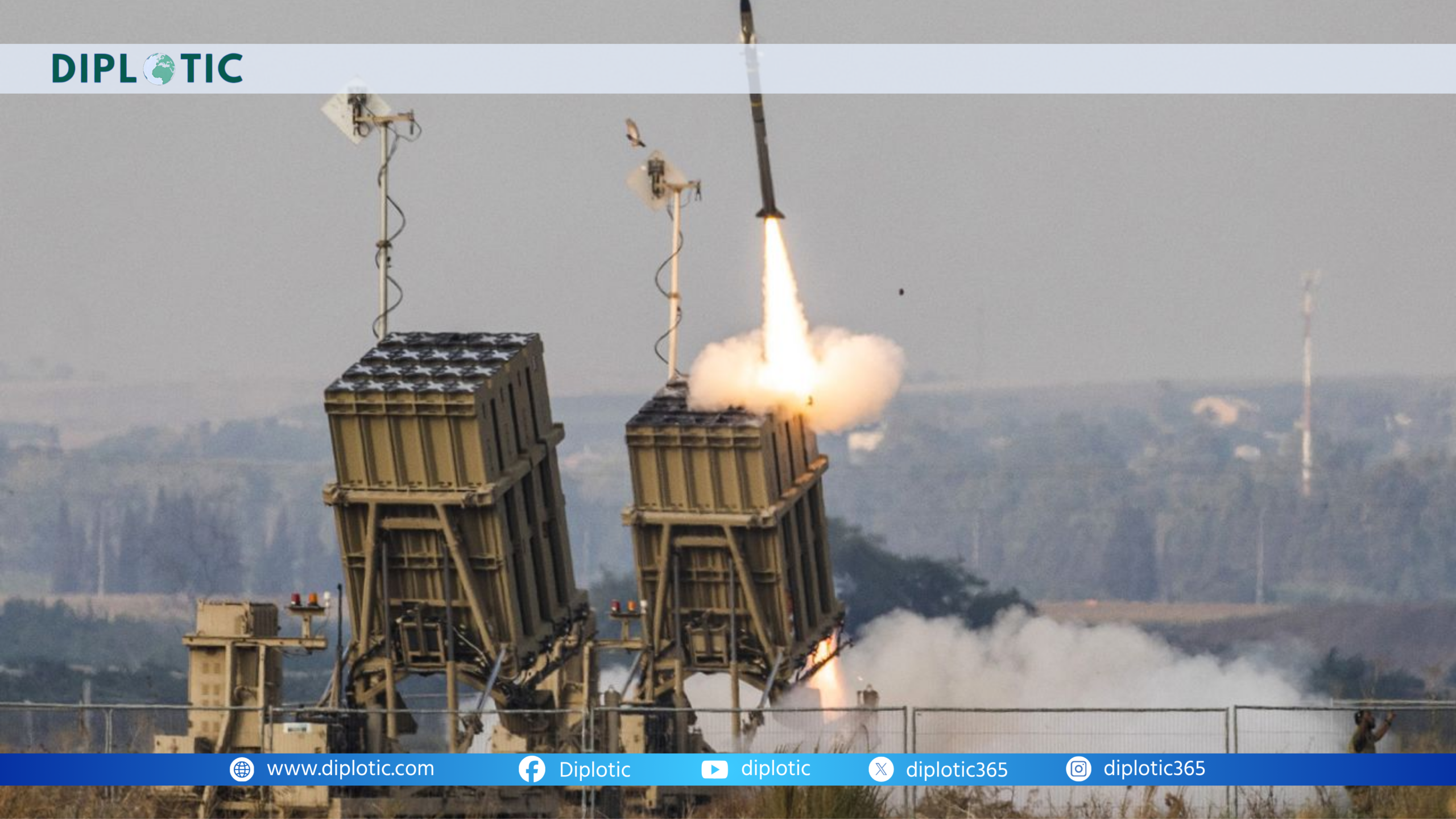
On March 20, 2026, Iran launched two ballistic missiles at the Indian Ocean island of Diego Garcia, which hosts a strategically important joint US-UK military base . One missile broke apart during flight. The other appears to have been destroyed by US missile defenses. Iran has denied responsibility . What made this attack remarkable was the distance: Diego Garcia lies approximately 2,500 miles from Iran—about twice as far as the top range Iran has publicly declared for its ballistic missiles . If Iran can indeed strike targets at that distance, then parts of Western Europe, Asia, and Africa lie within reach. The question of what Iranian missiles can actually do has suddenly become urgent for countries far beyond the immediate conflict zone. This investigation examines Iran’s missile capabilities, what the Diego Garcia attack reveals, and what it means for regional and global security.
What Are the Different Types of Ballistic Missiles and How Do They Work?
A ballistic missile is launched on a rocket and, after separating from it, subsequently flies mostly under the influence of gravity to its destination. The name refers to the characteristic arc of projectiles whose trajectories are largely shaped by gravity . The range of these missiles is determined by the size of the rocket. Larger rockets can push a payload farther, but they also present greater engineering challenges.
Short-range ballistic missiles can fly about 300 to 600 miles. They can be launched from mobile trucks and are used for destroying key defensive infrastructure such as radars . Medium-range ballistic missiles have ranges of about 600 to 1,800 miles. They are used to attack more strategic targets such as command and control centers . Intermediate-range ballistic missiles operate over about 1,800 to 3,400 miles, putting much larger geographical regions at risk . Intercontinental ballistic missiles, or ICBMs, have a range of about 3,100 to 6,200 miles, making it possible to strike targets over an enormous area. These very long-range weapons require multiple rocket stages. They fly very high, exiting the atmosphere and entering into space, before arcing back toward Earth .
Scaling up from short range to medium range to intermediate requires larger and larger rockets, which presents a number of increasingly difficult technical challenges. Larger rockets create more dynamic vibrations that the missile structure and all its components must survive. This requires an advanced manufacturing and testing infrastructure . The size of the rocket also determines how much payload the missile can deliver. For very long-range missiles, the payload is a tiny fraction of the total launch mass. The rest is propellant. This is why militaries more often load ICBMs with nuclear warheads than conventional chemical explosives. Pound for pound, nuclear warheads produce much larger effects. It is usually not worth the very high cost of sending a missile many thousands of miles just to blow up a single building .
What Missiles Does Iran Currently Have?
Iran has an extensive ballistic missile program developed over many years. The country has a number of short-range ballistic missiles, including the Fateh, Shahab-2, and Zolfaghar systems . The ranges of these missiles—up to 500 miles—are insufficient for Iran to use them against Israel directly, because the closest distance between the two countries is about 550 miles . However, Iranian-backed militias have deployed these weapons in neighboring countries such as Lebanon and Syria and have launched them from there in attacks against Israel .
Iran has also developed intermediate-range ballistic missiles such as the Shahab-3, Sejjil, and Khorramshahr weapons. These missiles have ranges of up to 1,250 miles, which means they can reach Israel directly from Iran . The Khorramshahr is particularly significant. Iran has reportedly demonstrated a version of this missile with a smaller warhead that gives it a range of 1,800 miles . Some observers suggest that the missiles Iran fired at Diego Garcia were most likely further-modified Khorramshahrs .
Iran has successfully launched satellites into space using two-stage rockets. This experience with rocketry provides a foundation for developing longer-range missiles . The technical overlap between space launch vehicles and ballistic missiles is significant. Both require powerful rocket motors, guidance systems, and the ability to survive the stresses of flight. A country that can put a satellite into orbit has much of the capability needed to build an ICBM .
What Does the Diego Garcia Attack Reveal About Iranian Capabilities?
The attack on Diego Garcia was significant not because it succeeded—it did not—but because it was attempted. The distance from Iran to Diego Garcia is about 2,500 miles, more than double the declared range of Iran’s known missiles . If Iran can launch a missile that far, even if it fails to hit its target, it demonstrates a capability that did not previously exist.
However, the attack also revealed limitations. One missile broke apart during flight. This suggests that Iran may be attempting to operate these systems at distances they are not reliably capable of . The other missile appears to have been destroyed by US missile defenses. This suggests that the Iranian intermediate-range ballistic missiles, at least in small numbers, do not pose a significant military threat to well-defended targets .
This conclusion is further supported by the earlier high-volume attack by Iran in December 2025, when it launched hundreds of missiles and drones in a concerted raid against Israel. Almost all were shot down by a combination of Israeli and US defenses . A single missile or a small salvo can be intercepted. A massive barrage can overwhelm defenses, but Iran’s ability to sustain such barrages over long distances is limited by production capacity and cost .
The simplest way to extend a missile’s range is to reduce its payload. A smaller warhead weighs less, so the same rocket can push it farther. This is likely what Iran did with the Khorramshahr missiles used in the Diego Garcia attack . But a smaller warhead also means less destructive power. If the payload is reduced too much, the missile may not be worth using at all .
What Are the Implications for Europe and South Asia?
The Diego Garcia attack has put Europe and South Asia on notice. A 2,500-mile radius from Iran covers significant portions of both regions. Parts of Western Europe, including Greece and Bulgaria, lie within this range. Most of South Asia, including India, Pakistan, and Bangladesh, also lies within it . If Iran can reliably strike at that distance, then countries that were previously safe from Iranian missiles are no longer safe.
For South Asia, this is a new consideration. The region is already complex, with its own nuclear rivalries and conflicts. An Iran capable of striking deep into the subcontinent adds another layer of strategic uncertainty. It also raises questions about missile defense. Countries that have not invested in ballistic missile defense may need to reconsider their priorities .
For Europe, the threat is more distant but still significant. NATO members in Southern Europe are within range. The alliance’s missile defense architecture, which was designed primarily to counter threats from Russia, may need to be reassessed .
There is also the question of whether Iran would actually use such missiles against European or South Asian targets. The Diego Garcia attack was aimed at a US-UK military base, not at civilian populations. Iran’s primary adversaries are the United States and Israel. It has no obvious reason to attack other countries. But the capability itself changes the strategic calculus. It gives Iran leverage it did not previously have .
What Are the Limits of Iran’s Long-Range Missile Program?
Despite the attention generated by the Diego Garcia attack, there are significant limits to what Iran can do with long-range missiles. Cost is one factor. A two-stage rocket that can fly 2,500 miles is probably one of the most expensive weapons Iran possesses . It is unlikely to have many of them. When launched in small salvos, these missiles are highly susceptible to sophisticated air defense systems .
Accuracy is another limitation. Missile navigation systems based on gyroscopes have slight errors that increase with time. The longer a missile flies, the less accurate it becomes. GPS-guided missiles can be jammed . Hitting a specific target at 2,500 miles is much harder than hitting a general area. The failed missile in the Diego Garcia attack may have been a guidance failure as much as a structural one .
Production capacity also matters. Iran can produce short-range missiles and drones in large numbers. Long-range missiles are more complex and take longer to build. A sustained campaign would quickly deplete stockpiles. This is one reason why Iran has not launched hundreds of long-range missiles at Israel; it may not have hundreds to launch .
Finally, there is the question of reliability. The failed missile in the Diego Garcia attack suggests that Iran’s long-range systems are not yet dependable. A missile that breaks apart in flight is not a reliable weapon. Developing reliable long-range missiles takes years of testing and refinement. Iran may be at the beginning of that process, not at the end .
Conclusion
The Iranian missile attack on Diego Garcia was a surprise. It demonstrated an intent to reach targets far beyond what Iran had previously declared possible. But it also demonstrated the limits of that capability: one missile failed, the other was intercepted. The attack was likely intended more for its psychological and political effects than for posing a real military threat .
For Europe and South Asia, the event serves as a warning. The geography of the conflict has expanded. Countries that were previously safe from Iranian missiles are now within potential range. Whether Iran can actually strike them reliably is less important than the fact that it might try .
The longer-term significance of the Diego Garcia attack may be less about the missiles themselves and more about what they signal. Iran is investing in long-range strike capabilities. It is willing to test them against defended targets. And it is willing to absorb the cost of failure. As the conflict continues, the reach of Iranian missiles will likely extend further, and the number of countries within range will grow. For the United States, its allies, and the region, the question is no longer whether Iran can reach distant targets. It is how to respond to a threat that is only going to expand .




