

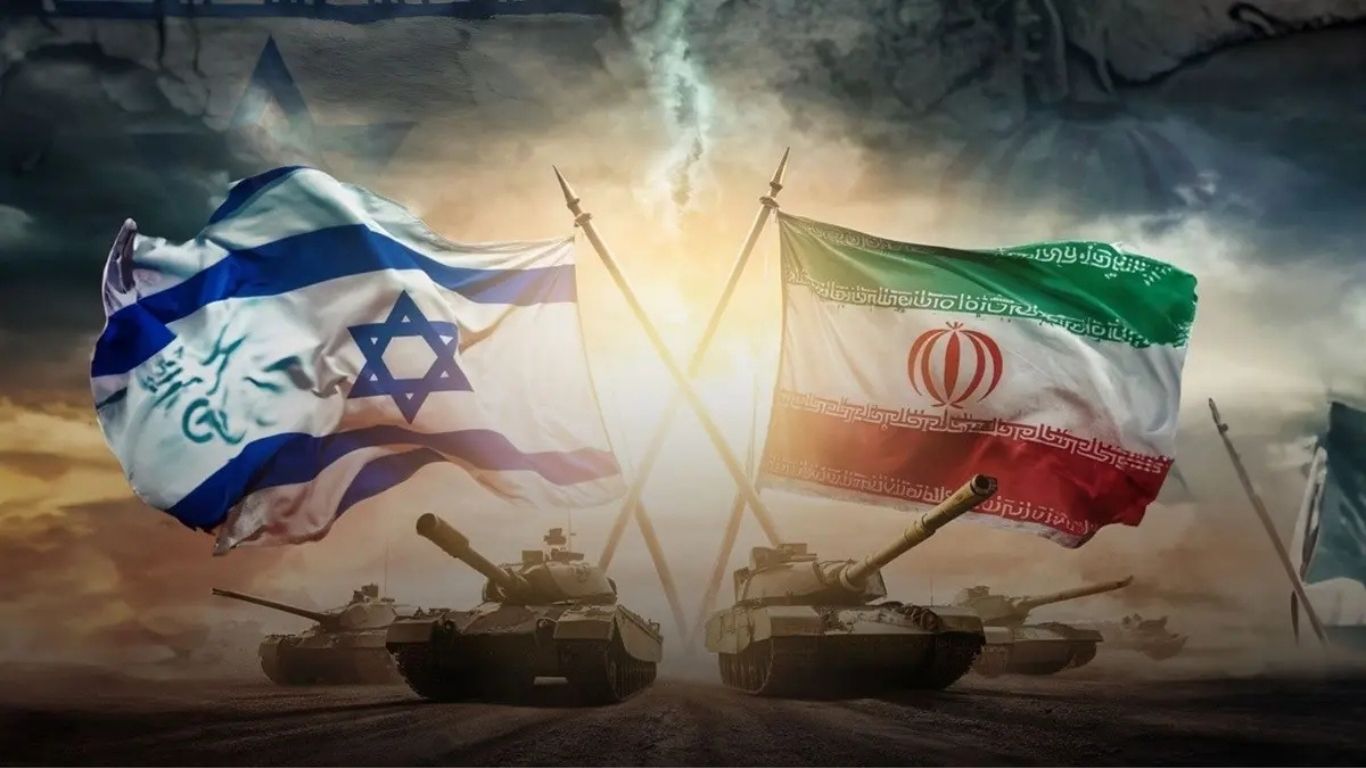
In late June 2025, when Israeli jets screamed over Iranian airspace, the world held its breath—not because Iran struck first, but because the West spun it like they did. Pakistani Defense Minister Khawaja Asif didn’t mince words, warning Muslim nations to unite or face the chopping block one by one. “Everyone’s turn will come,” he said, a line that’s less prophecy than pattern recognition. From Iraq’s bombed reactors to Libya’s disarmed chaos, the West’s playbook for dealing with “rogue” Muslim states is as old as it is ruthless. Now, whispers in think tanks and tabloids are turning toward Pakistan, a nuclear-armed Islamic republic with a growing alliance with China. Is it next on Israel’s list, or are we just chasing shadows?
The Playbook: Demonize, Delegitimize, Dismantle
Let’s not kid ourselves—the West doesn’t need tanks or UN resolutions to topple sovereignty anymore. The game’s evolved. Step one: flood the airwaves with stories of instability and extremism. Step two: choke the economy with sanctions or trade barriers. Step three: if that fails, wave the flag of “global security” and let the bombs fly, often with Israel’s well-being as the excuse. Benjamin Netanyahu, Israel’s hawk-in-chief, has been blunt for decades: Muslim states with nukes are a no-go. Iraq’s Osirak reactor was flattened in 1981. Libya was sweet-talked into disarming before Gaddafi’s fall. Iran’s been under economic siege, with sanctions and strikes piling up.
Pakistan? It’s the final frontier, not because it’s invaded anyone—its last war was 1971—but because it’s got nukes, faith, and a pipeline to Beijing. “The West’s problem with Pakistan isn’t what it’s done,” writes analyst Andrew Korybko. “It’s what it represents: an Islamic republic, a nuclear power, and an ally of China. That’s the ultimate red line.” With China-Pakistan Economic Corridor (CPEC) projects tying Islamabad to Beijing’s Belt and Road, Pakistan’s not just a regional player—it’s a pivot in the new world order.
The Narrative War: Painting Pakistan as a Threat
The smear campaign’s already in motion. A Times of India piece from June 2025 hyped unconfirmed reports of Pakistan developing intercontinental ballistic missiles that could hit the U.S. No evidence, no problem—the insinuation’s enough to raise eyebrows. British tabloids like the Daily Mail pile on, recycling tropes about Pakistan as an “unstable” state teetering on the edge of extremism. One op-ed, quoting an Indian “security analyst,” claimed Pakistan’s military is driven by “zealotry, not reason,” morphing into an “extremist Islamic state.” Never mind that Pakistan’s electorate has rejected religious parties for 77 years, sticking with secular heavyweights like the PML-N or PPP.
Compare that to India, where Narendra Modi—implicated in the 2002 Gujarat pogrom—leads a BJP openly pushing a Hindu nationalist state. Yet Western media, from CNN to The Guardian, frame India as the region’s “rational actor.” The hypocrisy’s so thick you could choke on it. “Hindu nationalism, no matter how violent, is just politics,” notes Middle East Eye. “Islamist politics, even when nonexistent, are an existential threat.”
Case in point: April 2025’s Pahalgam attack, where Hindu pilgrims were killed in Kashmir. India, without solid evidence, launched cross-border strikes on Pakistan, and Western outlets largely bought New Delhi’s line. Pakistani officials, meanwhile, faced grilling on BBC and Sky News, forced to deny terrorism links for the umpteenth time. It’s a tired script: Pakistan’s always the villain, India the victim, no matter the facts.
Pakistan’s Nuclear Sin
Pakistan’s nuclear arsenal, estimated at 170 warheads by the Stockholm International Peace Research Institute, is the real sticking point. Israel’s been vocal about its fears of Muslim states with nukes, and Netanyahu has called Pakistan’s program a “threat to civilization.” Think tanks like Modern Diplomacy are less subtle, with articles suggesting that once Iran’s “contained,” Pakistan’s denuclearization is next. The U.S., while publicly neutral, hasn’t forgotten Pakistan’s role in the CPEC, a $62 billion corridor that’s a thorn in Washington’s side.
Pakistan’s not helping its case with loose talk. A 2024 test of the Shaheen-III missile, capable of reaching Israel, stirred the pot. Posts on X from users like @PakDefence celebrated it as a deterrent, but others, like @IndiaFirst, spun it as proof of “Pakistan’s aggression.” The reality? Pakistan’s nukes are a defensive hedge, not an offensive gambit, built to counter India’s numerical superiority.
China’s Shadow and the CPEC Factor
What really keeps Western strategists up at night isn’t just Pakistan’s nukes—it’s its pivot to Beijing. The CPEC, part of China’s Belt and Road Initiative, has poured billions into Pakistan’s ports, roads, and energy grid, making it a linchpin in China’s global ambitions. “All roads in the 21st century lead to Beijing,” writes The Diplomat. “Pakistan’s centrality transforms it from a regional irritant to a global pivot.” The U.S., Britain, and Israel see this as a direct challenge to their influence, especially as China flexes its muscles in the Indo-Pacific.
This brings us to the curious White House meeting in June 2025 between Pakistani army chief Asim Munir and President Trump. Was it a olive branch, a warning, or a desperate bid to keep Pakistan in the U.S. orbit? Nobody’s talking, but the timing—post-Iran strikes—raises eyebrows. “Pakistan’s caught between being courted and condemned,” tweeted @GeoPolAnalyst, summing up the tightrope Islamabad walks.
A Pattern Too Clear to Ignore
Back in 2009, a professor slapped a map of the Mongol Empire on a seminar table and asked me, a British Pakistani with a soft spot for cricket and biryani, if I knew about neoconservative plans to “balkanize” Pakistan. It sounded like a conspiracy then, but 16 years later, it feels like a blueprint. The West’s pattern—demonize, sanction, strike—has toppled governments from Iraq to Libya. Pakistan’s nuclear arsenal, Islamic identity, and Chinese alliance make it a prime target.
The media’s complicity is glaring. Outlets like The Times and Fox News amplify India’s narrative while painting Pakistan as a ticking bomb. Meanwhile, India’s aggression, from Kashmir crackdowns to Hindu nationalist policies, gets a pass. “If the media wants peace in South Asia, it’s got to stop seeing the region through a prism of prejudice,” argues Dawn, Pakistan’s leading paper.
The Stakes: Peace or Provocation?
Here’s the rub: targeting Pakistan won’t just spark a regional fire—it’ll light a global one. A nuclear-armed state with 240 million people and a strategic alliance with China isn’t Iraq or Libya. Any move—sanctions, strikes, or narrative warfare—could backfire spectacularly. Pakistan’s ISI isn’t known for sitting idly, and China’s got too much invested in Gwadar Port to let its partner implode.
The fear isn’t just geopolitical—it’s psychological. The West’s been conditioning the world to see Pakistan as a threat, not a sovereign state. “Once Iran’s dealt with, Pakistan’s next,” warned a Modern Diplomacy piece, echoing Netanyahu’s rhetoric. But Pakistan’s not helpless. Its JF-17 fighters and Shaheen missiles are built for deterrence, and its people—despite economic woes—aren’t buying the “extremist” label.
As I sit here, chuckling at the absurdity of a world where a nation’s nukes make it a pariah while others get a pass, one thing’s clear: Pakistan’s not just a target—it’s a test. If the West and Israel can paint it as the next big bad, they’ll try. But if Pakistan, China, and the Global South push back, this could be where the playbook finally fails. Check X for the latest on Munir’s White House trip or India’s saber-rattling, but don’t hold your breath for peace—this game’s got too many players with itchy trigger fingers.




