

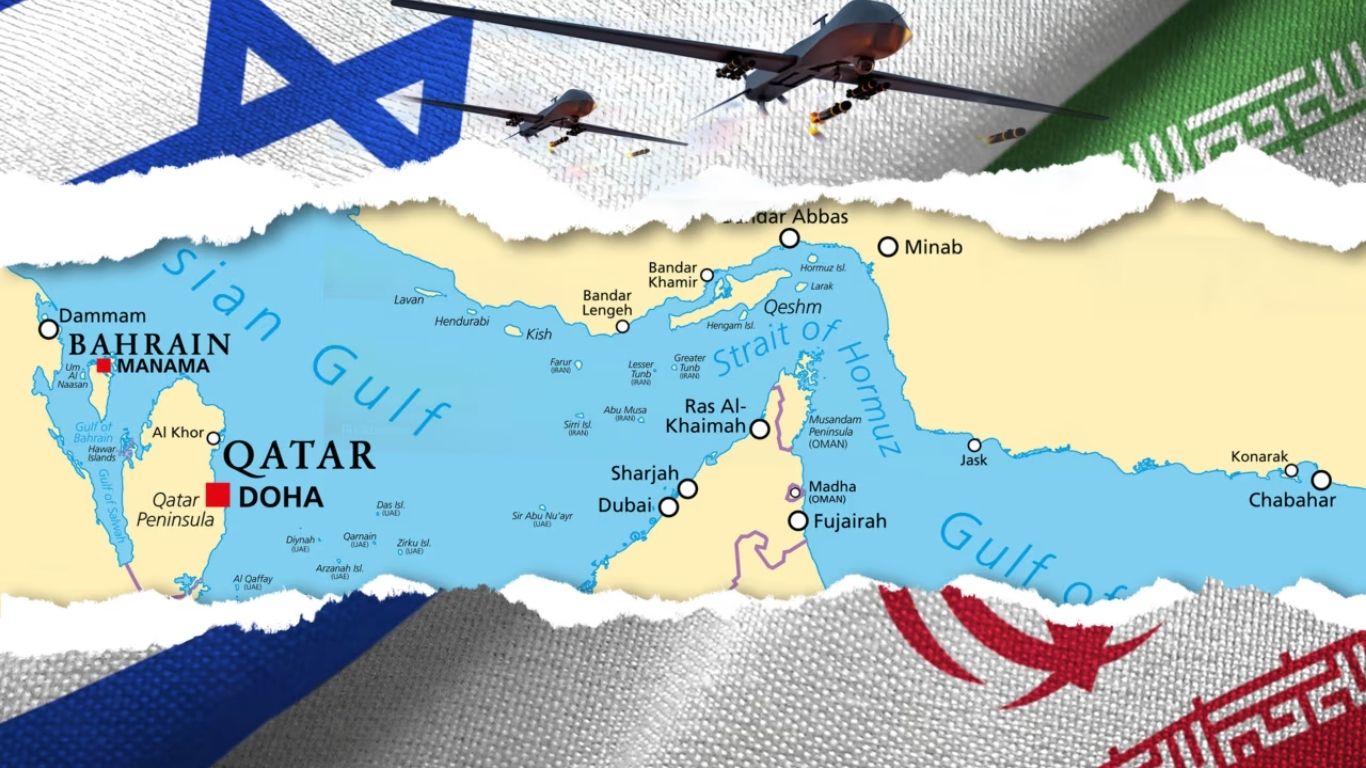
The Strait of Hormuz is a narrow channel between Iran and Oman that connects the Persian Gulf to the open Arabian Sea. Every day, roughly one-fifth of the world’s traded oil and a large share of liquefied natural gas passes through this 21-mile-wide waterway. When tensions rise in the region—as they did sharply in early 2026 after military strikes involving the United States, Israel, and Iran—markets react almost instantly. Oil prices jump, shipping costs climb, and governments scramble to assess supply risks. The strait is not just a geographic feature; it is one of the most critical chokepoints in global energy trade. A serious disruption here can send shockwaves through economies far beyond the Middle East, raising fuel prices, fueling inflation, and forcing countries to rethink energy security. With Asia depending heavily on these flows and alternative routes limited, the question is pressing: how does such a small stretch of water exert so much control over the world’s energy markets, and what happens if that flow is interrupted for long?
Where Exactly Is the Strait of Hormuz and Why Is It So Important?
The Strait of Hormuz lies at the mouth of the Persian Gulf. It is about 21 miles wide at its narrowest point, with shipping lanes just two miles wide in each direction. To the north is Iran; to the south is Oman and the United Arab Emirates. All oil and gas exports from major Gulf producers—Saudi Arabia, Iraq, Kuwait, the UAE, Qatar, and Iran itself—must pass through this channel to reach global markets.
In 2025, around 21 million barrels of crude oil moved through the strait each day, equal to about one-fifth of total world oil consumption. Roughly one-quarter of global liquefied natural gas (LNG) trade also transits the strait, with Qatar as the largest source. Most of this energy heads to Asia: China, India, Japan, South Korea, and Southeast Asian countries are the biggest buyers. Europe and other regions take smaller shares, but the volume is still significant.
The strait has no practical alternative for large tankers. Pipelines exist in Saudi Arabia and the UAE that bypass it, but their combined capacity covers only a fraction of Gulf exports. Shipping everything around Africa or through other routes is far slower and more expensive. This single-file dependency makes the strait a natural choke point: even a partial blockage or heightened risk can disrupt supplies and drive up prices worldwide.
How Does the Strait’s Geography Create Such High Vulnerability?
The strait’s narrowness and location create built-in risks. Tankers must follow tight lanes to avoid shallow waters and Iranian territorial waters. At its narrowest, opposing traffic passes within a few miles of each other. A single sunken vessel, mine, or military action could block the channel for days or weeks. Insurance premiums for tankers rise sharply during tensions, and some shipowners reroute or delay voyages, reducing effective capacity even without a full closure.
Iran controls the northern side and has repeatedly threatened to close the strait during past crises. It has the military means—missiles, fast-attack boats, mines, and submarines—to make passage dangerous. The U.S. Navy’s Fifth Fleet, based in Bahrain, patrols the area to keep the strait open, but any direct confrontation raises the risk of escalation. The combination of geography and geopolitics turns a 21-mile waterway into a global pressure point.
Energy markets price this risk constantly. When tensions rise, traders add a “risk premium” to oil futures. Even without actual disruption, the threat of one can move prices 5–15% in days. Asian buyers, who lack large domestic reserves compared with the U.S. or Europe, feel this pressure most acutely.
How Do Recent Events in the Gulf Highlight the Strait’s Role?
The escalation in early 2026 brought the strait back into sharp focus. U.S. and Israeli strikes on Iran damaged key facilities, and Iran responded with missile and drone attacks on Gulf targets. Qatar paused LNG production at Ras Laffan, and Saudi Aramco halted work at Ras Tanura after a drone hit. Shipping insurers raised premiums, and some tankers delayed loading or sought alternate routes. Brent crude rose 15% to around $84 per barrel, and natural gas prices climbed in response to LNG uncertainty.
Asian markets felt the impact immediately. China and India, the world’s top two oil importers, saw higher costs ripple through transport, industry, and households. Japan, South Korea, and Taiwan—almost fully reliant on imported energy—drew on reserves but warned of pressure if the disruption lasted. Southeast Asian countries like Thailand and the Philippines, with limited buffers, braced for fuel shortages and inflation.
The U.S. offered risk insurance to shippers and hinted at naval protection, but the risk premium remained high. OPEC+ signaled possible output increases, and the U.S. granted India a temporary waiver for Russian crude purchases. These steps eased some strain, but the strait’s centrality kept markets on edge.
What Could Happen If the Strait Faces Prolonged Disruption?
A full closure would be catastrophic. Oil prices could surge toward $120–150 per barrel, and LNG shortages would hit Asia hardest. Poorer importers would be outbid by wealthier nations, leading to fuel rationing, factory shutdowns, and higher food prices due to transport costs. Inflation would rise globally, and central banks might delay rate cuts or tighten policy.
Even partial disruption—higher insurance, slower transits, or selective targeting—would raise costs. Asian economies, already sensitive to energy prices, could see slower growth and currency pressure. India’s rupee and South Korea’s won have weakened in similar past shocks. The U.S., as a net oil exporter, would be less affected, but global trade would still slow.
Longer-term, repeated crises could accelerate diversification. Renewables, new LNG sources, and strategic reserves would gain priority. The strait’s vulnerability is a reminder that energy security shapes economic stability. Asia’s heavy dependence on Gulf supplies leaves it exposed when conflicts flare.
The Strait of Hormuz crisis of 2026 connects a narrow waterway to the world’s energy lifeline. Its role in carrying oil and gas makes it a global concern: any threat here moves prices, strains economies, and forces hard choices. Asia bears the heaviest burden due to import reliance and limited buffers. The conflict shows how quickly distant events reach daily life—higher fuel bills, slower deliveries, tighter budgets. As markets watch for de-escalation or further strikes, the strait remains a stark lesson in vulnerability. Stable flows through this channel are not guaranteed; they depend on diplomacy, deterrence, and restraint. The coming weeks will show whether calm returns or if the world faces a deeper energy shock. For Asia especially, the lesson is clear: energy security is economic security, and no country can afford to ignore the risks of a single point of failure.




