On the morning of March 4, 2026, the crew of the IRIS Dena, an Iranian warship, was heading home. The vessel had just participated in a multinational naval exercise hosted by India, a routine diplomatic engagement that brought together 74 nations in a display of maritime cooperation . By evening, the Dena was at the bottom of the Indian Ocean, sunk by a torpedo from a US submarine in one of the rare instances since World War II where a submarine has destroyed a surface warship . In the days that followed, a second Iranian vessel, the IRIS Bushehr, sought assistance off Sri Lanka’s coast, leading to the transfer of 204 sailors to a naval base near Colombo and raising complex questions about international law, neutrality, and the expanding scope of a conflict that now directly touches South Asian shores . This explainer examines what happened, why it matters for Sri Lanka, and what it reveals about the region’s delicate position in a widening war.
What Happened to the Iranian Warships?
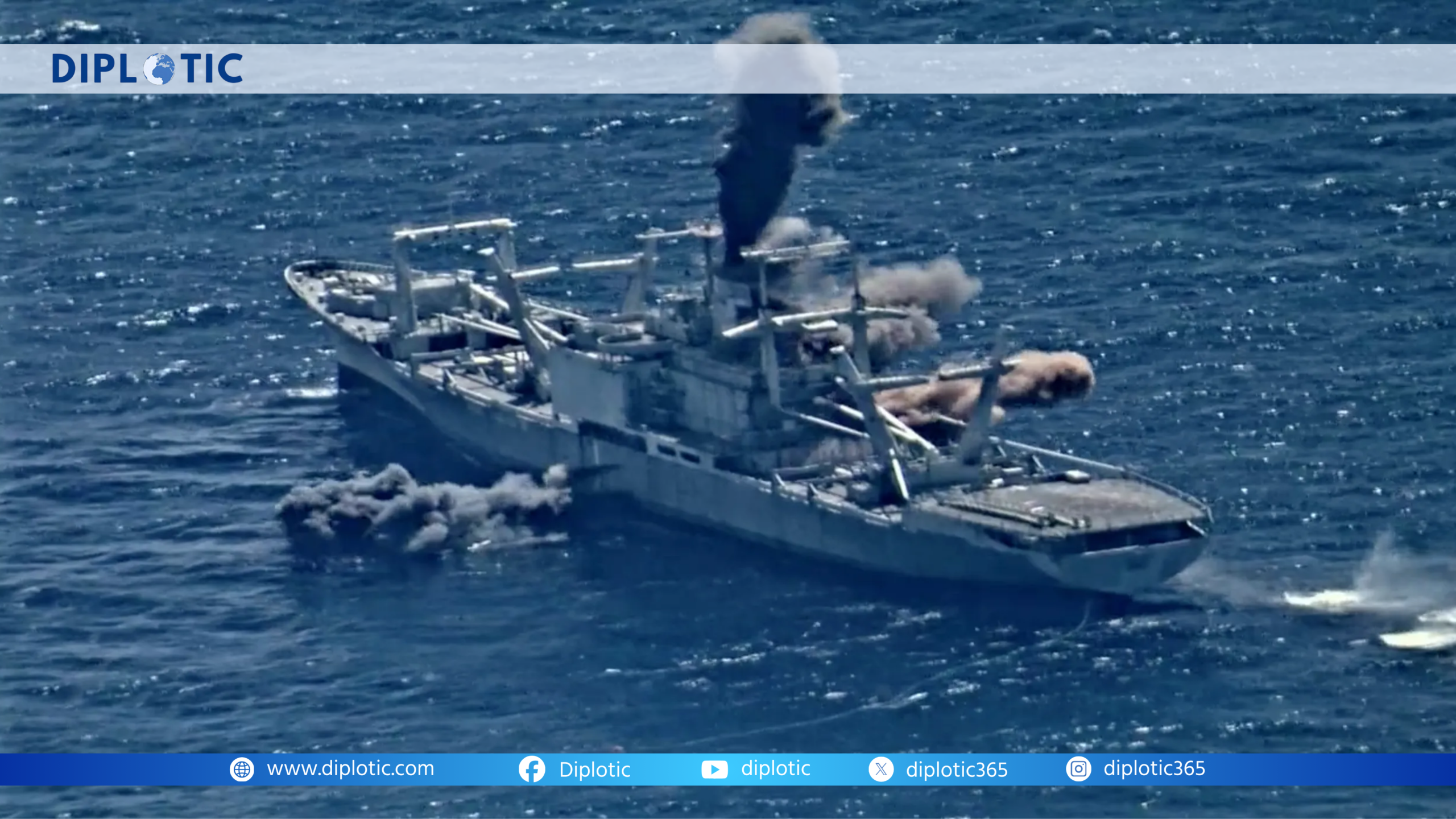
The sequence of events began on Wednesday, March 4, when the US submarine struck the IRIS Dena approximately 370 kilometers off the coast of Sri Lanka . The Dena, a Moudge-class frigate with a normal crew complement of around 140, had been participating in naval exercises hosted by India before heading into international waters on its return journey to Iran . The strike marked a significant escalation in the US-Israeli military campaign against Iran, demonstrating the reach of American naval power into the Indian Ocean and the willingness to target Iranian military assets far from the Persian Gulf .
The human cost was severe. Sri Lankan navy personnel, responding to distress signals, rescued 32 sailors and recovered 87 bodies from the wreckage . Iranian Foreign Minister Abbas Araghchi described the sinking as an “atrocity at sea” and warned that the US would “bitterly regret” the attack . India’s navy also received a distress signal from the Dena but by the time it launched a search and rescue operation, Sri Lankan forces had already begun their own efforts .
Just days later, a second Iranian vessel, the IRIS Bushehr, described in Iranian media as a logistics ship equipped with a helicopter pad, reported engine failure while in the vicinity . The ship requested assistance, and Sri Lankan authorities, after discussions with Iranian officials and the vessel’s captain, decided to take custody. On Friday, 204 sailors from the Bushehr were brought to the Welisara Naval Base near Colombo, where they underwent border control procedures and medical tests . Approximately 15 crew members remained aboard with Sri Lankan naval personnel to interpret operational instructions and logs, while the ship itself was scheduled to be taken to the port of Trincomalee in eastern Sri Lanka and remain in custody until further notice .
Why Did Sri Lanka Take Custody of the Bushehr?
Sri Lankan President Anura Kumara Dissanayake explained the government’s decision in terms of international law and humanitarian obligation. “We have to understand that this is not an ordinary situation,” he told journalists . “It’s a request by a ship belonging to one party to enter into our port. We have to consider that according to the international treaties and conventions” .
Under the Law of the Sea and the Hague Convention, states have both a right and an obligation to render assistance to vessels in distress. H.M.G.S. Palihakkara, Sri Lanka’s retired former foreign secretary and former permanent representative to the United Nations, explained that “there has been a distress call from the ship. So naturally Sri Lanka, as a party to the Law of Sea and The Hague Convention, had no option but to do what it did by mounting a humanitarian operation to provide assistance to save lives and provide medical care to the affected” .
Crucially, Palihakkara emphasized that parties to the conflict would understand that Sri Lanka was not taking sides. “You could not have ignored the distress call. Even the attacking powers cannot leave shipwrecked sailors dying. That is the law” . This framing positions Sri Lanka’s action as a neutral humanitarian intervention rather than a partisan act, a distinction essential for a country that seeks to maintain its longstanding policy of non-alignment.
What Does International Law Say About a Neutral State’s Obligations?
The legal framework governing situations like this is complex but well-established. Katsuya Yamamoto, director of the Strategy and Deterrence Program at the Sasakawa Peace Foundation in Tokyo, explained that Sri Lanka, which is not at war with either the US or Iran, is considered a neutral state . As such, the Bushehr can enter a Sri Lankan port if granted permission by the government.
Once the vessel is docked, it falls under Iranian jurisdiction, meaning Sri Lankan authorities lack legal grounds to inspect it unless Colombo decides to side with the US . This nuance is critical. By granting permission for the ship to dock and taking custody of the crew, Sri Lanka is not aligning itself with Iran. It is simply fulfilling its obligations under international maritime law while respecting the jurisdictional boundaries that govern vessels in foreign ports.
The UN resident coordinator in Sri Lanka, Marc-André Franche, welcomed the country’s intervention, stating on X that it reflected its commitment to “multilateralism, maintaining neutrality, and underscoring its dedication to peace” . This international endorsement reinforces Sri Lanka’s position that its actions were consistent with its obligations and principles.
How Does This Incident Test Sri Lanka’s Neutrality?
The broadening Middle East conflict has placed strategically located Sri Lanka in a delicate position. The island nation sits astride some of the world’s busiest shipping lanes, and its ports are essential nodes in the global trading system. As the conflict between the US-led coalition and Iran expands into the Indian Ocean, Sri Lanka must navigate between its humanitarian obligations, its economic interests, and its longstanding policy of non-alignment.
President Dissanayake articulated the government’s stance clearly: “We have followed a very clear stance. We will not be biased to any state nor we will be submissive to any state” . In a separate statement on X, he added: “No civilian should die in wars. Our approach is that every single life is as precious as our own” .
This balancing act will only grow more challenging. The sinking of the Dena so close to Sri Lankan waters demonstrates that the conflict is no longer contained to the Persian Gulf. Iranian vessels transiting the Indian Ocean, whether naval ships or commercial tankers, are now potential targets. Sri Lanka’s ports may become havens for vessels seeking refuge, and its search and rescue capabilities may be called upon again. Each such incident will test the government’s ability to maintain neutrality while fulfilling its international obligations.
The reactions of other powers will also matter. The United States and its allies will be watching closely to ensure that Sri Lanka does not provide material support to Iran. Iran will be watching to ensure that its sailors are treated humanely and that its vessels are not handed over to adversaries. Navigating these competing pressures requires diplomatic skill and a clear understanding of legal boundaries.
What Does This Mean for Regional Security?
The presence of a US submarine in the Indian Ocean capable of sinking a surface warship, and the willingness to use that capability against an Iranian vessel, represents a significant escalation. The Indian Ocean has long been a theater for great power competition, but direct attacks on naval vessels are rare. The last comparable instance of a submarine sinking a surface warship was during the 1982 Falklands War, when a British submarine sank the Argentine cruiser General Belgrano .
The incident also highlights the expanding geographical scope of the conflict. Iran’s navy, while not a match for US forces in a direct confrontation, has the capability to project power into the Indian Ocean and to threaten shipping lanes far from its shores. The sinking of the Dena may prompt Iran to reconsider its naval deployments or to retaliate against other targets in the region.
For India, the incident is particularly awkward. The Dena had just participated in naval exercises hosted by India, a routine diplomatic engagement that reflected New Delhi’s balancing act between its ties with the US and its relationship with Iran . The sinking of a vessel that had been an Indian guest just days earlier is diplomatically embarrassing and may complicate India’s efforts to maintain relationships with both sides. India’s navy launched a search and rescue operation after receiving the distress signal, but Sri Lankan forces reached the scene first .
For Australia, the incident raises domestic legal and political questions. The Australian government confirmed that three Australians were aboard the submarine that sank the Dena, part of the trilateral training program under the AUKUS security pact . The government maintained that it was not warned that the US and Israel planned to attack Iran and has not commented on the legality of the attack, though it supports the objective of preventing Iran from gaining nuclear weapons . Neil James, executive director of the Australian Defense Association, noted that it is “reasonably rare” for Australians embedded with another nation’s military to go to war against a country such as Iran that Australia wasn’t at war with . He clarified that an Australian would not have fired the torpedo, as that responsibility rests with the submarine’s captain and weapons officer .
What Are the Implications for Sri Lanka’s Economy and Security?
Beyond the immediate diplomatic challenges, the incident has practical implications for Sri Lanka’s economy and security. The country relies heavily on maritime trade, and its ports are essential for transshipment and logistics. Any escalation of conflict in the Indian Ocean could disrupt shipping, raise insurance premiums, and deter investment. The strategic location that makes Sri Lanka valuable also makes it vulnerable.
The presence of Iranian sailors and vessels in Sri Lankan custody also carries potential security risks. While the rescued sailors have undergone medical tests and border control procedures, their presence could attract unwanted attention from intelligence services or militant groups. The government must ensure that its humanitarian obligations do not compromise its security.
There are also economic dimensions to consider. Sri Lanka is still recovering from the devastating economic crisis of 2022-2023, and any disruption to trade or tourism could set back that recovery. The government’s handling of this incident will be scrutinized by international investors and credit rating agencies, who will be looking for signs of stability and competent management.
What Precedents Does This Set for International Law?
The sinking of the Dena and the docking of the Bushehr raise novel legal questions with few clear precedents. While the law of naval warfare is well-established, its application in modern conflicts involving non-state actors, hybrid warfare, and complex alliances is less certain. The fact that the Dena was sunk in international waters, far from any declared combat zone, challenges traditional notions of the geographical scope of armed conflict.
The treatment of the Bushehr’s crew also raises questions about the status of rescued sailors. Are they combatants entitled to prisoner of war protections under the Geneva Conventions? Are they simply distressed mariners entitled to humanitarian assistance? The answer depends on whether the conflict is characterized as an international armed conflict, which would trigger POW status, or something else. Sri Lanka’s decision to treat them as rescued sailors rather than combatants reflects a desire to maintain neutrality and avoid being drawn into the legal complexities of the conflict.
The incident may also prompt discussions at the United Nations and other international forums about the rules governing naval warfare and the protection of neutral shipping. If the conflict escalates further, the Indian Ocean could become a contested space where commercial vessels are at risk and neutral states are forced to take sides.
Conclusion
The sinking of the IRIS Dena and the docking of the IRIS Bushehr off Sri Lanka’s coast are not distant events in a faraway conflict. They are tangible evidence that the Iran war has reached South Asian waters, bringing with it complex legal, diplomatic, and security challenges. For Sri Lanka, a nation still recovering from economic crisis and navigating its post-conflict identity, this incident tests its commitment to neutrality, its respect for international law, and its capacity to manage the competing pressures of a polarized world.
President Dissanayake’s words capture the delicate balance the country must strike: “We will not be biased to any state nor we will be submissive to any state” . In practice, maintaining this balance requires clear understanding of legal obligations, skillful diplomacy, and the ability to communicate Sri Lanka’s actions to all parties in terms they can accept. The UN’s endorsement of Sri Lanka’s intervention as reflecting its commitment to “multilateralism, maintaining neutrality, and underscoring its dedication to peace” suggests that, for now, the international community accepts this framing.
But the conflict is far from over, and more incidents are likely. The Indian Ocean is vast, and Iranian vessels transit its waters regularly. US and allied submarines patrol its depths. Sri Lanka’s coastline stretches for thousands of kilometers, and its ports are essential nodes in global trade. The country cannot control the actions of belligerents, but it can control its own responses. By grounding those responses in international law, humanitarian principles, and a clear-eyed assessment of its national interests, Sri Lanka can navigate the treacherous waters ahead. The sunk warship near its coast is a warning: the war has come to the neighborhood, and staying neutral will require constant vigilance.