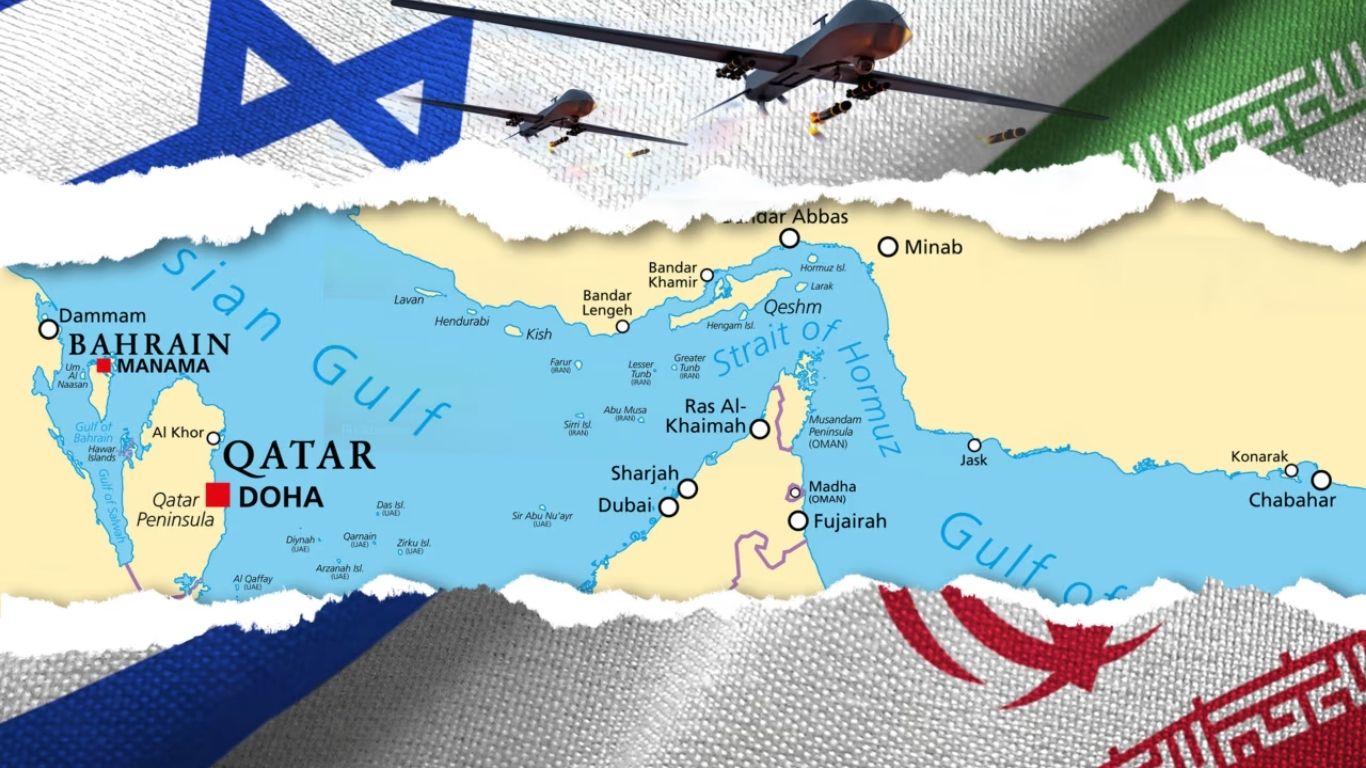
The Strait of Hormuz, a narrow, 39-kilometer-wide passage between Iran and Oman, is the linchpin of global energy security. Every day, roughly one-fifth of the world’s oil supply, more than 20 million barrels, squeezes through the Strait of Hormuz, destined for major economies such as China, South Korea, Japan, India, and even the United States. This waterway is not just a conduit for oil; it also carries about a fifth of the world’s liquefied natural gas (LNG), making it one of the most critical and vulnerable chokepoints in the global energy system.
Geopolitical Flashpoint and Global Economic Risk
The Strait of Hormuz is the only sea route connecting the oil-rich Persian Gulf to the open ocean, serving as the primary export channel for Iran, Iraq, Kuwait, Qatar, Saudi Arabia, and the United Arab Emirates. Its closure or even serious disruption would have catastrophic consequences for the global economy, sending oil and gas prices soaring and triggering waves of inflation across industries and borders.
Recent escalations in the Middle East most notably between Israel and Iran have put the world on edge. When tensions rise, government officials, oil executives, investors, and economists worry that Iran might attempt to interfere with tankers or even block the strait altogether. Such actions would immediately reduce the flow of energy to much of the world, especially Asia, which receives more than 80% of the oil and LNG that passes through the waterway.
Recent Developments and Market Reactions
In the wake of recent U.S. airstrikes on Iranian nuclear sites, the world watched nervously for signs of disruption. Shortly after the bombings, several tankers abruptly reversed course, highlighting the uncertainty and fear gripping commercial operators. Shipping companies became more cautious, some pausing their vessels outside the strait, creating congestion and delaying deliveries.
Despite these disruptions, overall maritime traffic through the Strait has remained relatively stable, with daily averages hovering around 114 to 122 vessels in recent weeks. However, the number of transits dipped noticeably in the immediate aftermath of the conflict, with S&P Global Commodities at Sea reporting a 14% drop in vessel traffic compared to the previous week and a 10% decline from the year’s weekly average.
The Strait of Hormuz: Anatomy of a Chokepoint
The Strait of Hormuz is a natural bottleneck. At its narrowest, it is just 29 nautical miles wide, and much of the shipping lane passes through Iranian territorial waters. This gives Iran significant leverage over global energy flows, a fact it has occasionally used as a bargaining chip in international disputes.
While alternative pipeline routes exist, such as Saudi Arabia’s East-West Pipeline and the UAE’s Abu Dhabi Crude Oil Pipeline, their combined capacity is only about a quarter of the volume normally shipped through the strait. For LNG, there are even fewer alternatives, as all exports from Qatar and the UAE must pass through this waterway.
Economic Impact and Market Volatility
The economic stakes could not be higher. Analysts warn that a prolonged closure of the Strait of Hormuz could send oil prices soaring above $100 per barrel, with some estimates suggesting Brent crude could spike to $110 or more within days. Such a shock would ripple through the global economy, raising the cost of transportation, manufacturing, and even food production, which is heavily dependent on fuel inputs.
Insurance premiums for ships would skyrocket, and some insurers might refuse to cover vessels transiting the region altogether. Shipping companies would be forced to take longer, costlier routes around the Arabian Peninsula, further tightening global supply chains and raising prices for consumers and businesses.
Who Stands to Lose the Most?
The countries most dependent on Persian Gulf energy, China, India, Japan, and South Korea, would be hit hardest by any disruption. China, in particular, is estimated to purchase about 90% of Iran’s oil exports and relies heavily on the strait for its energy security.
But the pain would not be limited to Asia. The United States and Europe would also feel the pinch, as oil is a globally traded commodity. Higher energy prices would fuel inflation, squeeze household budgets, and potentially slow economic growth in developed and emerging markets alike.
Even Iran would suffer. The country’s economy is highly dependent on oil exports, and nearly all of its crude and gas leaves via the Strait of Hormuz. A prolonged closure would cripple its main source of revenue, making such a move a last resort.
Navigational Hazards and Security Risks
Beyond the threat of outright closure, the strait is increasingly vulnerable to asymmetric threats. Iran’s Islamic Revolutionary Guard Corps Navy (IRGCN) has stepped up its presence, deploying advanced drone carriers, corvettes, and high-speed attack boats. Reports of illegal boardings, drone surveillance, and GPS jamming have become more frequent, affecting up to 1,000 vessels at a time and raising the risk of navigational errors and accidents.
Earlier this month, two oil tankers collided near the strait, with the United Arab Emirates blaming navigational errors caused by GPS interference. Such incidents underscore the fragility of the region and the potential for miscalculation or escalation.
The Fragile Ceasefire and Global Uncertainty
Whether the fragile ceasefire between Israel and Iran holds will have profound implications for the global economy. For now, energy markets have calmed, with prices retreating after initial spikes. But the risks remain, and traders are closely monitoring shipping data for any sign of renewed disruption.
The Strait of Hormuz is a stark reminder of how interconnected and vulnerable the world economy is. As long as geopolitical tensions simmer in the Middle East, the threat of a supply shock will loom large, keeping governments, businesses, and consumers on edge.
Conclusion: The Strait of Hormuz a Vital Artery in a Turbulent World
The Strait of Hormuz is more than just a shipping lane; it is a vital artery for the global economy. Any significant disruption to its operations would send shockwaves through financial markets, raise the cost of living for billions, and threaten the stability of the world’s most powerful economies. In an era of heightened geopolitical risk, the security of this narrow waterway is not just a regional concern it is a global imperative.