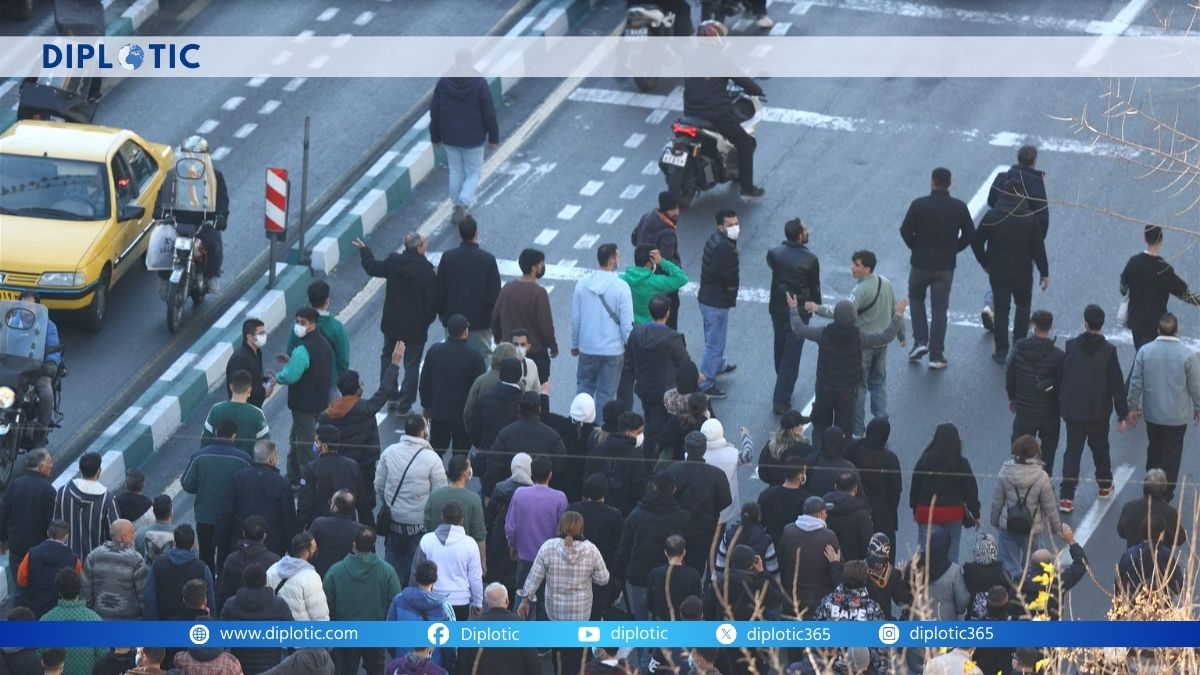
As the new year began, Iran found itself facing another wave of nationwide protests. What started with shopkeepers closing their businesses in Tehran quickly spread across the country, drawing in students, workers, and ordinary citizens struggling with daily survival. By early January 2026, demonstrations had entered their sixth day, accompanied by clashes, arrests, and deaths. The immediate trigger was economic collapse, but the deeper causes run far beyond currency figures.
Iran is no stranger to mass unrest. Over the past decade, protests have erupted repeatedly, driven by economic pressure, political frustration, and demands for dignity. The current demonstrations are unfolding in a tense regional and international environment, with sanctions, recent conflict, and sharp foreign rhetoric all shaping events. To understand what is happening now, it is necessary to look closely at why people are protesting, how widespread the unrest has become, how the government is responding, and what risks lie ahead.
How the Cost of Living Crisis Pushed People Into the Streets
At the heart of the current protests is a deep and worsening economic crisis. Iran’s economy has been under heavy international sanctions for years, limiting access to global markets and freezing foreign assets. These restrictions have weakened the country’s ability to stabilize its currency and control prices. By late December 2025, the situation reached a breaking point.
The Iranian rial fell to a record low of about 1.42 million to the US dollar, losing more than half its value in just six months. This collapse quickly translated into soaring prices. Food costs rose sharply, with some estimates showing an average increase of more than 70 percent compared with the previous year. Everyday items became unaffordable for large sections of society.
For ordinary Iranians, these figures are not abstract. They shape daily life. Taxi drivers, shopkeepers, and workers report that basic goods such as dairy products, cooking oil, and meat have multiplied in price several times over within a single year. Wages, however, have not kept pace. Savings have been wiped out by inflation, leaving families struggling to meet basic needs.
The protests began when traders in Tehran’s Grand Bazaar closed their shops, a powerful signal in a country where bazaar merchants have historically played a key political role. Their action reflected not only anger, but desperation. Many said they could no longer operate at a loss while customers disappeared and costs rose daily. This economic pain provided the fuel that ignited wider unrest.
How Local Economic Protests Turned Into Nationwide Unrest
What began as a focused protest quickly grew into something much larger. Within days, demonstrations spread to at least 17 of Iran’s 31 provinces. Students, workers, and citizens from different backgrounds joined in, turning economic grievances into broader political expressions of anger.
Thousands of people mobilized across cities and towns. In some areas, protests remained peaceful. In others, clashes broke out between demonstrators and security forces. By the end of the first week, at least seven people had been reported killed and dozens arrested. Confrontations in places like Lordegan, Azna, and Kouhdasht involved damage to government buildings, banks, and official institutions.
These developments show how quickly frustration can spill over. When economic suffering becomes widespread, protests often evolve beyond price demands into questions of governance and accountability. Slogans and actions reflected not just anger at inflation, but distrust of institutions seen as failing to protect people’s livelihoods.
The geographic spread of the protests is significant. Iran is a large and diverse country, and unrest crossing regional lines signals a shared experience of hardship. The participation of students also matters, as campuses have historically been centers of political activism. Once students join economic protests, demands often expand.
Despite government appeals for calm and unity, the demonstrations continued. This persistence suggests that public trust is low. Many protesters appear unconvinced that promises of reform will translate into real relief, especially after years of unfulfilled pledges.
How the Government Is Responding, and Why Its Approach Matters
The response of President Masoud Pezeshkian’s government has so far been cautious, at least compared with past crackdowns. Officials have acknowledged “legitimate demands” and avoided an immediate nationwide use of overwhelming force. This restraint marks a notable shift from previous protest cycles.
Several steps were taken quickly. A new central bank governor was appointed, with a public pledge to restore economic stability after the currency collapse. In universities, campus security managers were removed following criticism of how student protests were handled. These moves appear aimed at easing tensions and signaling responsiveness.
Pezeshkian has also used public speeches to emphasize anti-corruption efforts and economic reform. He framed resistance to these reforms as coming from vested interests that benefit from smuggling, rent-seeking, and bribery. Protecting livelihoods, he said, was a red line for his government.
However, uncertainty remains. Iran’s history of protest responses includes harsh repression, especially during the 2022 demonstrations following the death of Mahsa Amini. That unrest was met with mass arrests, deadly force, and later condemnation by United Nations experts, who described the response as crimes against humanity. Many Iranians remember this vividly.
This memory shapes current expectations. Protesters are aware that restraint could quickly give way to force if the state feels threatened. At the same time, the government faces a dilemma. A crackdown risks further inflaming anger and international criticism. Concessions, meanwhile, may be limited by sanctions and structural problems.
The coming days will likely reveal whether the current approach is a genuine shift or a temporary pause.
Why Past Protests Still Shape Today’s Fears and Demands
Iran’s recent protest history weighs heavily on the present. The 2022 uprising sparked by Mahsa Amini’s death went far beyond economic issues. It challenged social control, gender restrictions, and state authority. Although the government eventually contained the unrest, it did so at high human and political cost.
That experience left deep scars. Many families lost loved ones. Thousands were detained. Trust between citizens and the state eroded further. Even though some enforcement practices, such as dress code policing, became less strict afterward, fear never fully disappeared.
The current protests are different in focus but connected in memory. Economic pain is now the main driver, yet it exists alongside unresolved grievances from past crackdowns. People remember what protest can cost them, which may limit participation. But they also remember how little changed after silence returned.
This combination of fear and frustration creates a volatile environment. Economic protests can escalate quickly if people conclude that peaceful demands will be ignored. History shows that unresolved grievances tend to resurface, often with greater intensity.
How International Tensions Could Escalate the Situation
The protests are unfolding amid sharp international rhetoric. US President Donald Trump publicly warned that Washington would respond if Iranian authorities violently suppressed protesters. Israeli officials also issued symbolic messages of support for protesters. Such statements add an external dimension to an already fragile situation.
Iran’s leadership views foreign involvement with deep suspicion, shaped by decades of conflict and intervention. External threats can strengthen hardline positions and justify tougher internal security measures. President Pezeshkian has warned that Iran’s response to any aggression would be harsh.
Recent military conflict between Iran, Israel, and the United States adds to the risk. Although that confrontation ended months earlier, tensions remain high. Any perception that protests are linked to foreign pressure could push the government toward repression rather than reform.
This is why the current protests matter beyond Iran’s borders. They sit at the intersection of economic collapse, political legitimacy, and regional power struggles.
As 2026 begins, Iran faces a familiar but dangerous question. Can economic relief and reform come fast enough to calm the streets, or will unresolved pressure turn this wave of protest into something larger? The answer will shape not only Iran’s domestic future, but its place in an already unstable region.