

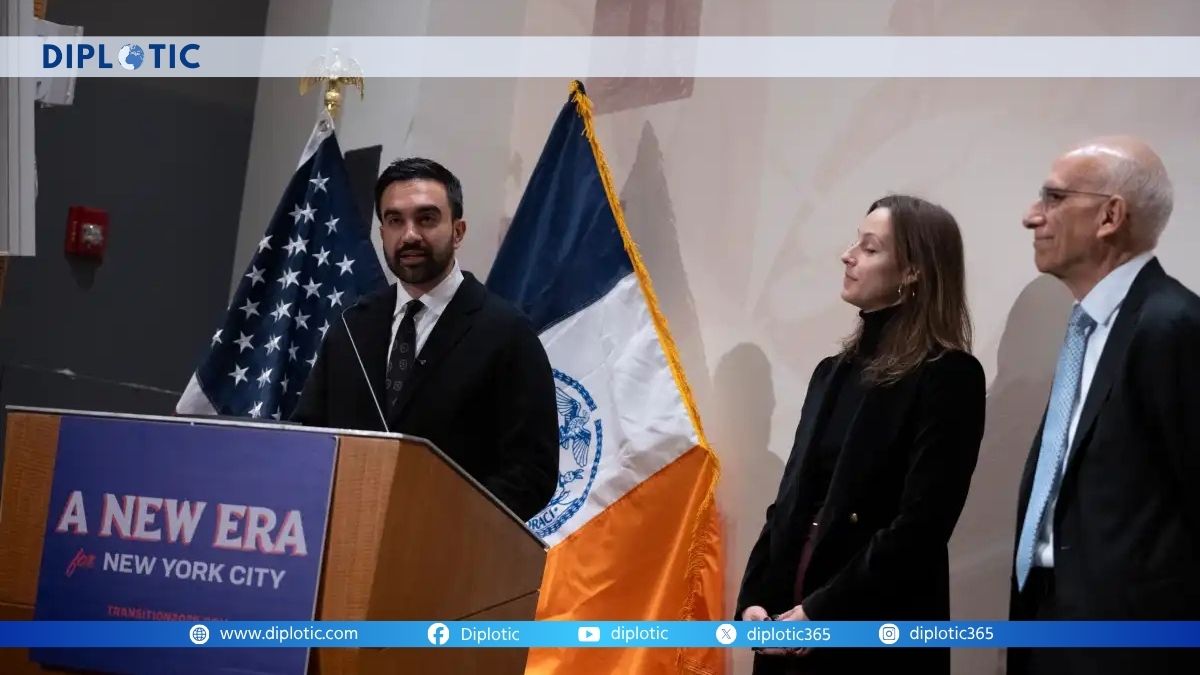
The new year in New York City began not just with a change in leadership, but with a symbolic break from political tradition. As 2026 dawned, Zohran Mamdani was sworn in as mayor in a midnight ceremony inside an abandoned subway station. Hours later, a public party stretched for seven blocks around City Hall, where tens of thousands of supporters braved the cold to witness a new kind of political event. This was not a closed, ticketed affair for donors and elites. It was a deliberate, populist spectacle designed to mirror the campaign that brought a 34-year-old democratic socialist to power. The presence of national progressive figures like Senator Bernie Sanders and Representative Alexandria Ocasio-Cortez underscored that this was more than a local transition; it was a national statement. The core message, chanted by the crowd and echoed from the podium, was simple and direct: “Tax the rich.” This inauguration set the stage for an administration that promises to govern as it campaigned—with bold, confrontational policies aimed at tackling the city’s deep affordability crisis. The immediate question is whether the symbolic unity and energy of day one can be translated into tangible change for millions of New Yorkers.
How Did the Inauguration Events Signal a New Political Style?
Every aspect of Mamdani’s inauguration was crafted to convey a departure from business-as-usual politics. The choice of location for the initial, intimate swearing-in was deeply symbolic: the long-shuttered City Hall subway station, a beautiful but forgotten relic of the city’s past. This act literally positioned the new administration in the underground heart of the city’s transit system, a nod to both history and the working-class voters who depend on public transportation. The use of a historic Quran from the public library, alongside a family heirloom, emphasized personal identity and a connection to shared civic institutions. The main event then exploded this intimacy into a massive public celebration. By making the inauguration an open, RSVP-based block party, the team intentionally dismantled the velvet rope that typically surrounds such ceremonies. Supporters waited for hours in the cold for a chance to participate, a testament to the engaged base but also a logistical challenge that left many outside the perimeter.
The speeches reinforced this theme of accessibility and systemic critique. Senator Sanders framed the victory as proof that “when working people stand… there is nothing that we cannot accomplish.” The new leaders—Mamdani, Comptroller Mark Levine, and Public Advocate Jumaane Williams—took their oaths on different religious texts and delivered remarks in multiple languages, projecting an image of inclusive unity. However, the unifying thread was not vague optimism; it was a shared enemy in economic inequality. The event successfully transformed a ceremonial transfer of power into a continuation of the campaign rally, energizing supporters but also setting a high bar for the administration to maintain that momentum through the grind of governance. It was a declaration that the people who powered the victory would have a stake in the administration.
What Are the Cornerstone Policies of the New Administration?
The inaugural rhetoric quickly turned into policy action, with housing at the forefront. Within hours of taking the oath, Mayor Mamdani signed a slate of executive orders focused on the city’s most pervasive crisis: affordability, driven by the cost of shelter. The most significant campaign promise reiterated was a freeze on rents for the city’s roughly one million rent-stabilized apartments, which constitute about half of the rental market. This move alone would provide immediate, direct relief to a huge segment of the population, though it is certain to face fierce legal and political challenges from the real estate industry. The new executive orders aimed to lay the groundwork for longer-term solutions. They established two new city task forces: one to catalog all city-owned land that could be used for affordable housing development, and another to identify regulatory barriers and incentives to spur construction.
These early actions reveal a two-pronged strategy: immediate tenant protection and a push to increase the supply of affordable housing. As the Deputy Mayor for Housing stated, the focus is on “protecting tenants, going after bad landlords, and building more housing.” The administration views the crisis as a failure of political will, suggesting a confrontational approach toward property owners and developers perceived as predatory or obstructive. By announcing these steps inside a rent-stabilized building in Brooklyn on the very first day—a day when many monthly rents are due—Mamdani underscored a sense of urgency and empathy. This swift action is designed to show that the campaign’s slogans are now official policy priorities, signaling to both supporters and adversaries that the new mayor intends to move quickly on his core promises.
What is the “Tax the Rich” Agenda and Can It Work?
The resonant chant of “Tax the rich” points to the administration’s proposed method for funding its ambitious social agenda. Mayor Mamdani’s central revenue proposal is to raise the city’s corporate tax rate from 7.25 percent to 11.5 percent, bringing it in line with neighboring New Jersey, and to increase the top marginal income tax rate by 2 percent on earnings over $1 million annually. The argument, as framed by Senator Sanders, is that this is not radical but simply demanding that the wealthy “pay their fair share.” The goal is to generate billions in new revenue to fund expanded social services, housing subsidies, and infrastructure without relying on state or federal aid, which may not be forthcoming.
However, the path to implementing these taxes is fraught with obstacles. New York City does not have full autonomy over its tax code; any significant changes require approval from the governor and the state legislature in Albany. The current political landscape in New York State makes this a steep uphill battle. The administration will need to leverage its populist mandate to pressure state lawmakers, a test of its political muscle beyond the city’s borders. Furthermore, critics warn that sharply higher taxes could accelerate the out-migration of high-earning individuals and corporations, potentially undermining the city’s tax base in the long run. The administration counters that investing this revenue in public goods—like better schools, reliable transit, and affordable housing—will make the city more attractive for everyone and foster a healthier, more stable economy. This fundamental debate will define the mayor’s relationship with the business community and test the practicality of democratic socialist economics in the heart of American capitalism.
What Are the Challenges Ahead for This Unconventional Government?
The exhilaration of inauguration day will soon meet the complex reality of running a municipal government with a budget of over $100 billion, a workforce of 300,000, and entrenched bureaucratic inertia. The first major challenge is coalition building. While the inauguration showcased unity among progressives, governing requires building broader alliances. Mamdani will need to work with a City Council where his allies do not hold a supermajority, with skeptical state-level officials, and with a powerful civil service unionized workforce. His confrontational stance toward real estate and business elites may galvanize his base but could also unite powerful opposition that seeks to block his initiatives at every turn.
A second challenge is managing expectations. The bold promises on housing, taxes, and police reform have raised hopes tremendously. The rent freeze, for example, will face immediate lawsuits, and its implementation will be complex. If the administration cannot deliver visible improvements quickly, the grassroots energy that propelled it to victory could sour into disillusionment. Finally, there is the sheer scale of New York’s problems, from aging infrastructure and climate vulnerability to homelessness and inequality, which have deepened over decades. No single administration can solve them in one term. The Mamdani administration’s success will ultimately be judged not on the symbolism of its first day, but on its ability to navigate these obstacles, implement tangible policies that improve lives, and demonstrate that a populist, progressive model can deliver effective governance for the most complex city in America. The block party is over; now the hard work begins.




