

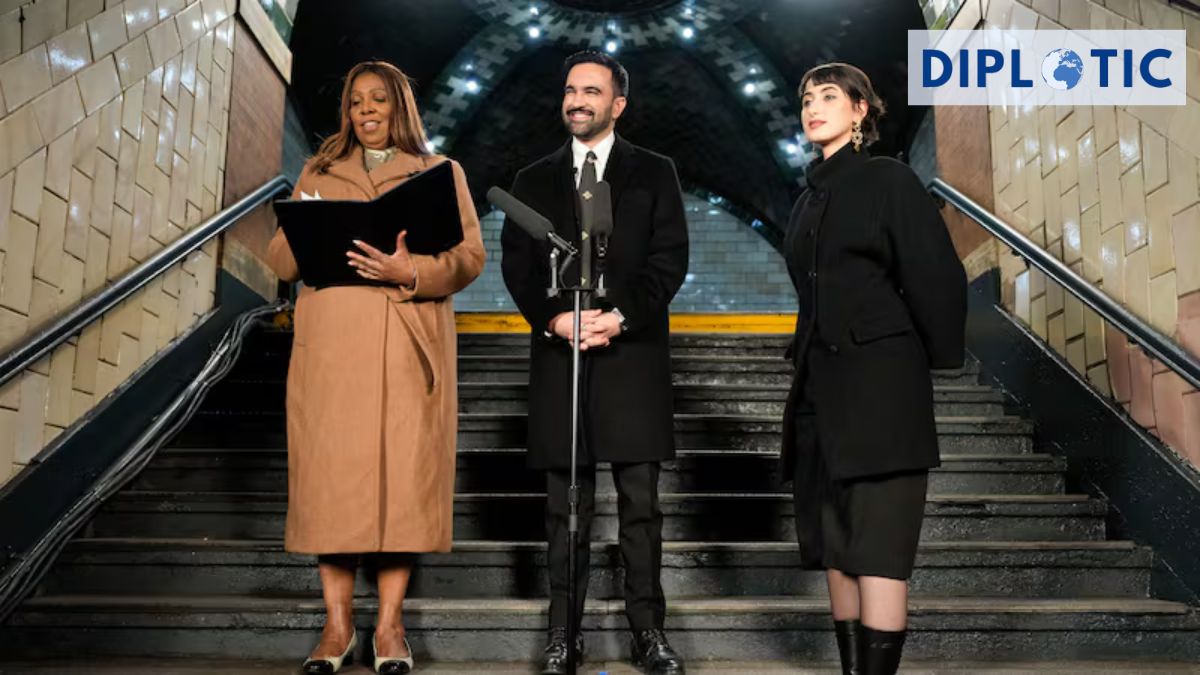
Discover the powerful journey of Zohran Mamdani, the Muslim, African-born, South Asian mayor of New York City, whose roots in Delhi activism and immigrant struggle are reshaping urban leadership, social justice, and modern identity politics.
A New Kind of Mayor for a New Kind of New York
When Zohran Mamdani was sworn in as the mayor of New York City, it marked more than a political victory; it signaled a generational shift in how power, identity, and justice are understood in modern America. Unlike earlier leaders who softened their personal histories to appeal to the mainstream, Mamdani stepped forward, embracing everything he is: Muslim, African-born, South Asian, and unapologetically rooted in social justice.
In the world’s most diverse city, his leadership reflects its streets: multilingual, multicultural, immigrant-driven, and deeply aware of inequality. His rise is not just the story of a politician; it is the continuation of a family legacy built on activism, compassion, and intellectual courage.
Roots in Delhi: Where Art Met Activism
Long before City Hall, Mamdani’s story passed through the narrow lanes of Delhi. His mother, acclaimed filmmaker Mira Nair, transformed her celebrated film Salaam Bombay! into real-world change by founding the Salaam Baalak Trust, one of India’s most influential rehabilitation programs for street children.
What began as a small shelter evolved into a vast network of 17 centers supporting over 100,000 vulnerable children with food, education, counseling, and vocational training. The Trust didn’t just offer charity; it restored dignity.
Zohran grew up observing this activism not as theory, but as lived experience. Compassion was not optional in his household; it was the standard.
The Intellectual Legacy of Mahmood Mamdani
Zohran’s father, Professor Mahmood Mamdani, is one of the world’s most respected political scholars. His groundbreaking book Good Muslim, Bad Muslim reshaped global conversations on Islam, terrorism, and Western power structures.
Dinner table conversations in the Mamdani household were about colonialism, identity, law, and surveillance complex topics that shaped Zohran’s political consciousness long before his first campaign.
Together, his parents created a home where art met scholarship and empathy met rigor, forming the foundation of his leadership philosophy.
From Housing Counselor to City Leader
Before entering politics, Zohran Mamdani worked in Queens as a housing counselor, helping immigrant families fight eviction, understand predatory loans, and navigate hostile bureaucracy. He sat at kitchen tables translating legal documents, calling banks, and advocating for tenants who were one rent payment away from homelessness.
This was not performative politics it was ground-level service.
As a state assemblyman, he organized hunger strikes with indebted taxi drivers, marched with tenants’ unions, and fought housing injustice legislation. His platform was built not in boardrooms, but in living rooms.
Why Mamdani Is Not the “Next Obama”
Comparisons to Barack Obama are inevitable — both men are African-born, globally raised, and rhetorically gifted. But where Obama muted his Muslim heritage to avoid political backlash, Mamdani places his identity front and center.
He does not ask voters to look past who he is.
He asks them to understand it.
Mamdani pronounces his name carefully so others can learn it. He speaks Urdu and Arabic on the campaign trail. He attends mosques, synagogues, and community centers. His message is clear: identity is not a liability; it is a lens of empathy.
“Rent, Groceries, Buses, Dignity”
His campaign slogan was as simple as it was revolutionary: Rent. Groceries. Buses. Dignity.
Rather than abstract promises, Mamdani focused on material justice, cost of living, public transport, housing security, and community dignity. His leadership reframed politics away from culture wars and toward survival realities.
In a city shaped by immigrants, service workers, and renters, his policies speak directly to everyday struggles.
A Living Continuation of a Humanitarian Legacy
When news of Mamdani’s mayoral victory reached the Salaam Baalak Trust in Delhi, celebrations quietly rippled through its centers. For many alumni, his rise felt personal — the continuation of the same compassion that once saved their own lives.
One former street child, now a successful professional, summarized it best:
“Mira didi gave us a future. Her son now gives people a voice.”
The Future of Urban Leadership
Zohran Mamdani’s journey from a book-lined living room in Vasant Vihar to the steps of New York City Hall represents the future of leadership: grounded, inclusive, and morally anchored.
In a world increasingly divided by fear, his story proves something radical and simple: that dignity travels farther than power and that justice rooted in lived compassion can reshape even the largest cities on earth.
New York did not just elect a mayor.
It chose a movement.




