Cricket has long been more than a game in South Asia. From bustling streets of Dhaka to the stadiums of Mumbai, the sport has carried a sense of shared culture, passion, and friendly rivalry. Historically, it was considered a gentleman’s game, a platform where nations could compete with respect even amid political tensions. But recent developments surrounding Bangladesh’s reported boycott of the ICC Men’s T20 World Cup 2026 suggest that this ideal is increasingly fragile. What was meant to be a global celebration of sport has instead revealed deep political entanglements, with cricket acting less as a unifying force and more as an instrument of strategic leverage. The controversy raises urgent questions: how much has politics penetrated the sport, and what does it mean for smaller nations seeking fairness in the international arena?
The immediate trigger for the crisis lies in Bangladesh’s insistence that its World Cup matches be held in Sri Lanka rather than India. On the surface, this request cited security concerns and logistical issues. Yet, deeper analysis indicates that the move reflects a lack of trust in the regional cricketing system, one dominated by India. The International Cricket Council (ICC) rejected Bangladesh’s request swiftly, a decision that illustrates a structural imbalance in the global cricketing framework. While the ICC presents itself as a neutral institution, in practice, it is heavily influenced by nations with economic and political clout. For Bangladesh, a smaller cricketing nation, these dynamics create an environment where legitimate concerns can be dismissed as minor inconveniences.
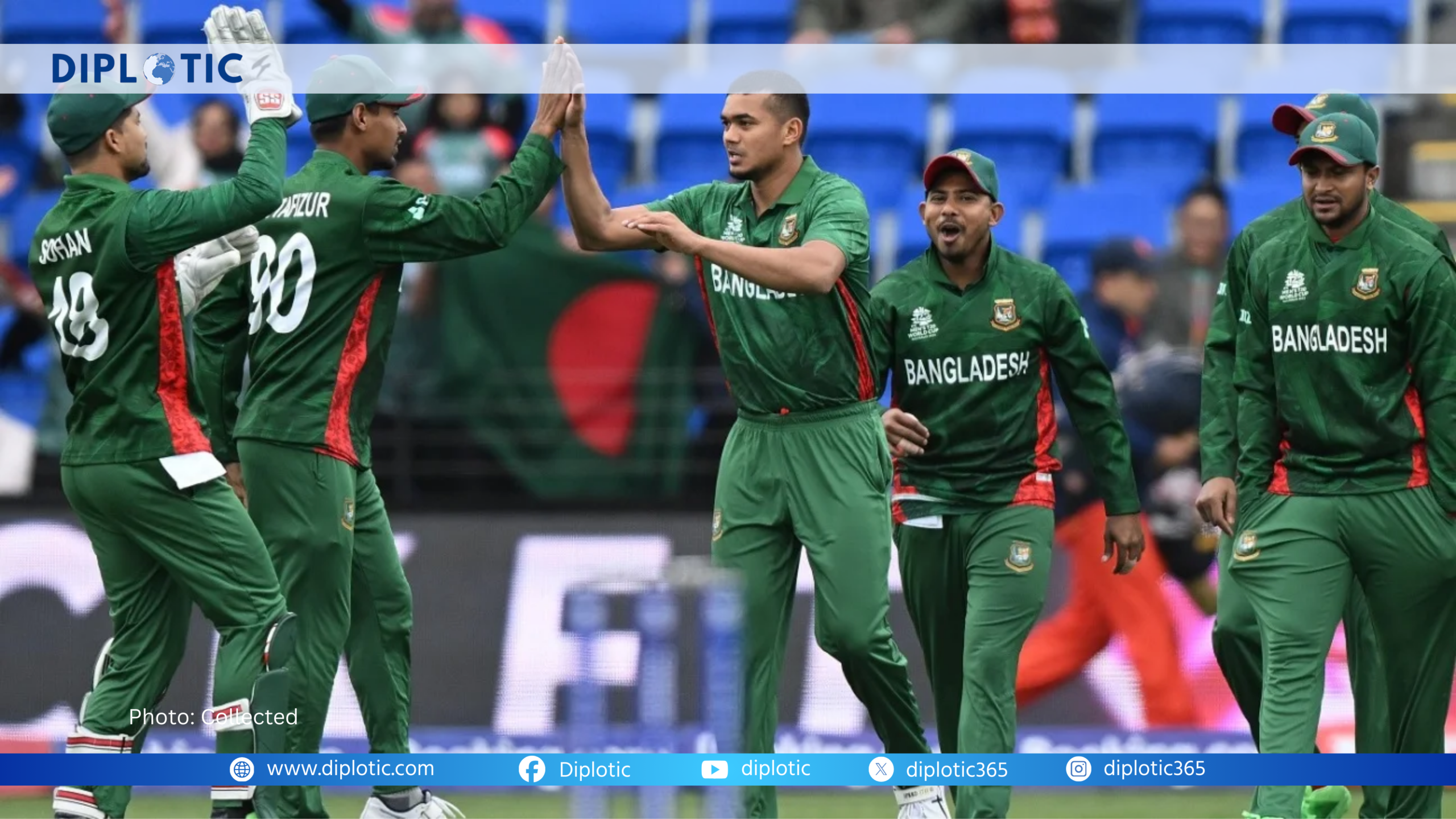
At the heart of this situation is the complex relationship between sport and statecraft. India’s cricket establishment, led by the Board of Control for Cricket in India (BCCI), has a history of intertwining cricketing decisions with political strategy. The sudden release of Bangladeshi pacer Mustafizur Rahman from an Indian Premier League (IPL) franchise was widely interpreted beyond contractual terms. For many in Bangladesh, it symbolized the implicit cost of participation in India-centric cricket structures. This perception is reinforced by the ICC’s stance: while security and logistics are cited, smaller nations quickly learn that India’s priorities carry disproportionate weight. In effect, cricket has become a platform where power dynamics are enforced subtly under the guise of administrative procedure.
The timing of this crisis also reveals broader geopolitical implications. India-Bangladesh relations have been sensitive since the political change in Dhaka in 2024, which ended Sheikh Hasina’s rule. The new government has sought a more independent posture in foreign affairs, which naturally extends to sporting decisions. Refusing to play in India can therefore be read as a statement of autonomy, a refusal to conform to expectations set by a larger neighbor. In this context, cricket cannot be considered separate from diplomacy. Sporting venues and tournaments have evolved into stages where the subtleties of regional power relations are displayed, and the Bangladesh request highlights the difficulty smaller nations face in asserting their concerns within this framework.
India’s use of cricket as a soft power instrument is not new. Over the past decades, New Delhi has shown a pattern of leveraging sporting ties in line with political priorities. Pakistan has frequently borne the brunt of this approach, with cricketing relations suspended or selectively resumed based on diplomatic convenience. Now, Bangladesh appears to be the latest nation affected by a similar logic. When sport is used as leverage, the principle that cricket should transcend politics is weakened. The ICC’s unwillingness to accommodate Dhaka’s request, coupled with its readiness to replace the team if necessary, underscores a troubling trend: commercial and political interests often outweigh fairness and inclusivity in international tournaments.
The consequences of these dynamics are significant. If powerful nations continue to instrumentalize sport, the credibility of international cricket will suffer. Smaller nations may feel marginalized or compelled to act in ways that compromise their sporting objectives. Beyond immediate competition, this trend threatens the foundational idea that cricket can serve as a bridge between societies, providing a neutral ground for cultural exchange and regional connection. India’s dual role—as both a country that claims to resist politicization on the global stage and as a major driver of political influence in cricket—illustrates a paradox. While it seeks legitimacy and leadership in world cricket, its approach risks eroding trust among fellow participants.
For Bangladesh, the stakes are both sporting and political. With elections approaching and public sentiment attuned to issues of sovereignty and national dignity, the government’s stance has become intertwined with national identity. Uncertainty within the team, reflected in statements from captain Litton Das, mirrors the larger dilemma facing the country: participate in a tournament that appears structurally biased or risk diplomatic and sporting isolation by withdrawing. The decision will resonate beyond the pitch, shaping perceptions of Bangladesh’s autonomy and willingness to defend its interests in a regional order dominated by a powerful neighbor.
The Bangladesh-India cricket standoff is more than a single sporting dispute. It is a lens through which we can observe the intersection of politics, economics, and sport in South Asia. If cricket continues to be used as a tool of statecraft, international tournaments may lose their ability to foster genuine competition and mutual respect. What was once a symbol of shared enthusiasm may increasingly reflect the uneven balance of power in the region. Cricket’s evolution in South Asia serves as a cautionary tale: when sport becomes subordinate to political strategy, its potential to unite societies diminishes, leaving competition overshadowed by geopolitical calculation.
Ultimately, the current crisis offers a critical moment for reflection. South Asia’s cricketing institutions must balance commercial interests, political pressures, and the integrity of the sport. For smaller nations like Bangladesh, asserting independence within this framework is not merely a question of logistics—it is a matter of principle and national pride. How the ICC and powerful member nations respond will shape the future of cricket in the region, determining whether it remains a shared passion and cultural bridge, or becomes another arena where political dominance dictates outcomes. The unfolding situation reminds us that in South Asia, cricket is never just a game; it is a mirror of broader societal and political dynamics, revealing both the promise and the perils of sport in a complex geopolitical landscape.