

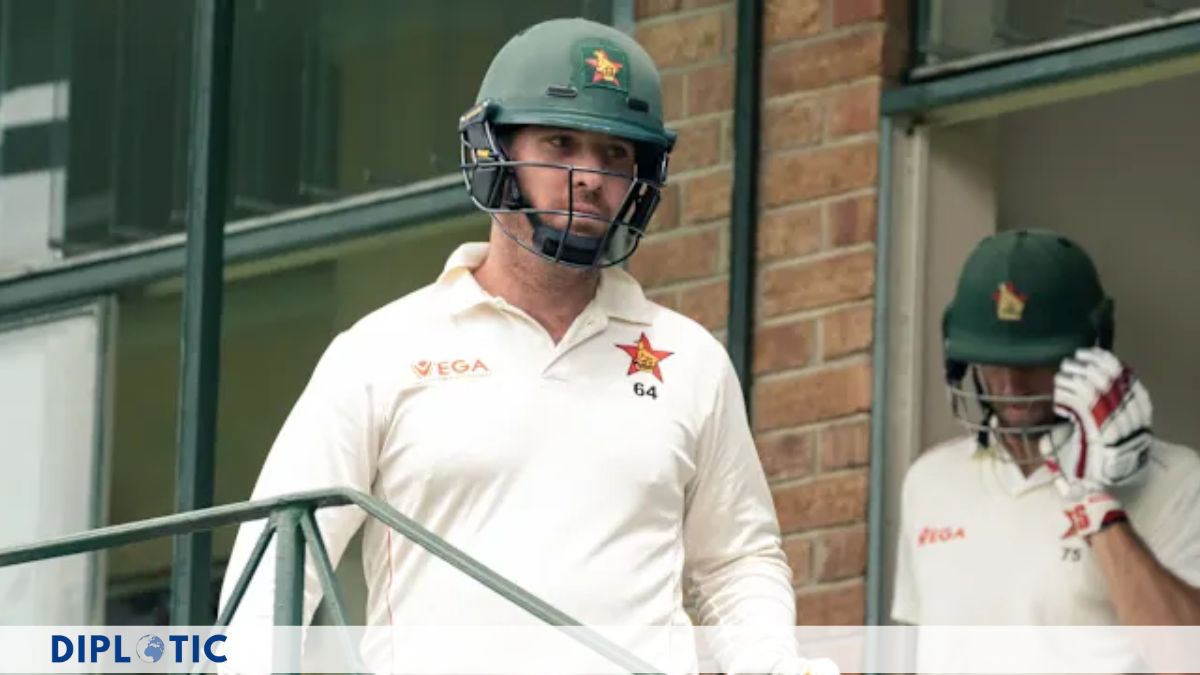
Brendan Taylor, Zimbabwe’s once-golden batsman, stepped back onto the Test stage on August 7, 2025, in Bulawayo, donning his 36th cap with the weight of a man who’s clawed his way out of hell. After a three-and-a-half-year ban for breaching the ICC’s anti-corruption code, compounded by a public battle with alcohol and drug addiction, Taylor’s return against New Zealand feels like a debut, he says—a mix of raw gratitude and hard-won redemption. “Three years ago, I couldn’t get out of bed,” he told ESPNcricinfo, voice cracking with emotion. “Now I’m doing what I love, representing Zimbabwe.” But with Zimbabwe’s cricket team mired in a six-match losing streak and batting woes plaguing the side, can Taylor’s comeback spark a turnaround, or is this a feel-good story masking deeper structural issues? Let’s unpack his journey, the stakes for Zimbabwe Cricket, and what his return means for a nation desperate for sporting hope.
A Fall from Grace: Taylor’s Dark Days
Taylor’s story is one of talent squandered and painstakingly reclaimed. In 2021, at 35, he abruptly retired from international cricket during a tour in Belfast, a decision that stunned fans. Seven months later, in January 2022, the truth emerged: Taylor had been approached by match-fixers in 2019, who threatened to expose his cocaine use unless he complied. He refused, reported the incident to the ICC, but admitted to accepting $15,000 from a businessman, breaching anti-corruption rules. The ICC handed him a three-and-a-half-year ban, barring him from all official cricket activities.
The fallout was brutal. “I was in the dark depths, in the abyss,” Taylor told ESPNcricinfo, recounting days of “total and incomprehensible demoralization.” His wife, Kelly-Anne, learned of his addiction alongside the world, initially doubting his decision to enter rehab in Zimbabwe’s Eastern Highlands. “I felt it was something I got myself into, and I needed to fix it myself,” he said. “I thought the dream was gone.” Shame and guilt gnawed at him for letting down his family, but their support—along with a stint in rehab—changed everything. “The joys and promises of recovery are dear to me,” he said. “Getting my life back on track is why I’m here.”
The Comeback: A New Man, A New Role
Taylor’s return wasn’t a given. Banned until July 2025, he opened a coaching facility in Harare, planning a post-playing career. But Zimbabwe Cricket’s managing director, Givemore Makoni, saw a bigger prize: Taylor as a player, eyeing the 2027 World Cup. Makoni, alongside chairman Tavengwa Mukuhlani, convinced him to lace up his boots again. “There are people in Zimbabwe Cricket I have to thank, especially the chairman and MD,” Taylor said. “Their support was pivotal.”
On August 7, 2025, Taylor walked out to open the batting against New Zealand, a shift from his usual No. 4 spot, alongside young Brian Bennett. Handed his Test cap, he called it “a moment of pure gratitude.” His first runs came off an edge, ducking a Jacob Duffy bouncer, but the symbolism was potent: Taylor, 20 kilograms lighter and “living good, clean, and healthy,” was back. He’s not keeping wicket—a role he excelled in during his 2004–2021 career—but claims he’s fitter than ever, having “trained harder than ever in my life.”
Zimbabwe’s Struggles: A Team in Crisis
Taylor’s return comes at a dire moment for Zimbabwe Cricket. The team has lost six straight matches across formats, with their batting a glaring weak point. In the first Test against New Zealand, they crumbled for 178 and 235, with Kyle Henry’s five-wicket haul exposing their fragility. The side hasn’t won a Test since 2021 against Afghanistan, and their ODI and T20 form is equally bleak, missing qualification for the 2023 World Cup. Social media users are skeptical, with one noting, “Taylor’s heart is in it, but can one man fix this mess?” Zimbabwe’s domestic structure, plagued by funding issues and player exodus, hasn’t produced consistent talent, leaving veterans like Taylor and Craig Ervine to shoulder the load.
The numbers are grim. Zimbabwe’s Test batting average in 2025 is a paltry 22.3, per Cricinfo stats, and their top-order collapses are routine. Installing Taylor as an opener—a role he rarely played in his 34 prior Tests—is a gamble, banking on his experience to stabilize a brittle lineup. But at 39, with a Test average of 36.27 and 2,083 runs from 2004–2021, can he still deliver under pressure?
Cricket’s Decline in Zimbabwe
Zimbabwe Cricket’s woes run deeper than the pitch. Once a competitive force in the 1990s and early 2000s, with stars like Andy Flower and Heath Streak, the sport has withered under mismanagement, political interference, and economic collapse. The 2003 player boycott, led by Flower and Henry Olonga over Robert Mugabe’s regime, marked a turning point. Since then, funding cuts and corruption allegations have gutted infrastructure, with domestic first-class cricket reduced to a four-team Logan Cup. The ICC suspended Zimbabwe Cricket in 2019 over government interference, reinstating them only after reforms in 2020.
Taylor’s ban exposed further cracks. His 2022 admission of match-fixing approaches highlighted vulnerabilities in smaller cricket nations, where players earn a fraction of their counterparts in India or Australia. Zimbabwe Cricket’s 2025 budget, per their annual report, is $12 million—less than the IPL salary of one top player. Yet, recent investments in Bulawayo’s Queens Sports Club and Harare Sports Club signal hope, with Taylor’s return part of a push to regain relevance before the 2027 World Cup, co-hosted by Zimbabwe, South Africa, and Namibia.
The Human Angle: Redemption and Representation
Taylor’s story resonates beyond cricket. His battle with addiction mirrors global struggles, with the WHO reporting that 270 million people used drugs illicitly in 2024. His openness about rehab—rare in a macho sporting culture—has sparked praise. “The way my family rallied was overwhelming,” he said. “I regret not leaning on them earlier.” Social media users call him an inspiration, with one commenting, “Taylor’s comeback shows you can hit rock bottom and still rise.”
His return also carries cultural weight. In Zimbabwe, where cricket is a unifying force in a divided nation, Taylor’s cap is a symbol of resilience. “It’s an honor to play again,” he said. “It’s a debut-like feeling.” Fans at Bulawayo, waving Zimbabwe’s green-and-gold flag, chanted his name, a rare bright spot in a gloomy sporting landscape.
Can One Man Save a Sinking Ship?
Taylor’s comeback is heartwarming, but skepticism abounds. At 39, his reflexes may not match his resolve, and opening against New Zealand’s pace attack—led by Tim Southee and Matt Henry—is no easy feat. Zimbabwe’s batting issues are systemic, not individual. Youngsters like Bennett and Dion Myers show promise, but the lack of a robust domestic pipeline limits depth. Social media users question the strategy, with one noting, “Why put a 39-year-old at opener? Feels like desperation.”
Then there’s the pressure of expectation. Taylor’s 2011 Test century against Bangladesh remains a high point, but his last Test knock in 2021 was a duck. If he fails, critics may argue Zimbabwe Cricket is clinging to nostalgia rather than building for the future. The 2027 World Cup looms large, but with only 18 months of eligibility left post-ban, Taylor’s window is narrow.
A Catalyst for Change?
Beyond personal redemption, Taylor’s return could spark broader shifts. His coaching facility in Harare, launched during his ban, trained over 200 young players in 2024, per Zimbabwe Cricket’s records. Could he transition into a mentor, nurturing talents like Myers or Tadiwanashe Marumani? His experience with addiction could also position him as an ICC ambassador for player welfare, addressing mental health and corruption risks in smaller nations.
Geopolitically, Zimbabwe’s hosting of the 2027 World Cup offers a chance to showcase progress. Taylor’s presence could draw crowds and sponsors, boosting a cash-strapped board. But this hinges on results. A strong showing against New Zealand—unlikely given their 2-0 series lead—could shift the narrative. Even a gritty 50 from Taylor might inspire confidence in a team ranked 10th in Tests.
A Test of Grit and Legacy
Taylor’s comeback is a microcosm of Zimbabwe’s fight for relevance. The second Test, ongoing as of August 8, 2025, is a litmus test. Early signs aren’t promising—Zimbabwe slumped to 4 for 95 on day one, with Taylor scratching out 12 runs before nicking off. But his focus is bigger than runs. “If performances happen, that’s great, but there’s a bigger picture here,” he said. That picture includes mentoring a young side and proving redemption is possible.
For Zimbabwe Cricket, Taylor’s return is a calculated risk. Success could galvanize a struggling program; failure could expose its fragility. Fans, desperate for heroes, are rooting for him. As one social media user put it, “Taylor’s back from the abyss. If he can do it, maybe Zimbabwe can too.” Whether he’s a spark or a footnote, Taylor’s second chance is a story of grit, gratitude, and a nation hoping to rise again.




