U.S. President Donald Trump has recently made headlines with his outspoken demand for Afghanistan’s Bagram Air Base to be returned to American control, a move that has stirred significant geopolitical tension. This carefully calculated proposition taps into layered strategic concerns involving U.S. interests, regional power dynamics, China’s nuclear proximity, and lingering counterterrorism objectives.
The Strategic Powerplay of Bagram Air Base
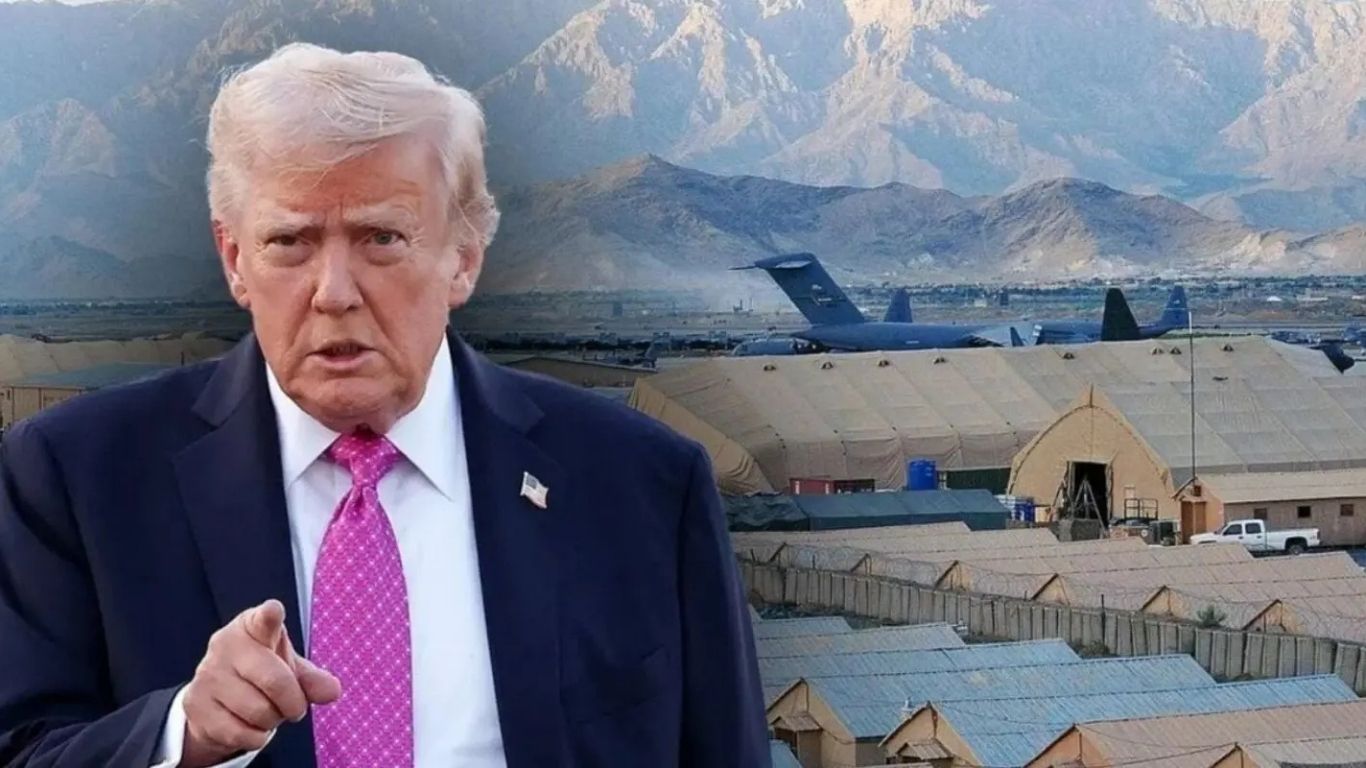
Bagram Air Base, located approximately 50 kilometers from Kabul, Afghanistan, was once the largest U.S. military base in the country. It served as a critical logistical hub for American and NATO operations throughout the two-decade-long engagement in Afghanistan. Its two heavy concrete runways could accommodate bombers and large cargo planes, making it structurally invaluable for military mobility and regional reach.
More than just infrastructure, Bagram symbolizes American influence and capability projection in Central Asia. The base’s geographical position offers a commanding vantage point to influence Afghanistan’s rugged terrain and critical regional routes. Importantly, it is just about an hour’s flight from Chinese nuclear weapons facilities, highlighting its significance in the ongoing great power competition between the U.S. and China. Trump has explicitly cited this proximity as a top reason for his push to retake Bagram, underscoring a strategic priority to monitor and counter China’s expanding nuclear arsenal.
Trump’s Motivations: Power, Prestige, and Geopolitical Leverage
Trump’s insistence on regaining control of Bagram stems from a multifaceted agenda:
Countering China: The base is strategically situated near the China-Afghanistan border, giving the U.S. a rare operational foothold within striking distance of Chinese nuclear sites. In Trump’s framing, controlling Bagram bolsters America’s ability to exert military and intelligence pressure in the region, curbing Beijing’s power ambitions.
Reasserting U.S. Influence: After the chaotic and often criticized U.S. withdrawal from Afghanistan in 2021, Trump views reclaiming Bagram as a chance to reverse what he perceives as a loss of American prestige. The base was “given away for nothing,” he claims, and its return would symbolize regained U.S. strength and resolve in a critical geopolitical theater.
Counterterrorism Operations: Though Trump’s emphasis is on China, Bagram also offers unparalleled access to Afghanistan’s interior, crucial for ongoing counterterrorism efforts against Sunni extremist groups that still threaten regional and global security.
Political Messaging: Domestically, Trump’s aggressive stance on Bagram serves to rally nationalist sentiments and project his image as a decisive leader putting “America First,” even in foreign policy.
Regional and International Pushback
Trump’s demand has met with notable resistance, not only from the Taliban who control the base but also from regional and global powers:
Taliban Stance: The Taliban categorically reject any U.S. attempt to reclaim Bagram, emphasizing Afghanistan’s sovereignty and their firm control over the base. Taliban spokesperson Zabihullah Mujahid sharply dismissed Trump’s demand as unrealistic and unwelcome.
Regional Diplomacy: Countries like India, Russia, China, Pakistan, Iran, and others convened in Moscow to express unified opposition against American reoccupation of Bagram. These nations fear that U.S. military presence could destabilize the region and hasten an unwanted escalation.
Global Geopolitical Implications: Russia and China see any move by the U.S. to retake Bagram as provocative, potentially exacerbating great power rivalries. Russia even issued warnings that such actions might be perceived as a form of re-invasion, complicating diplomatic ties further.
Challenges and Feasibility of Retaking Bagram
Pragmatically, regaining Bagram Air Base is fraught with challenges:
The Taliban’s control is firmly entrenched, having transferred the base to Afghan forces before their return to power. Any U.S. attempt to reclaim it militarily would likely be met with fierce local resistance as well as international condemnation.
Negotiations between U.S. officials and the Taliban, reportedly ongoing, indicate some discourse about potential use rights but have not yielded commitments. The Taliban’s conditions and demands remain unclear and are unlikely to permit a permanent U.S. military presence.
The political costs of deploying forces back into Afghanistan are considerable for the U.S., recalling the contentious two-decade war and withdrawal. Such a move risks reigniting insurgency threats and damaging America’s global standing.
What’s Next? A Game of Geopolitical Chess
Trump’s declaration about taking back Bagram is more than a policy statement; it is a power move in the geopolitical chessboard of South and Central Asia. It forces regional actors to position themselves and signals America’s unwillingness, at least rhetorically, to recede from this vital strategic zone. Whether the U.S. will operationalize Trump’s vision or if it remains political bluster will depend on several factors, including negotiations with the Taliban, pressure from allied nations, and the evolving strategic rivalry with China.
For now, the Bagram Air Base stands at the heart of a complex confrontation between former occupation and current sovereignty, between American strategic priorities and the realities of Afghan self-rule, and between the competitive ambitions of global powers.