

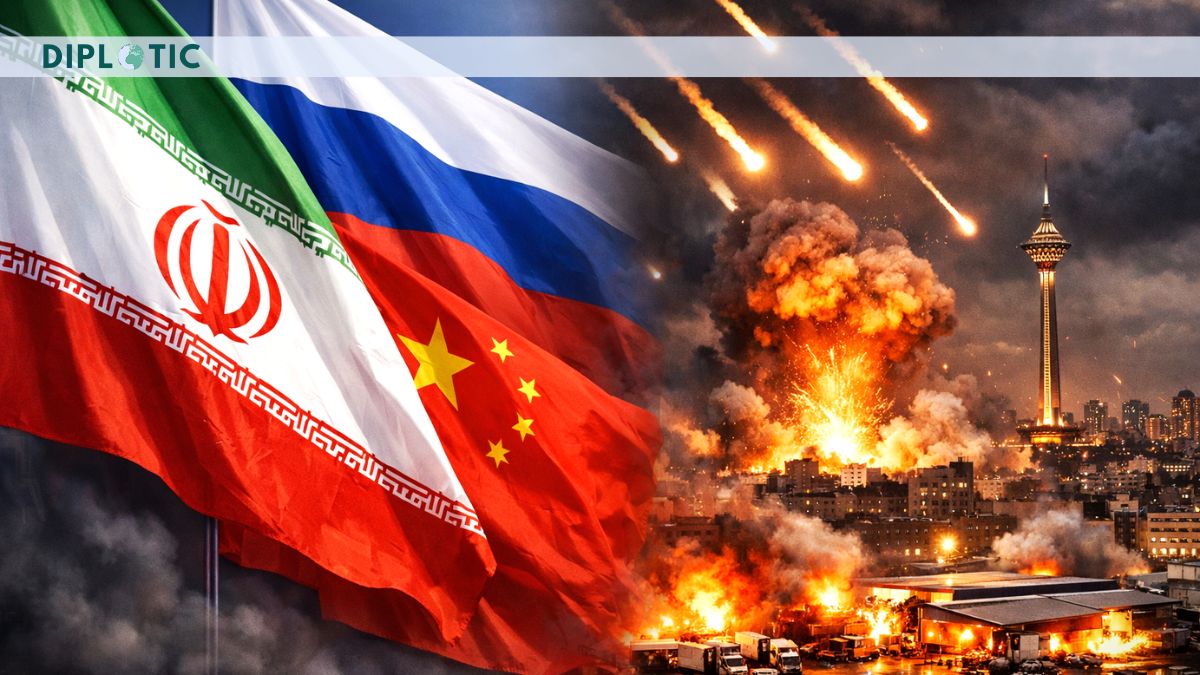
Rising tensions between the West and Iran are prompting renewed concern among geopolitical analysts, many of whom warn that a potential military conflict could reshape global power dynamics in ways that ultimately benefit rivals such as Russia and China.
As policymakers in Washington and allied capitals consider their options, experts emphasize that any confrontation with Tehran would extend far beyond a regional dispute. Instead, it could evolve into a broader strategic challenge with long-term global implications.
Iran Seen as a Resilient and Enduring Power
Unlike previous military engagements in the Middle East, Iran is widely viewed as a state with deep institutional strength and social cohesion. Analysts note that it possesses a strong national identity, a politically engaged population, and a government structure capable of withstanding prolonged external pressure.
In this context, military action could produce unintended consequences. Rather than weakening the Iranian state, external pressure may reinforce internal unity and strengthen more hardline political elements. This dynamic raises concerns that a conflict could become prolonged and increasingly difficult to contain.
Evolving Nature of Warfare Raises Strategic Questions
Defense experts highlight that modern warfare has shifted significantly in recent years. Iran has adapted to these changes by investing in asymmetric capabilities that are designed to offset conventional military disadvantages.
Through the use of advanced missile systems, drone technology, and cyber operations, Tehran has developed a strategy focused on increasing the cost and complexity of any external intervention. Analysts suggest that this approach does not aim for rapid battlefield victories but instead seeks to gradually erode the effectiveness of a more powerful adversary.
Such developments challenge long-standing assumptions about military superiority and raise questions about the effectiveness of traditional deterrence strategies.
Potential Strategic Gains for Russia
Observers also point to the potential advantages for Russia in the event of a conflict involving Iran. A military escalation in the Middle East could divert Western attention and resources away from other critical regions, including Eastern Europe.
In addition, instability in energy markets could play to Russia’s advantage. As a major energy exporter, it may benefit from rising oil prices and increased global demand. Analysts suggest that this scenario could strengthen Moscow’s economic position without requiring direct involvement in the conflict.
China Likely to Expand Its Influence
China, meanwhile, is expected to approach the situation with caution, focusing on long-term strategic opportunities rather than immediate involvement. Experts note that Beijing has consistently prioritized economic engagement and stability in its foreign policy approach.
A prolonged crisis could allow China to deepen its economic ties in the region while securing reliable access to energy resources. At the same time, it may further position itself as a stable and predictable partner in contrast to the uncertainty associated with military conflict.
This approach could enhance China’s influence, particularly among developing nations seeking economic cooperation over geopolitical confrontation.
Risk of Wider Regional Escalation
One of the primary concerns surrounding a potential conflict is the risk of escalation beyond Iran’s borders. The Middle East remains a highly interconnected region, where instability in one country can quickly spread to others.
Analysts warn that a military confrontation could affect neighboring states, disrupt key shipping routes, and increase tensions across multiple fronts. Such developments would complicate efforts to contain the conflict and could lead to broader regional instability.
Global Economic Impact Could Be Significant
The economic consequences of a conflict with Iran could extend far beyond the region. Given the Middle East’s central role in global energy production, any disruption could have immediate effects on international markets.
Economists caution that rising oil prices and supply chain disruptions could contribute to inflation and economic uncertainty worldwide. These effects would likely be felt across both developed and emerging economies, amplifying existing financial pressures.
Debate Continues Over Long-Term Outcomes
While some policymakers argue that military action could achieve specific tactical objectives, many analysts stress that the long-term strategic outcomes remain uncertain. The central question, they suggest, is not only what a conflict might achieve in the short term, but how it could reshape global power relationships over time.
There is growing recognition that such a conflict could accelerate the shift toward a more multipolar world, in which influence is distributed more widely among competing powers.
Conclusion
As tensions continue to rise, the possibility of conflict remains a subject of intense debate. While the immediate focus is on regional security, the broader implications highlight the complexity of modern geopolitics.
Experts increasingly agree that the consequences of a war with Iran would extend well beyond the battlefield. The outcome could influence global alliances, economic stability, and the overall balance of power for years to come.
In the words of one analyst, the true significance of such a conflict may ultimately be measured not by its immediate results, but by its lasting impact on the international order.




