

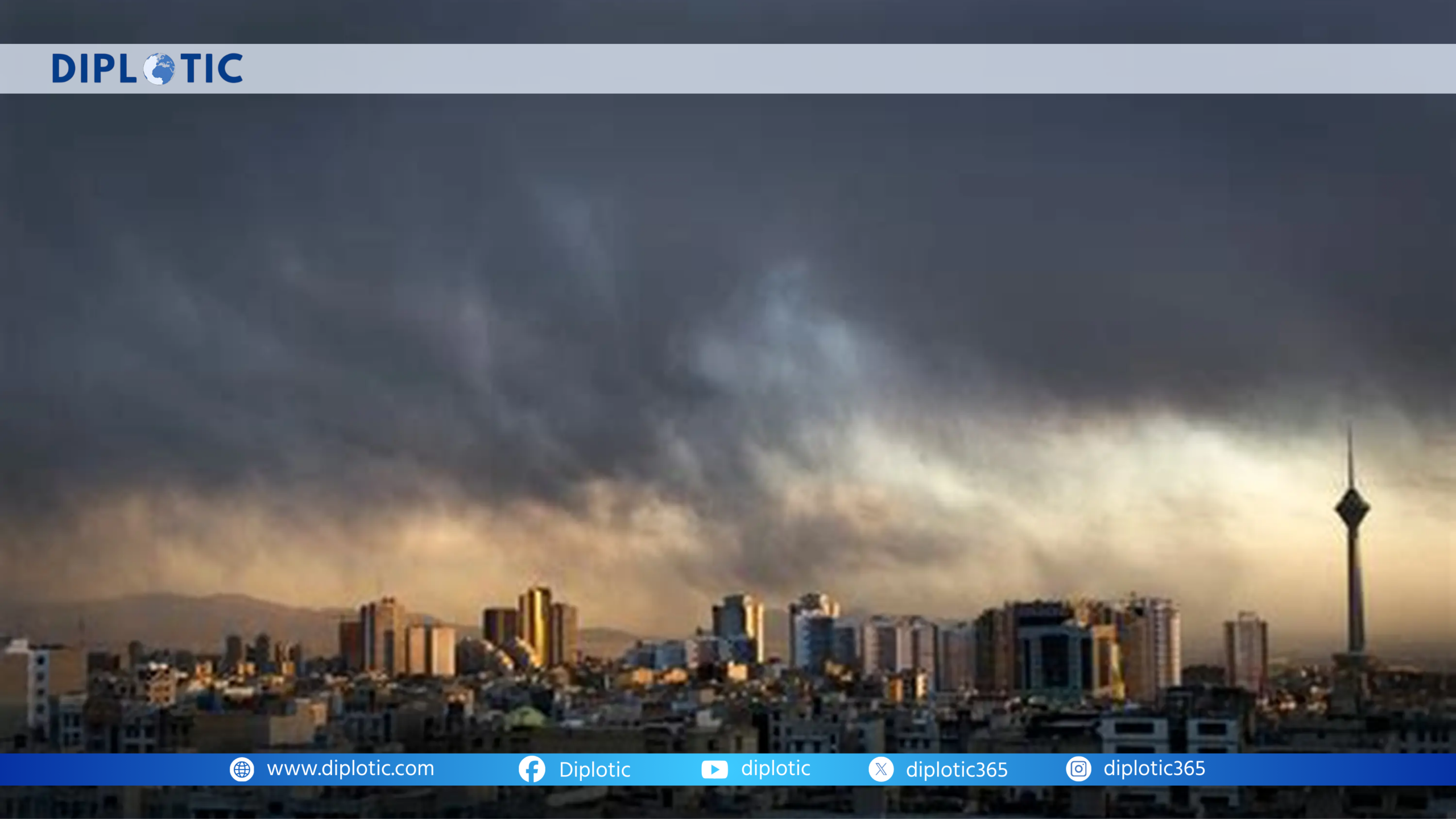
When war reaches cities, the damage rarely remains limited to military targets. It spreads into air, water, and daily life. The recent strikes on fuel depots in Tehran have raised serious questions about how modern warfare affects civilian environments. Thick smoke rising from burning oil storage facilities has covered large parts of the city, and residents have reported black rainfall and breathing problems. These events highlight a less visible dimension of the war involving Iran, Israel, and the United States.
Images from the Iranian capital show dark smoke hanging above a city of nearly ten million people. Residents in several districts described difficulty breathing and oil residue covering buildings and vehicles. According to reports from the Iranian Red Crescent Society, rainfall following the strikes could contain harmful chemicals capable of irritating skin and lungs. The attacks targeted large fuel storage sites believed to supply energy to military facilities.
Such incidents raise a larger question. When fuel depots and industrial infrastructure burn, what actually happens to the surrounding environment and public health? Modern wars often involve strategic attacks on energy facilities. These targets are chosen because they affect military logistics. But they are also large sources of pollution when destroyed.
Understanding what happened in Tehran requires looking beyond the immediate images of smoke and fire. It requires examining the science of oil fires, the urban risks of industrial strikes, and the long-term environmental effects that cities may face long after the explosions stop.
How Do Fuel Depot Strikes Turn Into Environmental Disasters?
Fuel storage sites are among the most dangerous industrial facilities in wartime because they contain massive quantities of combustible hydrocarbons. When bombs or missiles hit such facilities, the damage does not end with the explosion. The burning fuel releases a complex mixture of chemicals into the air.
The strikes in Tehran reportedly targeted several storage complexes connected to energy supply networks used by the Islamic Revolutionary Guard Corps. These complexes store refined petroleum products such as gasoline, diesel, and aviation fuel. Each of these substances produces dense smoke when burned.
Oil fires behave differently from many other industrial fires. Petroleum products burn at high temperatures and release soot particles, sulfur compounds, nitrogen oxides, and other pollutants. These particles can travel long distances in the atmosphere before falling back to the ground.
The phenomenon described by residents as “black rain” can occur when soot particles mix with moisture in the air and fall during rainfall. Similar events were documented during the 1991 Gulf War, when burning oil wells in Kuwait produced dark clouds that spread across parts of the Middle East.
In urban areas, these pollutants interact with existing air pollution. Tehran already struggles with seasonal smog caused by traffic and industrial emissions. When additional smoke from oil fires enters this environment, the result can be a sharp decline in air quality.
Health risks from such pollution are often immediate. Fine particles can irritate the lungs and eyes, while chemical compounds in the smoke may trigger headaches, coughing, or skin irritation. Vulnerable groups such as children, elderly people, and those with respiratory diseases face greater risk.
However, environmental scientists note that the duration of exposure matters greatly. If fires are contained quickly, pollution levels may return to normal within days. If fires burn for weeks, contamination can spread more widely and affect soil and water sources.
The Tehran incident therefore illustrates a broader reality of modern war. When energy infrastructure burns, the environment becomes an indirect battlefield.
Are Civilians the Unseen Victims of Infrastructure Warfare?
Modern conflicts increasingly involve strikes on infrastructure. Military planners often target fuel depots, refineries, airports, and communication centers because they support logistical networks. However, such strikes inevitably affect civilian life.
The Tehran attacks have been described as one of the largest strikes on industrial infrastructure during the current war. According to reports from Iranian emergency authorities, thousands of civilian structures across the country have been damaged during the conflict. Homes, schools, and medical facilities are among those affected.
Urban infrastructure is interconnected. When one part of the system fails, the impact spreads across daily life. Fuel depots supply not only military operations but also transportation, electricity generation, and heating. Damage to these facilities can therefore affect ordinary residents.
Environmental contamination adds another layer to this problem. Burning petroleum products release chemicals that can settle on buildings, roads, and vehicles. Residents in several districts reported oil residue coating surfaces after rainfall. Such contamination can require extensive cleanup efforts and may persist long after the fires are extinguished.
This pattern is not unique to Iran. Similar environmental consequences were seen in past conflicts where energy infrastructure was targeted. During the Gulf War, large oil fires burned for months, creating one of the largest air pollution events in modern history. Smoke clouds traveled hundreds of kilometers and darkened skies over several countries.
Urban warfare also increases psychological pressure on civilians. When smoke clouds cover the sky and the air becomes difficult to breathe, residents may fear unknown chemical exposure. Even when pollution levels are temporary, the uncertainty itself can cause anxiety.
International humanitarian law attempts to limit such consequences. Military forces are expected to avoid attacks that cause excessive harm to civilians or the environment. However, determining what qualifies as “excessive” remains a complex legal and political debate.
The Tehran case highlights the challenge of balancing military strategy with civilian protection. Fuel depots may be legitimate military targets, yet their destruction can create wide environmental risks in densely populated cities.
Could Attacks on Energy and Water Infrastructure Expand the Crisis?
The strikes on fuel depots occurred alongside accusations about attacks on other types of infrastructure. Iranian officials claimed that a desalination facility on Qeshm Island was targeted during the same period. Desalination plants convert seawater into drinking water and are essential for many communities in the region.
Both Israeli and U.S. authorities denied responsibility for that attack. Yet the allegation highlights a growing concern in modern warfare: infrastructure systems that support basic life are becoming part of the strategic landscape.
Across the Persian Gulf region, desalination plants supply drinking water to millions of people. Countries such as Bahrain, Kuwait, and the United Arab Emirates rely heavily on these facilities because natural freshwater resources are limited.
Recent reports from Gulf governments indicate that several countries experienced drone or missile attacks affecting fuel tanks, airports, and other infrastructure. These incidents suggest that the conflict is spreading beyond a single battlefield.
Infrastructure warfare carries particular risks because it affects systems that support everyday life. Energy networks power hospitals and communication systems. Water facilities provide essential public health services. When these systems fail, civilian populations face immediate hardship.
From a strategic perspective, targeting infrastructure can weaken an opponent’s ability to sustain military operations. But the broader impact often extends far beyond military objectives. Interruptions in water or energy supply can create humanitarian challenges that persist long after military operations end.
Environmental damage also becomes harder to control when multiple infrastructure systems are affected simultaneously. Oil fires pollute air and soil, while damaged water facilities can limit access to clean drinking water. Together, these problems can strain emergency response systems.
The Tehran strikes therefore represent more than a single event. They illustrate how modern conflicts increasingly involve interconnected networks of energy, water, and industrial infrastructure.
What Long-Term Environmental Risks Could Follow the Smoke Over Tehran?
The immediate images of dark clouds above Tehran raise a critical question: what happens after the fires stop? Environmental damage from industrial strikes can continue long after the initial explosions.
Oil fires release large amounts of soot and chemical particles. Some of these particles settle on the ground and mix with soil or water. In urban environments, this contamination may accumulate on rooftops, roads, and public spaces before being washed into drainage systems.
Scientists studying past oil fire events have found that most airborne pollution fades relatively quickly once fires are extinguished. Wind and rainfall gradually clear the atmosphere. However, certain pollutants can remain in the environment for longer periods.
One concern is the deposition of heavy hydrocarbons and sulfur compounds on soil surfaces. These substances can affect vegetation and local ecosystems if concentrations remain high. Urban cleanup efforts often focus on washing surfaces and removing contaminated debris.
Another issue is long-term monitoring. After large industrial fires, environmental agencies usually conduct air and water testing to determine whether pollution levels have returned to safe limits. Such monitoring helps authorities decide whether further action is necessary.
The scale of environmental impact also depends on the duration of the fires. Short fires may produce temporary pollution spikes. Fires that burn for days or weeks can spread contaminants across wider regions.
Tehran’s experience may therefore become part of a broader discussion about environmental risks in urban warfare. Modern cities contain large industrial facilities, chemical storage sites, and fuel depots. When these sites are attacked, environmental consequences can spread far beyond the immediate target.
The history of industrial warfare shows that environmental damage is often the least visible consequence of conflict, yet it can shape recovery for years. Cities must clean contaminated spaces, rebuild infrastructure, and restore public confidence in safety.
The smoke over Tehran is therefore not only a symbol of the current conflict. It is also a reminder that in modern war, the battlefield often extends into the air people breathe and the environment they depend on for daily life.




