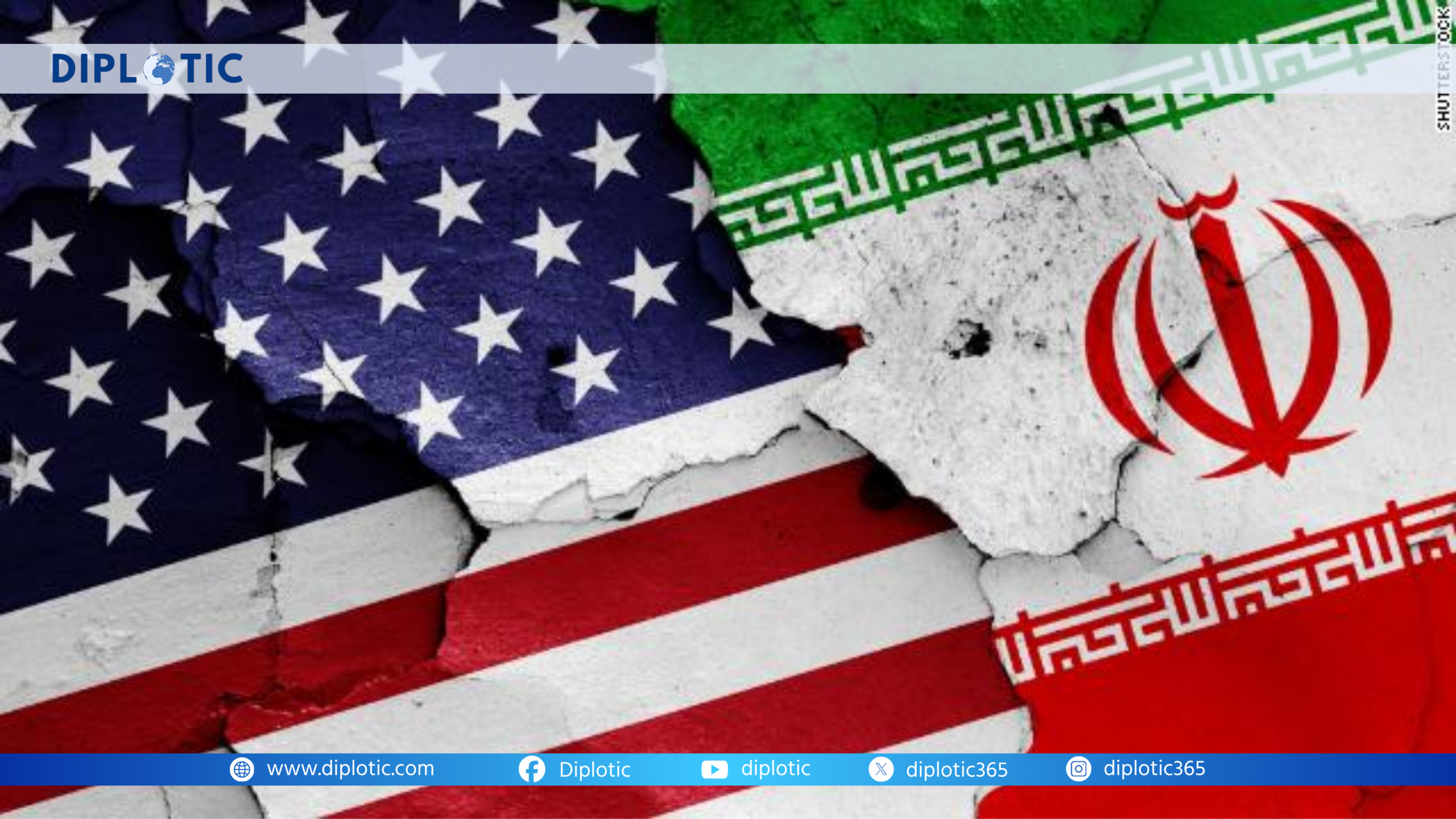
As demand for critical minerals grows, the US is outpacing China in African investments. Find out what’s fueling the race for control over the continent’s resources.
A shift in investment power: What changed in 2023
In recent years, a quiet but important change has taken place in global investment flows. For more than a decade, Africa has been seen largely as a domain where China was the dominant foreign investor. But in 2023, the United States reportedly invested about US $7.8 billion across Africa, compared with China’s roughly US $4 billion marking the first time since 2012 that the US has taken the lead in foreign direct investment (FDI) on the continent.
Why does this matter? Because it signals deeper shifts in how global powers view Africa: not just as a market or passive partner, but as a strategic terrain for resources, infrastructure and influence. Investment is not only about money — it’s about supply chains, critical minerals, access, and long-term advantage.
What changed? The US focus appears to have shifted in two major ways: first, toward resources that matter for the future (for example critical minerals used in electric vehicles, batteries, data centres) and second, toward infrastructure and development models that are seen as alternatives to those offered by China. Meanwhile, China’s investment flows to Africa have held steady but have not surged; China’s direct FDI in Africa in 2024 was reported at about US $3.37 billion, slightly down from prior years.
So, the first section sets the scene: for decades China was ahead, but 2023 appears to mark a turn. In the next section we’ll look at how China built its dominance, and the foundations of that position.
How China built its foothold in Africa
China’s involvement in Africa did not happen overnight. Its engagement stretches back into the mid-20th century, but picked up significantly in the 2000s. Early on, China’s aims included diplomacy, infrastructure, and resource access.
By the late 2000s and early 2010s, China had become Africa’s largest trading partner (surpassing the US in around 2009) and had invested heavily in infrastructure—roads, ports, mining, and energy projects.
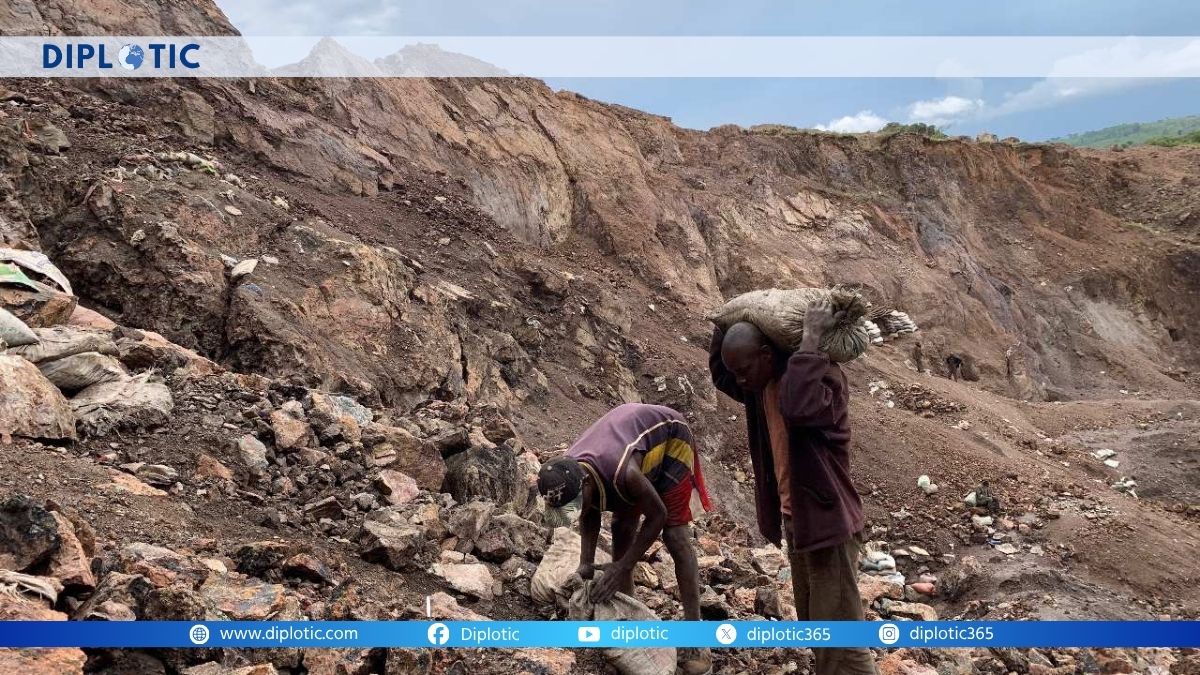
In particular, China used its state-backed mechanisms (for example, the China–Africa Development Fund) to invest in mining, manufacturing and infrastructure. The logic was clear: secure raw material flows, build processing capacity, and by doing so support its own industrial rise. For example, in the Democratic Republic of the Congo, Chinese mining companies have stakes in major copper and cobalt mines key for batteries and electronics.
At the same time, China’s model—large infrastructure projects, bundled financing, often state-led proved appealing to many African governments seeking rapid development. Though criticisms have arisen (debt, local impacts, transparency), the broader effect was that China became the go-to partner for many African states.
However, as China’s economy slowed and global competition intensified, China’s relative growth in FDI in Africa flattened. According to recent data, China’s FDI flows to Africa were US $3.96 billion in 2023, and US $3.37 billion in 2024.
Thus China built the foundation of its presence in Africa; now the US appears to be adapting its strategy to the new global context.
Why the US is stepping up in Africa now
So what has changed with the US? Why is the US overtaking China now? Three inter-locking factors help explain this shift.
First: strategic minerals and supply-chain concerns. Africa is rich in lithium, cobalt, rare earths, tungsten and other materials vital for electric vehicles, data centres, AI, weapon systems. The US has grown concerned about its dependence on China in those supply chains. By investing in Africa, the US can diversify and secure access. The opening paragraph of our discussion touches this: “African countries … in the eye of the storm”. This context means that investment is not just economic, but strategic.
Second: alternative development and investment models. The US (via agencies such as the United States International Development Finance Corporation) has been promoting investments that emphasise sustainability, transparency, local value-addition, and partnering with African governments. These differ from the large infrastructure-heavy Chinese model, and may appeal more to countries concerned about debt, sovereignty, or governance. Although detailed figures are less public, this shift has gained traction.
Third: timing and geostrategy. The US is acting in a context where China’s aggressive global posture, trade restrictions, export controls (especially on minerals and high-technology components) have made resource access and diversification more urgent for Washington. By increasing investment in Africa, the US seeks to influence the development trajectory of the continent, align more closely with African policy priorities, and counterbalance China’s long-standing presence.
It is worth noting that while the US is ahead in FDI now (in terms of volumes for 2023) this does not mean China has disappeared — China remains a major economic actor, especially in trade. Moreover, the US’s lead might reflect a one-year turn or specific deals rather than a dramatic, irreversible shift. But the fact that it has materialised is notable.
What this means for Africa and the global order
What are the consequences of this shift for Africa, for China and for the world?
For African countries, more investment means more choices. Governments now may have greater leverage in negotiations — as the US and China compete for access to minerals, infrastructure and markets. That can translate into potentially better terms: higher local content, jobs, more value-added processing. But it also raises questions: will increased investment always mean positive development outcomes? Will the race for minerals create new dependencies or environmental/social risks?
For China, this signals a challenge. Its previous advantage in infrastructure and resource access in Africa is being contested. While China still has strong relationships, it may face more competition, need to adjust its model (for example with greater transparency or more local partnerships) and contend with African countries’ shifting preferences.
For the global order, it suggests a new phase of “investment diplomacy”. Africa is becoming a frontier not only for new markets but for global competition over supply chains, technology, and influence. The fact that investment flows are now a battleground suggests that future economic diplomacy may matter as much as military or trade policy.
Finally, the volume of investment is a reminder of how Africa’s role in the global system is evolving. As African populations grow, consumption rises, and industrialisation deepens, Africa will increasingly matter in geopolitics, economics and technology. The US overtaking China as the largest FDI source is a symptom of that larger shift.
Conclusion: What lies ahead?
The story of how the US overtook China as Africa’s biggest foreign direct investor — based on 2023 data — is more than just a statistical curiosity. It reflects deeper shifts in global strategy, resource politics and Africa’s place in the world. China built its foothold through infrastructure and resource-led partnerships; the US is now stepping in with its own set of priorities: critical minerals, alternative finance models and strategic alignment. For Africa, this means new opportunities, but also new risks. For the global order, it means we may be entering a phase where investment power becomes a key battleground in international relations. As we move forward, the big question is: will this change in rank translate into lasting transformation — for Africa, for China, for the United States — or is it merely a moment in a longer, shifting terrain of global economic competition?