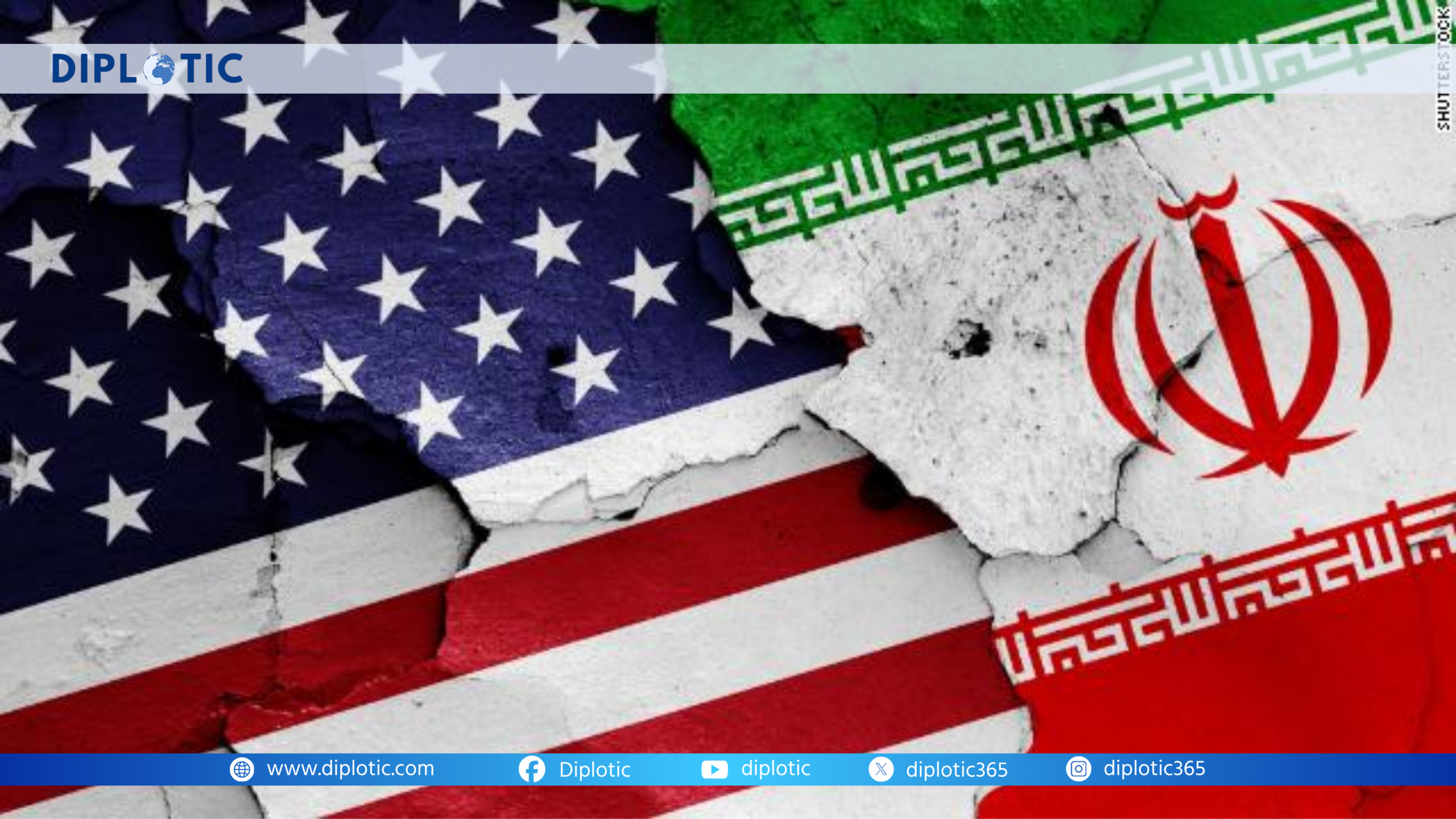
After a year of severe global aid cuts, a new $2 billion pledge from the United States to the United Nations humanitarian system should be welcome news. Instead, it has sparked deep concern and debate among experts and observers. The announcement came laden with stringent conditions that reveal a fundamental shift in how the world’s largest donor intends to wield its financial power. The U.S. State Department declared the UN must “adapt, shrink or die,” demanding specific reforms and directing the money exclusively to a pre-selected list of 17 priority countries. Notably absent from that list are nations like Afghanistan and Yemen, which are suffering some of the planet’s most severe humanitarian crises. This move is more than a simple budget allocation; it is a stark assertion of political control. It raises a critical question: is this the beginning of a shrunken, less flexible global aid architecture, one that bends to the geopolitical priorities of a single powerful state at the expense of universal humanitarian principles?
What Are the Specific Conditions Attached to the US Aid Pledge?
The $2 billion pledge is not a blank check. It arrives with a set of explicit demands that fundamentally alter how the money can be used and who can benefit. First, the U.S. has stipulated that the funds must be channeled through a single pooled fund under the UN’s Office for the Coordination of Humanitarian Affairs (Ocha), rather than being distributed directly to individual UN agencies like the World Food Programme or UNICEF. This centralizes control and gives the donor a single point of pressure. Second, and most controversially, the aid is restricted to only 17 countries pre-approved by the U.S. government. This list includes major crisis zones like Sudan, Haiti, and the Democratic Republic of the Congo, but glaringly excludes others. Afghanistan, where millions face acute hunger under Taliban rule, and Yemen, still reeling from war and famine, are not included.
Furthermore, the funding is presented as a reward for compliance with a demand to eliminate perceived waste and duplication within the UN system. U.S. Secretary of State Marco Rubio’s call for the UN to “cut bloat, remove duplication” frames the pledge not as pure charity, but as a transactional incentive for reform. This conditional nature leads analysts to caution that the $2 billion is promised, not yet delivered, and could be withheld if the UN fails to meet Washington’s expectations. The combined effect of these conditions is to tightly couple humanitarian assistance with the donor’s immediate political and strategic interests, moving away from needs-based allocation.
Why Are Afghanistan and Yemen Excluded, and What Does This Reveal?
The exclusion of Afghanistan and Yemen from the list of 17 priority countries is the clearest signal that political considerations, not just humanitarian need, are driving U.S. aid policy. Both nations are at the top of any objective global assessment of human suffering. Afghanistan’s economy has collapsed, and its population survives on the edge of starvation. Yemen continues to struggle with the aftermath of a devastating war, widespread disease, and food insecurity. Their omission suggests that U.S. foreign policy disagreements with the governing authorities in these countries—the Taliban in Afghanistan and the Houthi movement in parts of Yemen—are overriding the imperative to help innocent civilians.
This selective approach represents a departure from the core humanitarian principle of impartiality, which holds that aid should be given based on need alone, without regard to politics, race, or religion. By picking and choosing which crises deserve support based on its own diplomatic stance, the U.S. is effectively instrumentalizing aid. It becomes a tool to reward friendly or strategically useful contexts and to punish or isolate adversarial regimes, even when their citizens are caught in the middle. Experts fear this sets a dangerous precedent, encouraging other donors to follow suit and fragmenting the global response based on political blocs rather than human need. It also places the UN in an impossible position: to accept the money is to endorse a politicized model of aid distribution that contradicts its founding principles.
How Does This Pledge Fit into the Broader Trend of US Aid Policy?
The $2 billion announcement cannot be viewed in isolation. It is part of a broader pattern of contraction and conditionality in U.S. foreign assistance under the current administration. Earlier in 2025, the administration moved to cut $5 billion in foreign aid already approved by Congress, labeling it “woke, weaponised and wasteful spending.” It has also proposed ending support for UN peacekeeping missions, to which it already owes significant arrears. Within this context, the $2 billion pledge, while a large figure, actually represents a reduction from previous U.S. contributions. For comparison, the U.S. provided $3.38 billion to the UN humanitarian system in 2025 under the previous administration.
Therefore, the pledge is less a generous increase and more a strategically deployed fraction of past spending, used as leverage to force systemic change. The demand to channel funds through Ocha’s pooled fund may be less about partnership and more about creating a single lever of control. By concentrating the money, the U.S. can more easily monitor its use and enforce its conditions. Analysts describe this as an attempt to “solidify a massively shrunk UN humanitarian system,” one that is leaner, more centralized, and more directly accountable to Washington’s priorities rather than to a collective of international donors or the assessed needs on the ground.
What Are the Long-Term Implications for Global Humanitarian Response?
The long-term consequences of this shift could reshape the international aid landscape for years to come. If the UN accepts these terms, it risks becoming an implementer of donor-driven priorities rather than a neutral coordinator of global response. Its legitimacy and perceived impartiality could be severely damaged, making it harder to operate in complex crises where trust from all warring parties is essential for access. Furthermore, by pre-selecting countries, the system loses its agility. As one analyst noted, if a new major crisis erupts in a region not on the U.S. priority list, the UN may find itself unable to respond effectively with American funds, creating deadly gaps in coverage.
There is also a significant risk of a domino effect. Other major donors may adopt similar conditional approaches, leading to a patchwork of aid where populations are helped or abandoned based on the geopolitical whims of powerful states. This could accelerate the erosion of the multilateral, rules-based system that has guided international cooperation since World War II. The UN’s public praise for the “generous” pledge, despite the conditions, has been criticized by some as evidence of an institution becoming “subservient” to its most powerful member, sacrificing its principled voice for financial survival. This dynamic reinforces the “adapt, shrink or die” ultimatum, suggesting the path chosen may indeed be one of shrinking autonomy and adapting to a world where humanitarian aid is just another instrument of great power competition.
Is This the Future of International Aid?
The U.S. aid pledge of $2 billion represents a pivotal moment. It moves humanitarian assistance firmly into the realm of hard-nosed political bargaining. The era of funding based primarily on universal need and shared human solidarity appears to be receding, replaced by a model where aid is a conditional tool for specific policy outcomes. The UN now faces an existential choice: accept the money and the attached strings, which may ensure its immediate operational survival but at the cost of its core principles and independence, or resist and face a devastating financial shortfall that would also hurt the world’s most vulnerable.
The “adapt, shrink or die” framing is brutally clear. Adapting likely means becoming a more streamlined contractor for donor priorities. Shrinking is an inevitable result of reduced and politicized funding. The alternative—a principled stand that risks the loss of crucial funds—could lead to operational paralysis. For the millions depending on international aid, the outcome of this standoff is not abstract. It will determine whether help arrives based on who they are and where they live, or based on the political calculations of distant capitals. The future of a neutral, needs-based global safety net now hangs in the balance, threatened not by a lack of resources, but by the deliberate decision to weaponize those resources for political ends.