Cambodia demands an immediate ceasefire with Thailand amid deadly border clashes that have killed over 30 and displaced nearly 200,000. Discover the latest on this explosive Southeast Asian conflict.
The Southeast Asian region faces a growing humanitarian and geopolitical crisis as Cambodia has urgently called for an “immediate and unconditional ceasefire” with Thailand, following days of violent clashes that have killed at least 32 people and displaced nearly 200,000 civilians.
In a dire appeal to the international community, Cambodia’s ambassador to the United Nations, Chhea Keo, declared Phnom Penh’s intention to resolve the conflict peacefully, emphasizing the need to avoid further bloodshed. “Cambodia asks for a truce unconditionally and seeks a peaceful solution to the dispute,” he stated.
Death Toll Rises Amid Intense Fighting
The violence, which erupted on Thursday, has already claimed 32 lives 19 in Thailand and 13 in Cambodia, with victims including both civilians and soldiers. Thai officials confirmed that among the dead are 13 civilians and six soldiers. Meanwhile, Cambodia reported the deaths of eight civilians and five military personnel.
The conflict has triggered a mass evacuation, with nearly 140,000 people fleeing their homes in Thailand and another 35,000 displaced in Cambodia, raising alarms about a growing refugee crisis.
Third Day of Fighting: Clashes Intensify
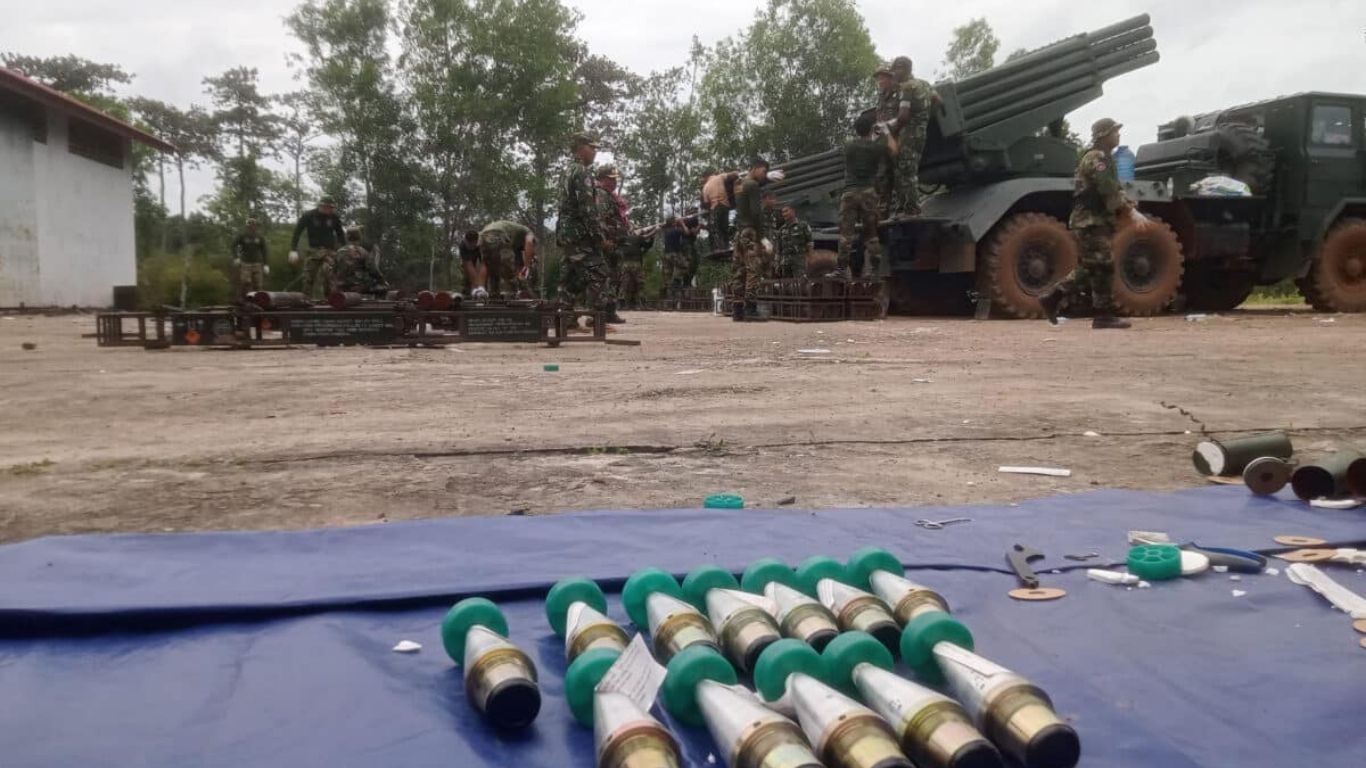
On Saturday, fighting entered its third day, with Thailand’s military accusing Cambodian forces of opening a new front near the southern coastline, only to be reportedly pushed back by the Thai navy. Simultaneously, combat persisted in Thailand’s northeastern provinces of Surin, Ubon Ratchathani, and Srisaket, prompting the declaration of martial law in eight border districts.
Thai acting Prime Minister Phumtham Wechayachai warned of a rapid escalation, stating that the fighting now involves heavy artillery and has spread to at least 12 locations. “The situation is dangerously close to war,” he cautioned.
Cross-Allegations Fuel Tensions
Accusations from both sides have further complicated efforts for peace. Thailand claims that Cambodia initiated the attacks using surveillance drones, breaching previously agreed-upon security protocols.
In contrast, Cambodia alleges that Thai troops violated a longstanding border agreement by advancing on a sacred Khmer-Hindu temple, reigniting a deeply rooted territorial dispute that dates back over a century to the post-colonial border demarcations by the French.
More alarmingly, Cambodia has accused Thailand of deploying cluster munitions, a weapon banned by many countries due to its devastating impact on civilian populations. Thailand has yet to respond to these serious allegations.
Diplomatic Deadlock: Global Calls for Peace
Despite the mounting international pressure, Thailand’s foreign minister, Maris Sangiampongsa, dismissed the need for third-party mediation. Speaking to Reuters, he insisted, “There is no need for external intervention what is needed is genuine sincerity from Cambodia.”
This stance comes as the United States, the United Nations, and regional powers including Malaysia and Indonesia called for an immediate cessation of hostilities and the protection of civilians. Malaysian Prime Minister Anwar Ibrahim, who currently chairs the Association of Southeast Asian Nations (ASEAN), has offered to mediate peace talks, though Thailand has yet to accept.
A History of Tension and Unresolved Disputes
The ongoing border dispute is rooted in complex historical claims and unresolved territorial boundaries. Following French colonial rule in Cambodia, ambiguous border lines were drawn, leaving areas of cultural and strategic importance under dispute. The contested land includes ancient temples and resource-rich regions.
Over the years, sporadic skirmishes have flared, but the latest escalation sparked by the killing of a Cambodian soldier in May has pushed bilateral relations to their lowest point in over a decade.
Humanitarian Crisis Looms
The consequences of the fighting extend far beyond the battlefield. Displaced families are currently being housed in makeshift shelters, while access to food, medical aid, and clean water becomes increasingly strained. Human rights organizations have urged both governments to uphold international humanitarian law and ensure the protection of civilians.
What Comes Next?
The world watches with growing concern as the crisis between Cambodia and Thailand intensifies. Without an immediate and sustained ceasefire, the threat of a full-blown war looms ominously over the region. The international community must now decide how far it is willing to go to mediate peace and prevent further loss of life. Until a peaceful resolution is achieved, the region teeters on the brink, caught between history, politics, and the human cost of unresolved conflict.