

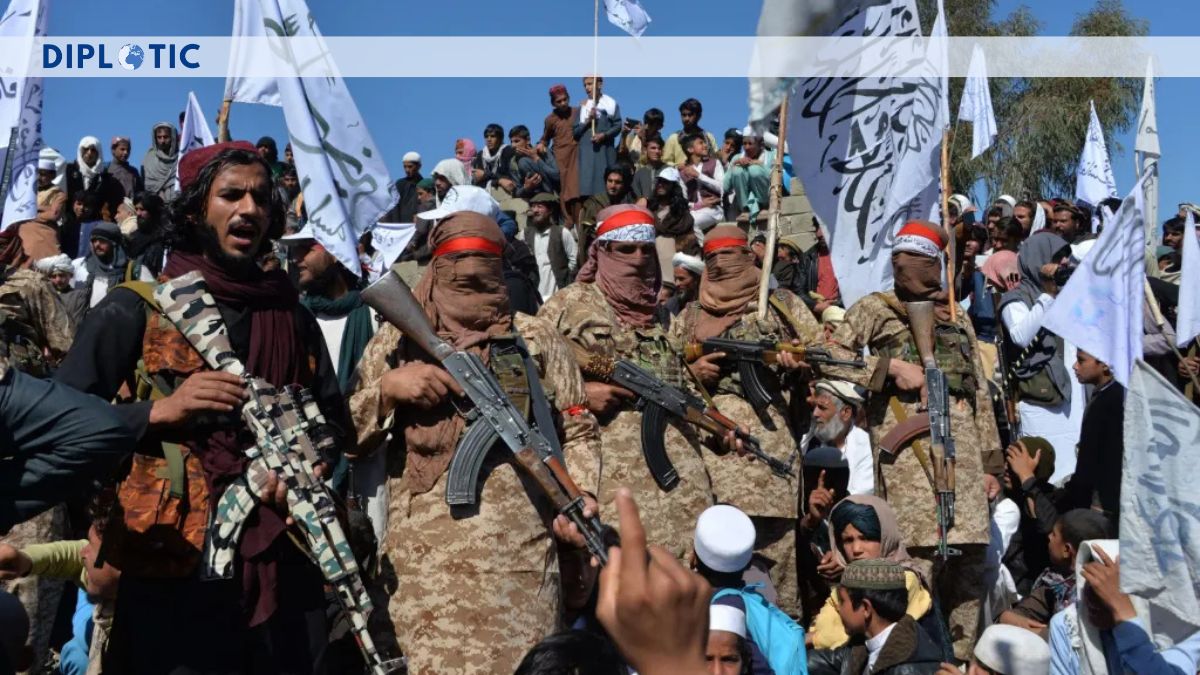
A UN Security Council report reveals that terrorism in Afghanistan is expanding under Taliban rule, exposing safe havens for TTP, Al Qaeda, and ISKP, threatening regional and global security.
A UN Reality Check the Taliban Cannot Ignore
The latest United Nations Security Council Monitoring Team report delivers one of the most damning international assessments of Afghanistan’s security landscape since the Taliban returned to power. Far from supporting the Islamic Emirate of Afghanistan’s repeated assurances that terrorism has been eliminated, the report decisively contradicts them. It presents compelling evidence that Afghanistan remains a safe haven for terrorist organizations, directly undermining regional stability and posing a serious global security threat.
This UN evaluation is not speculative rhetoric. It is a fact-based, intelligence-driven warning that exposes a widening gap between Taliban promises and realities on the ground. The message is unmistakable: terrorism in Afghanistan has not ended it has evolved, entrenched itself, and expanded.
Afghanistan Under Taliban Rule: A Terrorism Safe Haven Reborn
According to the UN report, multiple internationally designated terrorist organizations continue to operate freely inside Afghanistan. Groups such as Tehreek-e-Taliban Pakistan (TTP), Islamic State Khorasan Province (ISKP), Al Qaeda, and the East Turkestan Islamic Movement (ETIM) maintain operational capabilities, leadership structures, and freedom of movement.
Rather than being dismantled, these networks appear to have adapted to a permissive environment marked by ideological alignment, selective enforcement, or outright tolerance. This has transformed Afghanistan into a hub for cross-border militancy, reversing decades of counter-terrorism gains and reigniting fears of Afghanistan once again becoming the epicenter of international terrorism.
Broken Commitments and the Collapse of Credibility
The Taliban’s international legitimacy hinges on commitments made under various diplomatic understandings, including pledges that Afghan soil would not be used for terrorist activities. The UN Monitoring Team’s findings categorically refute these claims.
Afghan territory is reportedly being used to plan, coordinate, finance, and launch terrorist attacks beyond its borders. These are not isolated incidents carried out by rogue actors. Instead, they reflect a deeply embedded extremist ecosystem, sustained by old alliances and shared ideological goals.
This raises an unavoidable question: Is the Taliban unwilling to act, or incapable of dismantling these networks? Either answer carries profound implications for regional and global security.
TTP: The Most Immediate and Lethal Regional Threat
Among the many dangers highlighted, the Tehreek-e-Taliban Pakistan (TTP) emerges as the most urgent threat particularly to Pakistan. The UN report attributes the group’s operational resilience directly to its safe havens inside Afghanistan.
Despite internal debates within Taliban ranks over whether the TTP has become a liability, evidence suggests that certain Afghan Taliban factions continue to shelter or ignore the group. This has allowed TTP to regroup, recruit, and intensify its insurgency across the Pakistan-Afghanistan border.
The consequences are severe. The report documents over 600 TTP attacks in Pakistan during 2025 alone, many planned and executed from Afghan territory. This level of violence confirms Pakistan’s longstanding concerns about cross-border terrorism emanating from Taliban-controlled areas.
Al Qaeda’s Silent Comeback Through Strategic Alliances
Equally alarming is the UN’s assessment of the evolving relationship between Al Qaeda and TTP. The Monitoring Team notes that Al Qaeda has effectively “blended itself” into TTP structures, benefiting from Afghanistan’s permissive environment.
This alliance strengthens both groups. Al Qaeda gains protection, relevance, and regional reach, while TTP benefits from global networks, operational expertise, and ideological reinforcement. The persistence of this relationship signals that the threat from Afghanistan is not merely regional it is international.
The re-emergence of Al Qaeda influence under Taliban rule is particularly concerning given the group’s historical role in global terror attacks.
Economic Fallout: Terrorism’s Hidden Cost to Afghanistan
Beyond security, the UN report highlights the devastating economic impact of ongoing militancy. Border closures, particularly with Pakistan, are costing Afghanistan nearly one million dollars per day, a staggering loss for an economy already crippled by sanctions, unemployment, and humanitarian crises.
These disruptions choke trade, deepen poverty, and undermine any prospect of economic recovery. Terrorism, therefore, is not only destabilizing Afghanistan politically—it is destroying the country’s economic future from within.
Pakistan’s Counter-Terrorism Role Recognized
In a notable contrast, the UN report acknowledges Pakistan’s sustained counter-terrorism efforts, particularly against ISKP. The arrest of ISKP spokesman and propagandist Sultan Aziz Azzam in May 2025 is cited as a major success in dismantling extremist propaganda and recruitment networks.
The report further notes that coordinated national and international actions have significantly reduced ISKP’s leadership capacity, financing channels, and media outreach. These efforts demonstrate Pakistan’s continued contribution to global counter-terrorism, even as it remains a primary victim of cross-border violence.
International Implications: A Threat Beyond South Asia
The UN’s findings carry a clear warning for the international community. Allowing Afghanistan to function as an unchecked terrorist sanctuary risks repeating history with consequences far beyond the region.
Unchecked militancy fuels refugee flows, regional instability, extremist recruitment, and transnational terror plots. Without decisive action, the security vacuum in Afghanistan will continue to export violence, threatening global peace and security.
Stability Claims Ring Hollow Without Action
The UN Security Council’s report delivers a stark verdict: Afghanistan under Taliban rule has failed the terrorism test. Despite repeated assurances, the country continues to host and enable a dangerous network of extremist organizations.
Pakistan’s struggle against TTP safe havens and its successes against ISKP highlight a sharp contrast in counter-terrorism commitment. The lesson is clear without concrete, verifiable action against terrorist networks inside Afghanistan, claims of stability will remain fiction.
The cost of inaction will not be confined to Afghanistan’s borders. The world has seen this story before and it cannot afford to ignore the warning signs again.




