

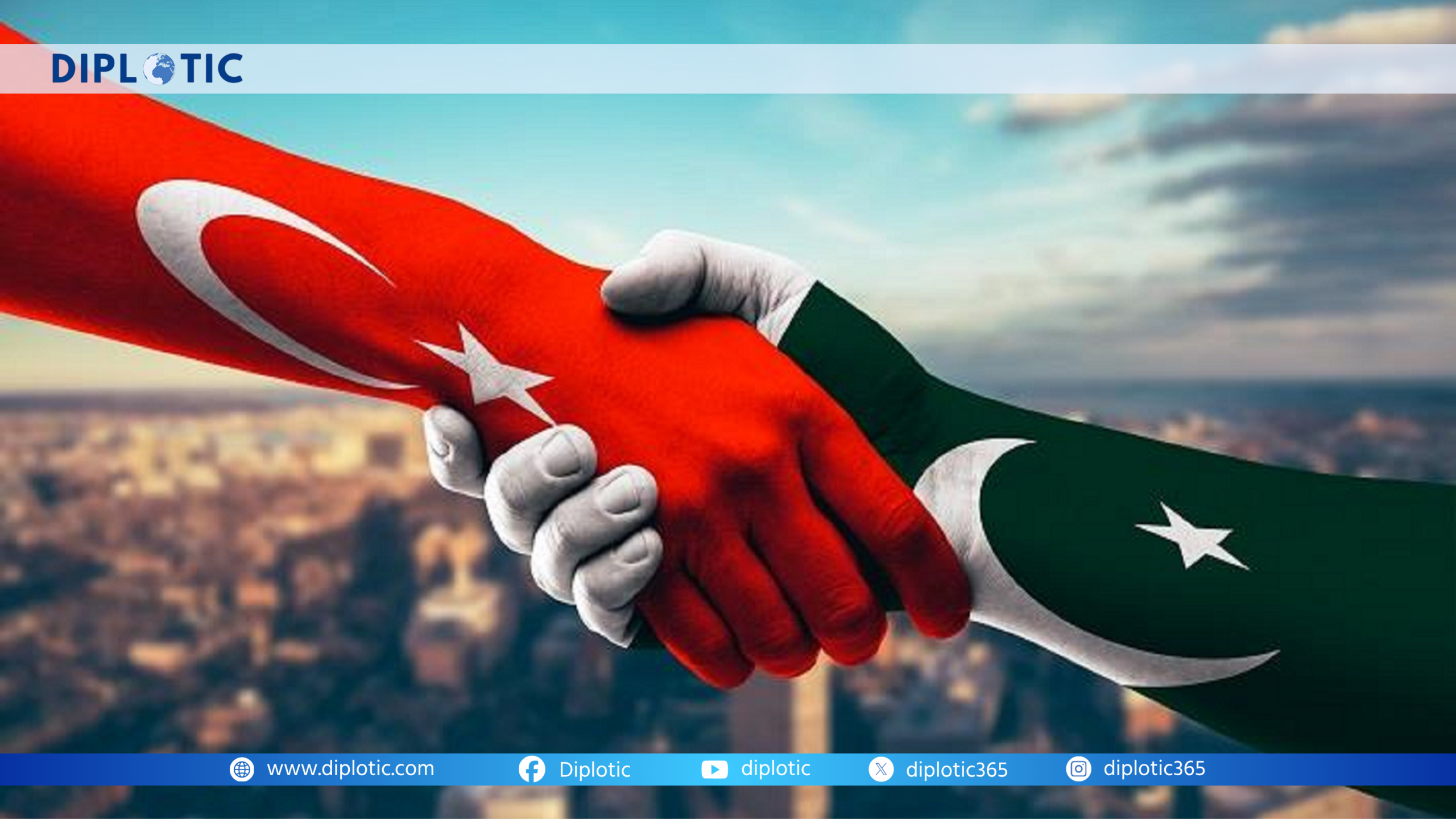
The ongoing war with Iran has changed the balance of power in the Middle East. Strikes have damaged much of Iran’s military capacity, and the country now faces economic strain. As talks continue to end the fighting, some Israeli analysts believe Iran may no longer serve as Israel’s primary adversary. In an opinion piece published in the Israeli daily Maariv, analyst Boaz Golani argues that the region’s “shifting sands” will require a new major rival to take Iran’s place. He suggests the competition is narrowing to two large Sunni-majority countries with strong armies and authoritarian structures: Turkey and Pakistan. Both maintain good relations with the United States, Israel’s closest ally. This possibility raises important questions about future tensions and how Israel might manage new threats once the current conflict subsides.
Why does the analyst believe Iran’s role as Israel’s chief enemy is ending?
Under former Supreme Leader Ali Khamenei, Iran spent three decades building its position as a leading opponent of Israel. It supported proxy groups across the region and developed missile and drone capabilities that posed a direct challenge. Golani claims the recent war, combined with Iran’s economic difficulties, has effectively “wiped out” much of that military strength. With Tehran weakened, it will likely step back from its previous level of confrontation. The analyst writes that Iran will be forced to vacate the role of Israel’s great enemy, creating space for another power to fill it.
This view reflects the immediate impact of the conflict. US and Israeli strikes targeted key Iranian facilities, leadership, and production sites. While Iran has shown resilience through asymmetric responses and the closure of the Strait of Hormuz, its conventional capabilities appear significantly reduced. If the war ends without full regime change, a diminished Iran may focus more on internal recovery than on regional confrontation. The resulting vacuum, according to Golani, opens the door for new rivals to emerge.
Why are Turkey and Pakistan seen as the leading candidates to become Israel’s next major adversary?
Golani identifies Turkey and Pakistan as the two countries best positioned to assume Iran’s former role. Both are large nations with substantial populations—85 million in Turkey and 240 million in Pakistan. Both have Sunni majorities and authoritarian systems that rely heavily on military support. Each maintains large, capable armed forces. Interestingly, both countries also enjoy relatively good relations with the United States, which complicates any direct confrontation but does not eliminate the possibility of rivalry with Israel.
Turkey has already shown increasing friction with Israel. In recent weeks, leaders from both sides have exchanged sharp accusations linked to the situation in Gaza and competing influence in Syria. Israeli Prime Minister Benjamin Netanyahu has publicly criticized Turkish President Recep Tayyip Erdogan for actions against Kurdish citizens and for allegedly supporting Iran and its proxies. Tensions have grown as Turkey moves closer to Greece and Cyprus while still allowing some indirect flows of oil and cargo that reach Israel. Analysts believe future rivalry between Israel and Turkey will likely center on Syria, where both sides have long-standing and competing interests.
Pakistan presents a different but equally serious potential challenge. Pakistani officials have been vocal in their criticism of Israel. Defence Minister Khawaja Asif recently called Israel “evil” and a “curse for humanity” in a now-deleted social media post. Pakistan has also played a central role in mediating aspects of the Iran conflict, hosting talks between US and Iranian delegations. Its large army and nuclear capabilities give it significant weight in any regional equation. While Pakistan’s relationship with the United States remains important, its strong public sentiment against Israel could push it toward a more confrontational stance if conditions align.
Golani notes that both countries share important similarities with the role Iran once played: large populations, military strength, and the ability to project influence. He writes that Israel must prepare for a scenario in which one of these two nations confronts it directly once fighting with Iran ends. The choice between them, he adds, is not in Israel’s hands, and both options carry significant risks.
What factors could shape the emerging rivalry, and how might Israel respond?
Several dynamics will influence whether Turkey or Pakistan steps into a more adversarial position. For Turkey, competition in Syria appears to be the most immediate flashpoint. Ankara has expanded its influence there, while Israel seeks to protect its own security interests along its northern border. Broader regional issues, including the situation in Gaza, continue to fuel public and political tensions between the two countries.
For Pakistan, the drivers may be more ideological and domestic. Strong anti-Israel sentiment exists within parts of Pakistani society and the political class. Its nuclear arsenal and large conventional forces give it unique leverage, though its close security ties with the United States act as a restraining factor.
Golani emphasizes that Israel’s main lever in dealing with either country will be its relationship with the United States. He argues that this alliance must be protected and strengthened because it provides diplomatic and strategic advantages. Close coordination with Washington could help manage tensions, deter direct confrontation, and shape outcomes in shared areas of interest.
At the same time, both Turkey and Pakistan maintain complex relationships with the United States. This creates space for competition without immediate full-scale conflict. The analyst suggests that the coming period will require careful preparation as the regional balance continues to shift.
What broader implications does this potential shift hold for the Middle East?
If either Turkey or Pakistan assumes a more prominent role as Israel’s primary regional challenger, the nature of tensions in the Middle East could change. Turkey’s involvement would likely focus on political and military influence in Syria and the eastern Mediterranean. Pakistan’s role might emphasize ideological opposition and support for certain Palestinian or Muslim causes. In both cases, the dynamics would differ from Iran’s long-standing proxy-based approach.
A new rivalry could complicate efforts to stabilize the region after the Iran war. It might also affect wider international alignments, given the importance of US relationships with both Ankara and Islamabad. For Israel, the challenge would be to adapt its strategy to new actors while managing the aftermath of the current conflict.
The possibility of Turkey or Pakistan filling the vacuum left by a weakened Iran highlights how fluid the regional order has become. As fighting with Iran winds down and talks progress, attention is already shifting toward these emerging power balances. The coming months will test whether new rivalries can be managed peacefully or whether they will lead to fresh cycles of tension.
In the end, the war on Iran has altered more than just one country’s capabilities. It has opened the door to a different set of challenges for Israel and its partners. Preparing for a future in which Turkey or Pakistan plays a larger adversarial role will require clear-eyed analysis, strong alliances, and careful diplomacy. The Middle East’s shifting sands, as Golani describes them, continue to reshape old assumptions and demand new strategies from all involved parties.




