

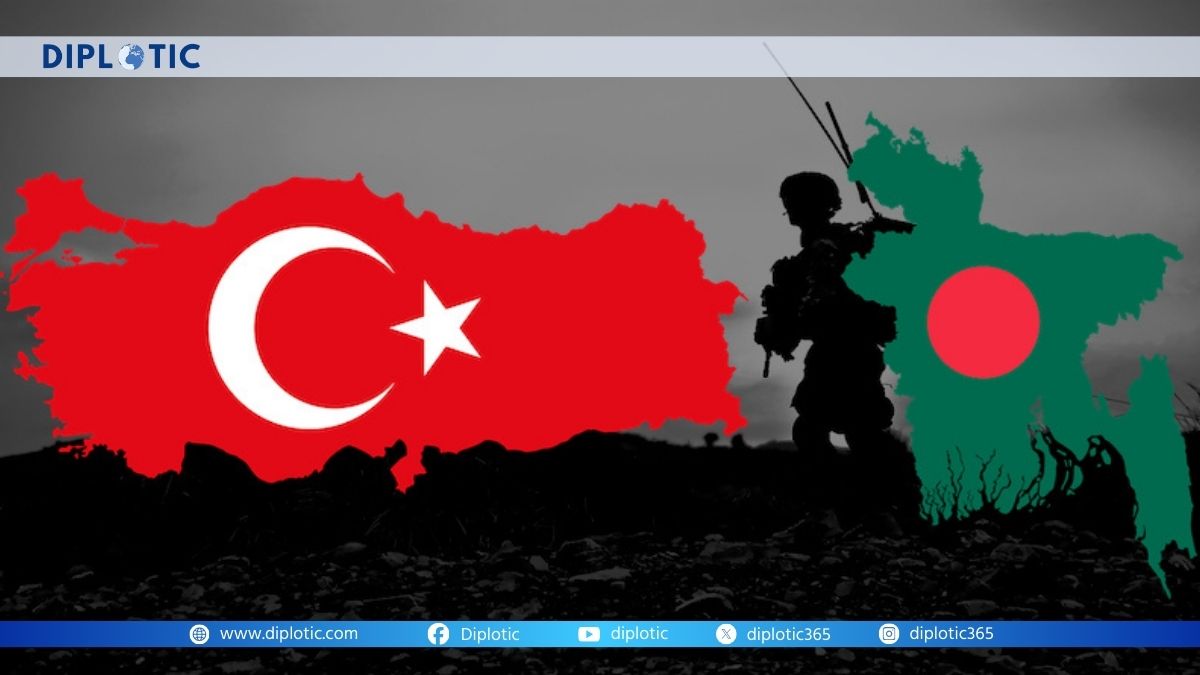
The map shows a vast distance between the Anatolian peninsula and the Indian subcontinent, separated by the expanse of Iran and the Arabian Sea. Yet, political and strategic currents consistently draw Turkey toward South Asia, revealing a connection that transcends simple geography. This interest is not a new phenomenon but a recurring theme in history, driven by a blend of religious identity, historical legacy, and hard-nosed geopolitical calculation. In recent years, under President Recep Tayyip Erdogan, Turkey has pursued a more assertive “neo-Ottoman” foreign policy, actively seeking a leadership role across the Muslim world. This ambition has brought South Asia back into sharp focus for Ankara. From deepening military ties with Pakistan to being implicated in regional security incidents, Turkey’s contemporary engagements prompt a critical question: what enduring interests pull a Mediterranean and Black Sea power so persistently into the affairs of a distant region like South Asia, and what does this mean for the complex balance of power there?
What Are the Historical Roots of Turkey’s South Asian Links?
The historical connection forms the bedrock of Turkey’s modern interest. This lineage traces back not to the modern republic, but to the Ottoman Empire, which saw itself as the paramount Sunni Muslim power and custodian of the Caliphate. During its zenith in the 16th century, the Ottoman Empire’s strategic interests collided with those of other expanding powers near South Asia, namely Shia Safavid Persia and the seafaring Portuguese Empire. The Ottomans sought allies to counter these rivals, leading to diplomatic and military outreach to Indian states. A pivotal moment was Ottoman support for Babur, the founder of the Mughal Empire. By providing Babur with key military technology like advanced artillery and matchlock rifles, the Ottians directly influenced the establishment of one of India’s most significant empires, creating a lasting symbolic link between Turkish and Indo-Islamic power. Later, as European colonialism swept over South Asia in the 18th and 19th centuries, the Ottoman Empire remained a symbolic beacon of Muslim independence. This culminated in the early 20th century with the “Khilafat Movement” in British India, where millions of Indian Muslims mobilized politically to defend the Ottoman Caliph. This deep history of religious solidarity and political alliance provides a powerful narrative that modern Turkish diplomacy can and does invoke.
How Do Modern Ideology and Identity Fuel This Engagement?
The collapse of the Ottoman Empire and the secularist reforms of Mustafa Kemal Ataturk temporarily suppressed Turkey’s pan-Islamic foreign policy. However, the rise of President Erdogan and his political vision has powerfully revived these historical themes under the label of “neo-Ottomanism.” This ideology views the dissolution of the Ottoman and Mughal empires as civilizational tragedies and seeks to restore Turkey’s position as a leader and protector of Muslim interests globally. South Asia, home to hundreds of millions of Muslims, is a natural theater for this ambition. Culturally, Turkish television dramas, music, and fashion have gained significant popularity in Pakistan, building soft power and a sense of shared identity. Politically, Turkey’s consistent vocal support for Pakistan on the Kashmir issue, in contrast to the more cautious stances of Arab Gulf states, reinforces its image as a reliable advocate. This ideological drive is not merely sentimental; it serves concrete national interests by amplifying Turkey’s international stature, creating a bloc of friendly states, and positioning Ankara as an indispensable player in the Islamic world, rivalling traditional powers like Saudi Arabia and Iran.
What Are Turkey’s Geopolitical and Strategic Aims in the Region?
Beyond ideology, cold strategic calculations are a major driver of Turkish policy in South Asia. Central to this is Turkey’s deepening alliance with Pakistan, often described alongside Azerbaijan as the “three brothers.” This partnership serves multiple Turkish objectives. First, it provides a lucrative market for Turkey’s growing defense industry. Military sales and technology transfers to Pakistan demonstrate the capability of Turkish arms and generate vital revenue. Second, the partnership is a tool of regional competition. It allows Turkey to project influence into Central and South Asia, counterbalancing the reach of its perennial rival, Iran, and reducing the diplomatic space for Arab rivals like Saudi Arabia and the UAE. For Pakistan, Turkey offers a seemingly more dependable Muslim ally than the Gulf states, which increasingly prioritize economic ties with India. This mutual need creates a strong strategic bond. Furthermore, a presence in South Asia gives Turkey a stake in the broader Indo-Pacific strategic landscape, enhancing its claim to be a global actor rather than just a regional Middle Eastern power.
How Do Turkey’s Actions Affect Regional Dynamics, Particularly with India?
Turkey’s South Asia engagement inevitably shapes its relationship with the region’s dominant power, India. The current trajectory places Turkey and India at odds. Turkey’s strong alignment with Pakistan on security matters, including reported support during past military clashes, is viewed with deep suspicion in New Delhi. Allegations of Turkish links to terrorist activities in India, however unproven, further poison the atmosphere. Economically, the relationship lacks ballast; bilateral trade is minimal, especially compared to India’s massive commercial ties with the Arab world. Diplomatic spats over Kashmir are compounded by India’s own strengthening partnerships with Turkey’s adversaries, namely Greece and Armenia. Consequently, Turkey’s South Asia policy effectively sides with Pakistan in the region’s fundamental rivalry, closing the door on a substantive partnership with India. This choice underscores that Turkey’s interests in the region are prioritized through a specific lens: strengthening the Muslim bloc (as represented by Pakistan) and advancing its own geopolitical standing, even at the cost of a relationship with a major emerging economy.
What Is the Future of Turkey’s Role in South Asia?
Turkey’s involvement in South Asia is likely to persist and potentially deepen, as it is fueled by durable forces: historical memory, ideological ambition, and strategic necessity. The pattern is cyclical; as a Eurasian power with one foot in Europe and the other in the Middle East, Turkey has repeatedly looked eastward to secure allies and affirm its leadership. In the 21st century, this means a sustained, multifaceted partnership with Pakistan encompassing defense, diplomacy, and culture. This alliance serves to consolidate a front of Muslim-majority states under Turkish patronage, counter Iranian influence, and provide a platform for Ankara’s global aspirations. The major point of friction will remain India. Unless a significant geopolitical shift leads Turkey to radically rebalance its approach, its ties with Pakistan will continue to define its South Asian presence, inherently limiting its engagement with New Delhi. Therefore, Turkey’s role will be that of an external power firmly embedded in one side of the region’s central conflict, a patron to Pakistan, and a complicating factor in an already volatile strategic environment. Its historical legacy ensures it has a stake; its modern ambitions ensure it will seek to play that stake for maximum influence, making it a permanent, if distant, participant in South Asia’s unfolding future.




