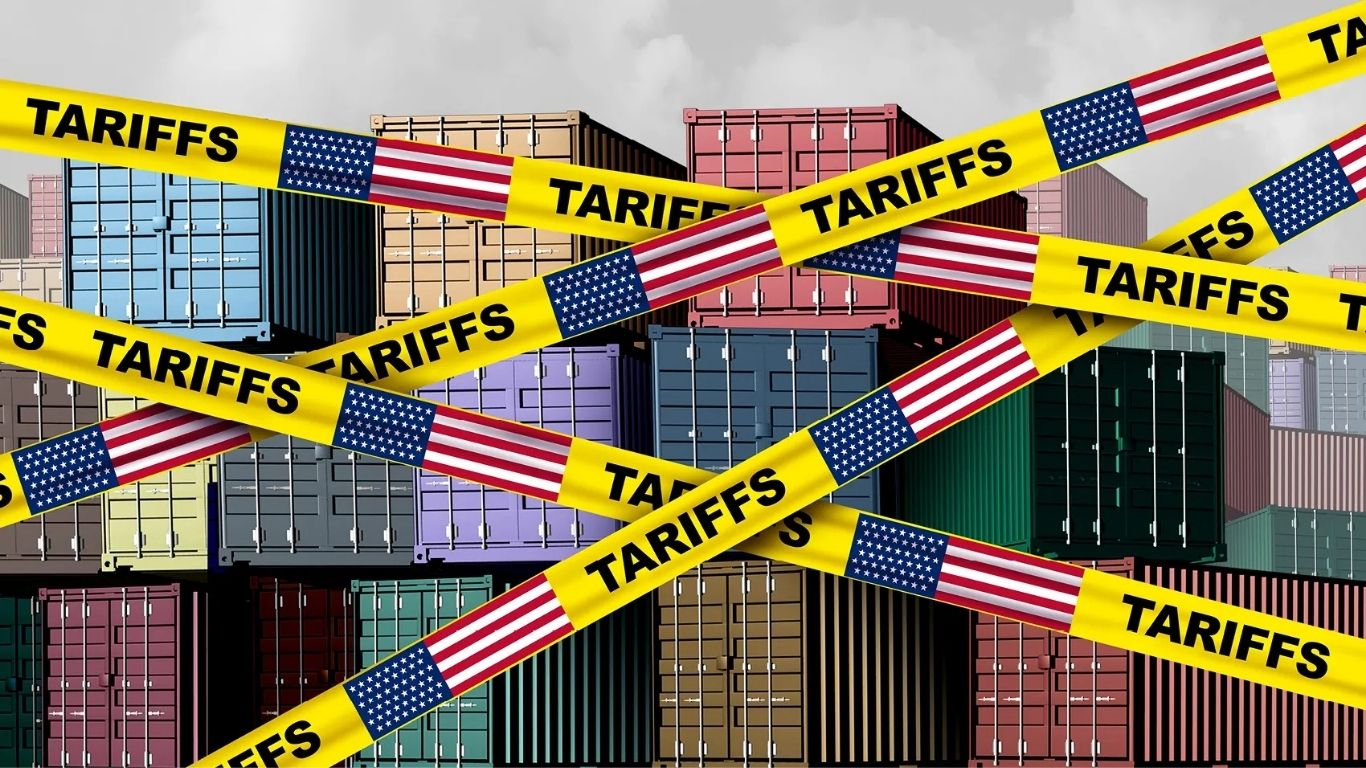
When President Donald Trump unleashed a sweeping wave of tariffs, lifting duties on steel, aluminum, autos, and more, it didn’t just make headlines. It revived a story many had assumed America had moved past: a story rooted in protectionism, economic nationalism, and the raw power of trade as a lever of statecraft.
The United States has a venerable pedigree of tariff use. But what makes Trump’s policy so remarkable and controversial is how dramatically it departs from modern precedent. To understand his tariff offensive, we must first revisit the past.
The Three Pillars of American Tariff Policy: Revenue, Restriction, and Reciprocity
Since the very founding of the Republic, tariffs have played a central role. In 1789, Congress passed one of its first major acts: the Tariff Act, designed primarily to raise revenue. Historically, economists identify three broad motives that Dartmouth’s Douglas Irwin called the “three Rs”:
- Revenue
- Restriction (i.e., protection of domestic industry)
- Reciprocity (using trade duty as a bargaining chip)
In the early 19th century, tariffs were overwhelmingly about raising money. From the nation’s founding through the Civil War, customs duties contributed as much as 90 percent of federal revenue. As industrialization accelerated, and especially from the post–Civil War era to the Great Depression, America shifted to more protectionist tariffs. The infamous Smoot–Hawley Tariff Act of 1930 imposed steep duties on hundreds of goods in an attempt to shield the domestic industry. Finally, from roughly the mid-20th century onward, reciprocity became the dominant model. The U.S. championed multilateral trade institutions such as the General Agreement on Tariffs and Trade (GATT), which later evolved into the WTO.
Moreover, with the Reciprocal Tariff Act of 1934, Congress explicitly empowered the president to negotiate tariff reductions in exchange for reciprocal concessions abroad.
A Historical Comparison: From McKinley to Trump
At its highest points in the late 19th and early 20th centuries, U.S. tariff rates were sky-high. Under the McKinley Tariff of 1890, duties averaged nearly 50 percent. Yet even those historic high points differ sharply from Trump’s 2025 trade strategy—or do they? According to the Peterson Institute for International Economics, the average U.S. tariff rate under Trump has surged as high as it has since World War II, marking a clear break from decades of multilateral liberalization. Still, despite the steep climb, the new tariffs remain historically modest compared to the extreme protectionism of the Gilded Age. “We are not close to the days of … Smoot–Hawley,” economists note, even as the administration vows more to come.
What Makes Trump’s Tariffs Different and Risky
Ambitious Scope and Presidential Power
Unlike historical tariffs, which were largely the purview of Congress, Trump’s 2025 duties are being deployed unilaterally often under emergency powers granted by statutes like the International Emergency Economic Powers Act. That concentration of authority has drawn skepticism from legal experts, some of whom argue that Congress has effectively ceded power over trade.
Structural Shock vs. Bargaining Chips
Where prior tariffs often responded to narrow economic or security concerns, Trump’s strategy is sweeping and systemic. The president has imposed a baseline 10 percent tariff on nearly all imports, with “reciprocal” levies soaring to 20–25 percent for major partners like the EU, Japan, and Canada. Observers warn these policy shifts could choke global supply chains, fuel inflation, and trigger retaliatory trade wars.
Tax Hike on the Imports, But Not on Income
JPMorgan economists recently labeled Trump’s tariff surge “the largest U.S. tax hike since 1968,” estimating a cumulative 22 percent increase across trade taxes. This is particularly striking given that, for most of its history, the federal government no longer relied on tariffs as its primary source of revenue. Since the mid-20th century, income and corporate taxes have shouldered that role. Despite this, Trump has periodically floated the idea that tariff revenue could potentially reduce or even supplant the federal income tax.
Economic Nationalism as Strategy
In Trump’s view, tariffs are not just economic tools; they’re geopolitical weapons. He has repeatedly invoked protectionism in the name of “economic independence” and national sovereignty, framing trade as a zero-sum battleground. His critics argue this style of unilateral tariff warfare undermines decades of diplomatic norms and multilateral cooperation.
The Risks: Inflation, Retaliation, and Economic Drift
A growing chorus of economists warns that Trump’s tariff blitz could backfire. Elevated duties may stoke inflation if the cost of imported goods rises sharply, and these price pressures would hit American consumers hardest.
Moreover, many affected countries are already retaliating. Tariff tit-for-tat has threatened to spiral into a full-blown trade war, heightening global tension and imposing new costs on all sides. This feedback loop, some argue, could chip away at global growth and inject volatility into markets.
Historical Echoes, But a New Chapter
Trump’s tariff campaign is deeply resonant with America’s past, but it’s not a nostalgia act. It’s a bold reimagining of old tools for 21st-century geopolitics. The three Rs, revenue, restriction, and reciprocity, are still identifiable, but their weights and functions are evolving.
Some historians see parallels with pre–income tax America, when customs duties funded the entire government. Others warn that such a model is simply unfit for a modern global economy, where supply chains crisscross continents and trade agreements tie nations together.
A Turning Point or a Reckoning?
President Trump’s tariff offensive is more than a policy shift it is a structural reorientation of American economic strategy. By leaning into unilateral, high-stakes protectionism, the administration is irrevocably reshaping trade policy, legal norms, and the international economic order.
Whether this proves to be a moment of national renewal or a perilous step backward remains to be seen. But one thing is clear: Trump’s tariffs are not just about dollars and cents. They represent a powerful, provocative statement about what it means to be economically sovereign in a fiercely interconnected world.