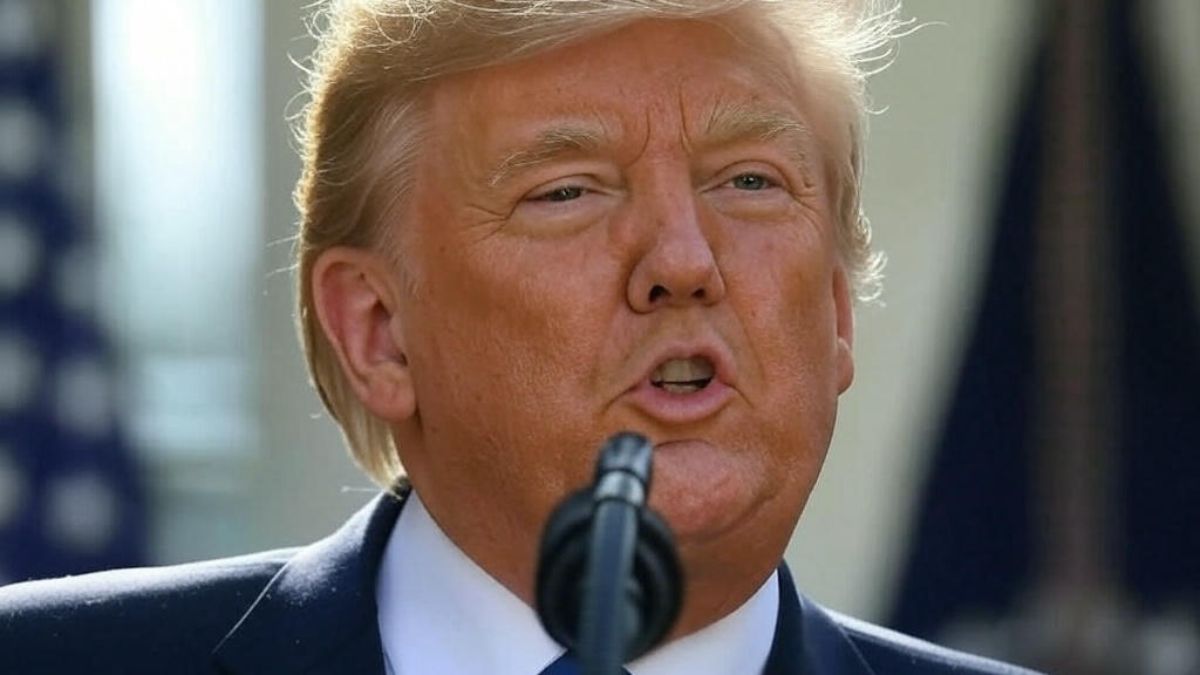
Trump Raises Specter of Third Term, Suggests ‘Methods’ to Circumvent Constitution. In a stunning revelation during an exclusive “Meet the Press” interview with NBC News, former President Donald Trump stated he was “not joking” about seeking a third term in office, despite the constitutional two-term limit. His remarks have reignited concerns about the potential erosion of democratic norms and the resilience of the U.S. Constitution.
His statements sparked an immediate national debate, raising questions about whether he is seriously considering defying the 22nd Amendment or using his rhetoric to energize his political base ahead of the next election cycle.
A ‘Serious’ Consideration: Trump’s Bold Assertion on a Third Term
While Trump has previously alluded to the idea of extending his presidency in a joking manner at rallies, this marks the first time he has acknowledged the possibility with clear intent. Speaking to NBC’s Kristen Welker, Trump claimed that “a lot of people” were encouraging him to pursue another term, adding, “But we have — my thinking is, we have a long way to go. I’m focused on the current.”
His comments immediately sparked legal and constitutional debates, as the 22nd Amendment explicitly prohibits any individual from serving more than two elected terms as president. Despite this, Trump hinted at potential legal workarounds, saying, “There are methods which you could do it.”
This has led political analysts to speculate whether his remarks signal a real strategy or simply a calculated move to keep his supporters engaged. Historically, Trump has thrived on political controversy and speculation, often using it to dominate media cycles.
The Constitutional Roadblock: Can Trump Find a Loophole?
One potential strategy raised during the interview involved Vice President JD Vance running at the top of the ticket in 2028 and then stepping aside for Trump. “That’s one,” Trump admitted, adding, “But there are others too.” He declined to elaborate further.
Legal scholars swiftly dismissed the viability of such maneuvers. Derek T. Muller, an election law professor at the University of Notre Dame, noted that the 12th Amendment complicates this approach, stating that “no person constitutionally ineligible to the office of president shall be eligible to that of vice-president of the United States.” Muller emphasized that even if Trump attempted to circumvent the law, the legal and practical hurdles would be nearly insurmountable.
Congressional Support and the Long Road to a Constitutional Amendment
Just days after Trump’s second inauguration, Representative Andy Ogles of Tennessee proposed an amendment that would remove the two-term restriction. However, such a change would require a two-thirds majority in Congress and ratification by three-fourths of U.S. states—an extraordinarily difficult feat in today’s deeply divided political landscape.
Despite the challenges, Trump’s supporters argue that the political momentum surrounding him could make such an effort viable. His populist appeal remains strong, with many Republicans backing his vision of “Making America Great Again.” However, even among conservatives, there are concerns that attempting to overturn long-established constitutional limits could backfire and fracture the party.
Threats of Tariffs and a Hardline Stance on Russia and Iran
Beyond his controversial third-term remarks, Trump made headlines by ramping up his hardline economic policies and foreign policy stances. He threatened to impose “secondary tariffs” on nations purchasing Russian oil if Moscow failed to negotiate a ceasefire in Ukraine. The former president declared he was “pissed off” at Russian President Vladimir Putin for casting doubts on Ukrainian leadership and accused Ukraine’s President Volodymyr Zelensky of obstructing peace efforts.
Trump also warned Iran of severe repercussions if nuclear negotiations faltered, raising the specter of military action. “If they don’t make a deal,” he warned, “there will be bombing. It will be bombing the likes of which they have never seen before.”
Experts warn that these aggressive foreign policy moves could have significant economic repercussions, potentially leading to increased global instability and retaliatory actions from affected nations. Additionally, Trump’s transactional approach to diplomacy—using tariffs as leverage—has been criticized for potentially alienating long-time allies.
Economic Pressure as a Political Weapon: The Rise of ‘Secondary Tariffs’
In a move reminiscent of his aggressive trade policies during his first presidency, Trump reiterated his intent to use tariffs as leverage against global adversaries. He recently issued an executive order penalizing nations purchasing Venezuelan oil by imposing new levies on their exports to the U.S. This “secondary tariff” strategy, mirroring secondary sanctions, could redefine international trade relations.
However, some economic experts have raised concerns that such measures could lead to trade wars, increasing costs for American consumers and businesses. If implemented, these tariffs could drive inflation higher, creating economic uncertainty just as the U.S. recovers from previous economic downturns.
The Bigger Picture: A Test of U.S. Democracy
Trump’s latest remarks amplify concerns about authoritarian tendencies and the potential normalization of constitutional defiance. His comments, coupled with growing support from loyalist lawmakers, indicate that challenges to America’s long-standing democratic traditions may intensify in the years ahead.
While legal experts remain confident that constitutional safeguards will hold, the former president’s willingness to explore ways around these barriers poses a fundamental test for the nation’s democratic resilience. Whether this is political bravado or a serious attempt to reshape American governance remains to be seen—but one thing is clear: the conversation about a third Trump term is far from over.
What This Means for Everyday Americans
For the average American, this debate is more than just a political spectacle. It raises critical questions about the future of democracy, the balance of power, and the integrity of U.S. institutions. Voters must consider the long-term implications of a leader who challenges constitutional limits, as well as the economic and geopolitical effects of Trump’s proposed policies.
As the 2028 election looms, one thing is certain: Trump remains a dominant force in American politics, and his influence—whether inside or outside the White House—will continue shaping the nation’s future.
With the political landscape shifting rapidly, staying informed is more crucial than ever. Whether you support or oppose Trump’s vision, civic engagement, voting, and holding leaders accountable will play a crucial role in determining the future of American democracy.