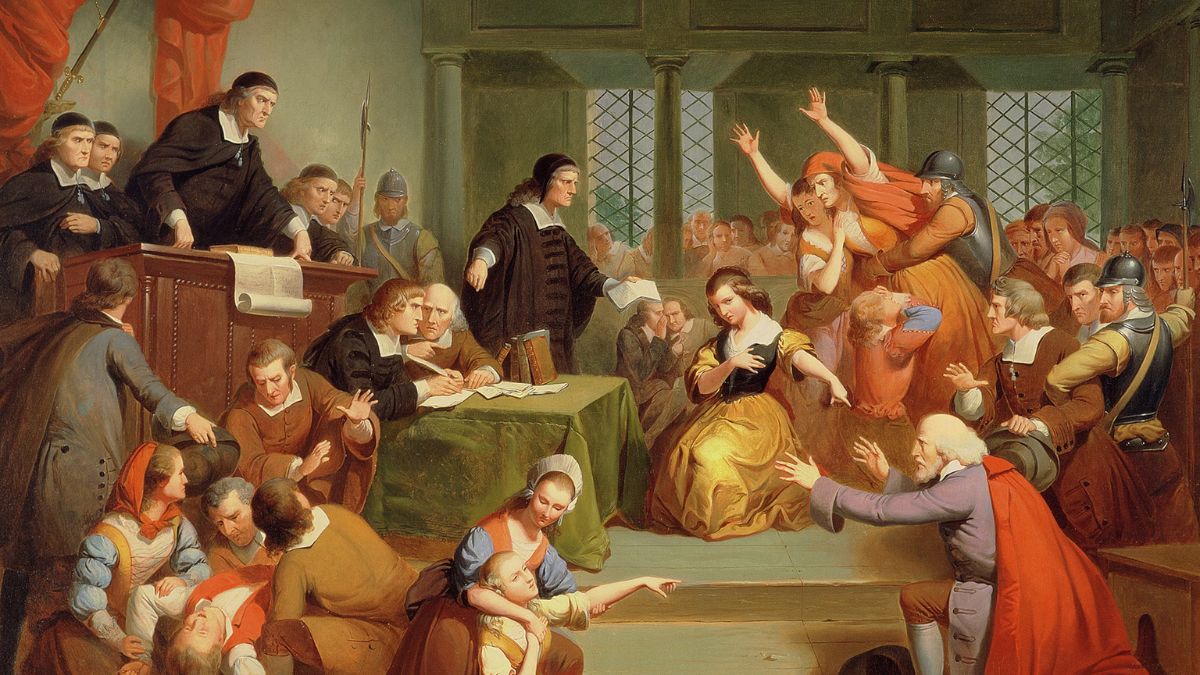
In 16th-century Scotland, a tempestuous North Sea crossing launched one of Scotland’s blackest periods in recorded history. King James VI thought witches were calling up storms to drive his ship to destruction and launched a witch-hysteria that spanned over a hundred years and terrorized Scotland. Between 1560 and 1700, at least 4,000 women and men were falsely accused, tortured and executed under the Witchcraft Act. Today, a novel, How to Kill a Witch: A Guide for the Patriarchy by Zoe Venditozzi and Claire Mitchell, and an official tartan to remember its victims are shining a spotlight on its dark past and highlighting its continuing allure.
An era of brutal fear and scapegoating
The North Berwick Witches Trials in 1589 were triggered by King James’ paranoia. The king, who believed witches to be followers of Satan, composed Daemonology, a manual on identifying and persecuting suspected witches, and fueled common hysteria. The Act on Witchcraft enforced stern Protestant moralism on alleged witch plotters with “the devil.” Society’s misfits—old women, disabled people, poor people, and narcotics abusers—were commonly targeted as they were seen as a burden to their respective communities.
Torture was relentless and cruel. Devices like thumbscrews, boot-crunching devices, and the “witch’s bridle” induced unimaginable pain. The suspected witches were stripped and shaved and searched for “witch’s marks” by so-called specialists like John Kincaid, a well-known “witch pricker,” who earned a livelihood identifying supposed devil’s marks. Victims were generally choked prior to being burnt alive, not out of empathy for their pain, but to prevent their bodies from being resuscitated by the devil or allowing them into paradise. As historical researcher Judith Langlands-Scott says, “People are still haunted by what happened.”
A Modern Reckoning
Witches of Scotland co-founders Wendy Venditozzi and Neil Mitchell fought for decades for acceptance for their recognition of injustices. This culminated in 2022 when Scotland’s then-first minister Nicola Sturgeon apologized for the “colossal injustice” of the trials. Followed by women church ministers offering an official church apology for church involvement. The newly unveiled Witches of Scotland tartan, now added to the Scottish Register of Tartans, is a “living memorial.” Its colours—black and gray to commemorate dark days, red as a symbol for blood spilled by victims and pink for adhesive tape used to hold together records at court—symbolize cruelty during the time and red tape.
The novel How to Kill a Witch blends diligent research and gallows humor to expose the sheer absurdity in the actions of the witch hunters, ranging from accusing women surfing on sieves to dancing in church. “It’s a clever trick, isn’t it, the way society blamed women,” says Venditozzi to the BBC, highlighting how women were blamed as being weak and frail and prone to being overpowered by the devil. Myths such as that of “burning at the stake” are debunked by authors as they elucidate that burning came after strangulation in order to destroy bodies and souls. **Modern Witchcraft and a Revival of
The witch trials still evoke in today’s popular culture as “witchy” style is ubiquitous and “WitchCore” is on trend and Practical Magic 2 is one of its latest installments. And nature-respect-based and ritual and tarot witchery is going ballistic today. Neopagans and Wiccans have rituals centered on empowerment and self-care far distant from “agents of devil” stereotypes in bygone days but, as Mitchell notes, far removed from their forebears who were mere Christians overcome by hysterics.
This resurgence is raising concerns about fantasizing about a violent past. Langlands-Scott and Mitchell argue that since modern witchcraft bears little relationship to that of centuries gone by, nothing need be feared about it. Instead, all the increased interest in the trials—is recorded in a global audience for the Witches of Scotland podcast—is a desire to learn about facts and recall the victims, who were primarily Catholics and folk healers who were assaulted by an overzealous Presbyterian establishment.
Lessons for Today
The witch persecutions as Atwood accounts for them appear as an inevitable symptom in crisis societies when targeted groups serve as scapegoats. Venditozzi makes connections to modern times by referencing recent waves of blaming weak groups during times of social crisis. How to Kill a Witch even quotes an American pastor threatening witches among his congregation and shows how superstition persists. Groups such as Advocacy for Alleged Witches continue to combat the same ideas using rationale and compassion.
The tartan and novel about Scotland’s witch trial remind one to learn from past mistakes. “It is extremely important that we remember and learn from it,” says Mitchell, commenting that Scotland is behind Norway and America in remembering victims of witch trials. Langlands-Scott is hopeful about apologies and activism, particularly by women, as a “giving voice” to those who were left without one.
A Call to Remember
As Scotland grapples with its past, the tartan and How to Kill a Witch testify to all who were damaged. They challenge us to reckon with harsh realities about fear and prejudice and about who is powerful and who is powerless—Issues that remain starkly in our own era. “Even witch trials being centuries in the past,” remarks Venditozzi, “we witness periodic waves of blame being directed against out-groups during periods of social concern.” By keeping their memories alive, we counteract scapegoating and stand up for the powerless among us now. How to Kill a Witch: A Handbook for the Patriarchy is out now in the UK and due out in America later in the fall as How to Kill a Witch: The Patriarchy’s Handbook to Silencing Women.