Once a vital urban stronghold in Sudan’s embattled Darfur region, El-Fasher has descended into chaos and terror. Survivors arriving in the nearby town of Tawila, roughly 80 kilometers away, recount stories of unimaginable brutality committed by the Rapid Support Forces (RSF) after they seized control of the city.
The RSF, a powerful paramilitary group born out of the infamous Janjaweed militias, has been accused of systematic atrocities since Sudan’s civil war reignited in April 2023. But the fall of El-Fasher marks one of the darkest chapters yet in Sudan’s ongoing humanitarian catastrophe.
Thousands fled on foot, crossing barren terrain with no food, water, or protection. Their accounts collected by BBC correspondents and aid workers paint a horrifying picture of torture, execution, and desperation.
Survivors’ Voices: “We Saw People Murdered in Front of Us”
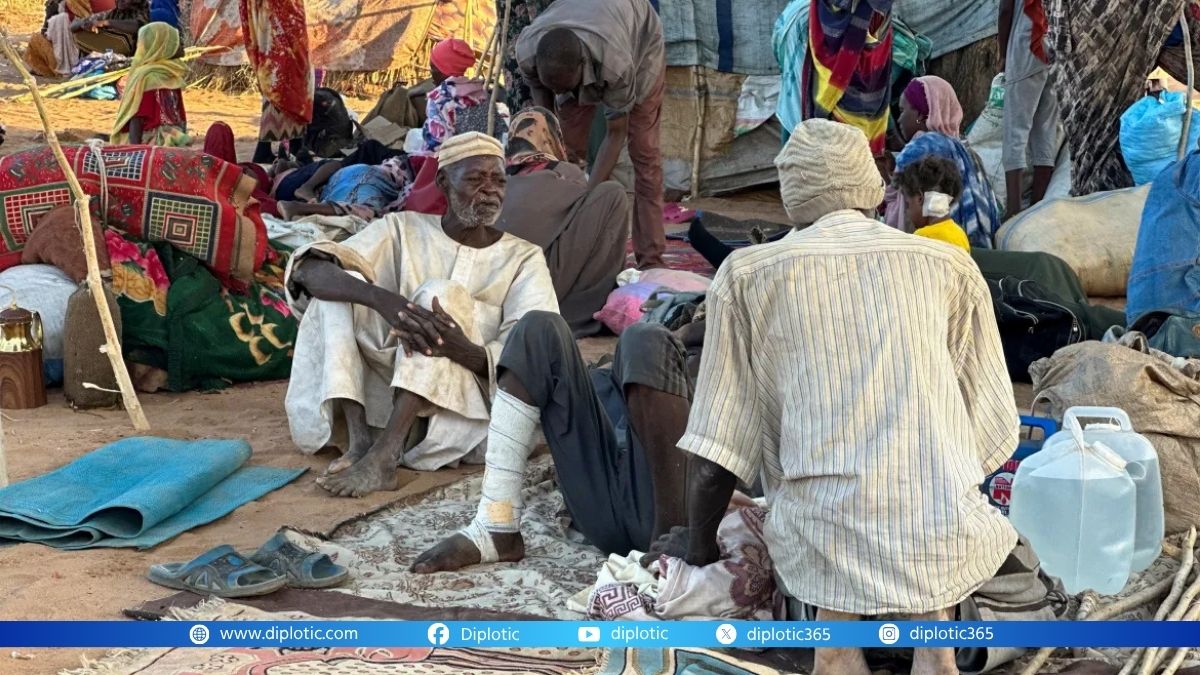
For Ezzeldin Hassan Musa, survival came at an unbearable cost.
“We were divided into groups and beaten,” he recalls, lying exhausted beneath a makeshift gazebo in Tawila. “We saw people murdered in front of us. We saw people being beaten. It was really terrible. They wanted to execute us completely.”
His body bears the marks of beatings, his clothes the only possessions left after RSF fighters robbed him of everything. “Phones, clothes, even my shoes,” he says. “We went without food for three days. By God’s mercy, we made it through.”
Such testimonies echo a chilling pattern of ethnic cleansing and collective punishment tactics the RSF has long been accused of using to terrorize communities in Darfur.
Executions on the Road: The Deadly Journey to Safety
Another survivor, Ahmed Ismail Ibrahim, arrived in Tawila with gunshot wounds and multiple bandages. His story encapsulates the brutal reality of the escape route from El-Fasher.
“Four of the men with me they killed them in front of us,” he says. “They beat them and killed them. Then they searched our phones. One fighter finally told us, ‘OK, get up and go.’”
Ahmed and two others fled into the scrublands, walking and resting in ten-minute intervals until they reached safety. His brothers refused to leave him behind.
These stories reveal not isolated incidents but a pattern of systematic violence against men suspected of ties to the Sudanese Armed Forces (SAF), the RSF’s main rival.
The Humanitarian Fallout: Darfur’s Endless Crisis Deepens
In Tawila, Médecins Sans Frontières (MSF) has set up emergency clinics to treat the wounded and malnourished. Medic Alfadil Dukhan describes the influx of patients: “Most of the new arrivals are elders, women, or children. The wounded are suffering. Some already have amputations. We are trying to give them support and medical care, but the needs are overwhelming.”
According to MSF estimates, at least 500 people urgently need medical treatment among the 5,000 who reached Tawila this week. Many others remain trapped along the road between El-Fasher and Tawila injured, starving, or too afraid to move.
The United Nations has called the situation in El-Fasher “horrific,” warning that tens of thousands may still be stranded without aid. Before its fall, the city endured an 18-month siege cut off from food, medicine, and humanitarian relief by RSF blockades.
A City Starved and Besieged
For nearly a year and a half, El-Fasher’s residents lived under constant bombardment. Artillery and airstrikes devastated neighborhoods, hospitals, and schools. The Zamzam displacement camp, once home to hundreds of thousands fleeing earlier waves of violence, was overrun by RSF fighters in April.
By the time the city finally fell, hunger and disease had already claimed countless lives. Those who escaped now carry the trauma of starvation and the memory of mass graves.
Yusra Ibrahim Mohamed, a widow who fled after her husband, a Sudanese army soldier, was killed, recalls seeing bodies littering the streets. “If someone resisted, they were beaten or robbed. People could even be executed. I saw dead bodies in the streets,” she says.
The World Watches, But Help Is Scarce
Despite repeated UN resolutions and international condemnations, global attention on Sudan’s war has waned amid other geopolitical crises. Yet experts warn that the situation in Darfur could spiral into one of the worst humanitarian disasters of the 21st century.
Caroline Bouvoir of Solidarités International, working with refugees in neighboring Chad, voices deep concern: “We believe there were about a quarter of a million people still in El-Fasher. Only around 5,000 have reached Tawila. That is not many. Many are stuck sick, dehydrated, traumatized, or trapped by insecurity.”
Satellite images and eyewitness accounts confirm that RSF militias are still attacking civilians along escape routes, looting villages, and targeting aid convoys.
Calls for Action: “People Are Dying on the Roads”
For survivors like Ezzeldin, survival brings guilt and sorrow for those left behind. His plea is simple but urgent:
“My message is that public roads should be secured for citizens, or humanitarian aid sent to the streets. People are in a critical state they can’t move or seek help. Aid should reach them, because many are missing and suffering.”
Humanitarian agencies echo his call, urging immediate international intervention to secure corridors for food, medicine, and safe passage.
But with Sudan’s military and RSF locked in a brutal power struggle, and foreign powers divided over mediation, the prospects for peace remain bleak.
A Crisis Beyond Borders
The violence in El-Fasher is not an isolated tragedy it is part of a broader pattern of ethnic and political warfare consuming Sudan. Millions have been displaced nationwide, and hundreds of thousands have crossed into Chad, South Sudan, and Egypt.
The Darfur region, already synonymous with genocide two decades ago, now faces what observers call a “second genocide.” Entire communities are being wiped out, aid groups are blocked from access, and communications are frequently cut off.
Hope Amid Despair
Despite the horror, stories of solidarity still emerge. Locals in Tawila have shared scarce food and shelter with new arrivals. MSF medics work around the clock under dangerous conditions. And survivors like Ezzeldin and Yusra continue to speak out risking their safety to expose the truth.
Their testimonies may yet help bring accountability. RSF leader Gen Mohamed Hamdan Dagalo (Hemedti) admitted on Wednesday that “violations” occurred in El-Fasher and promised investigations, though few believe justice will follow.
For now, Tawila remains a fragile sanctuary. Its tents overflow with the displaced, its clinics strained to the limit but it stands as a symbol of endurance.
Conclusion: The World Cannot Look Away
The El-Fasher siege has become a stark reminder of the world’s failure to protect civilians in Sudan. With mass killings, starvation, and displacement reaching catastrophic levels, the international community faces a moral imperative: to act, not merely to mourn.
As survivors speak through their pain, their message is clear the world must not abandon Darfur again.