

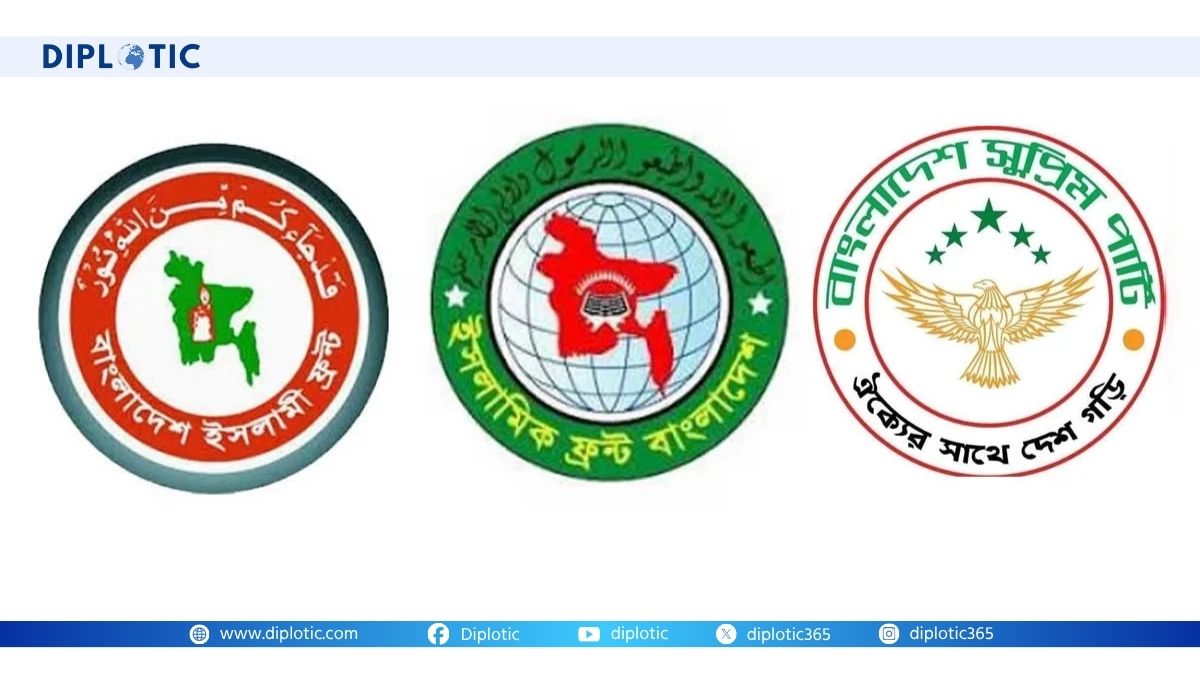
A coalition calling itself the “Greater Sunni Alliance”—reportedly including comparatively small registered parties such as Bangladesh Islami Front, Islamic Front Bangladesh, and the Bangladesh Supreme Party—emerged on 30 August and is organizing nationwide programs pressing for “free, fair, and participatory” elections. Although the election frenzy started long ago, the alliance has recently announced public meetings in the divisional cities and districts with 13-point demands.
Now, questions naturally arise: Can they really win over the broader public and resonate with the youth just by pushing these demands ahead? Will they be able to leave a real mark in this fiercely competitive field by healing old wounds and transcending their previous shortcomings?
Present Political Landscape
The political environment after the July uprising is highly fluid: new youth-led parties like the National Citizen Party (NCP) have appeared, major parties are realigning, and a reform “July Charter” was negotiated. That creates both openings and risks for new or renewed bloc politics.
BNP has already taken to the field with its 31-point demands and outline for the state, leading in the electoral race. It has also made a tactical move to nominate several prominent figures from so-called non-political groups like Hefazat-e-Islam in select constituencies a strategic bid to keep such forces in their corner during the election race.
Jamaat-e-Islami, teaming up with a number of like-minded Islamist parties, has been working to forge a stronger alliance and has rolled out a series of joint programs to push that effort forward.
However, historically, Islamist parties in Bangladesh have been fragmented and limited in national reach. The best national result for Jamaat-e-Islami was in 2001 (double-digit seats); in more recent parliaments, Islamist parties have held few seats compared with the big secular parties. This pattern, plus internal rifts between reformist and hardline Islamist currents, makes a durable, large Islamist coalition difficult.
In addition, NCP is also competing for the same “new politics” vote that a rebranded Islamist alliance might try to capture.
Major challenges & scars that need to be overcome
The coalition lacks the strong ground-level organizational networks, resources, candidate pools, etc. that established parties have already fortified. Despite having vast grassroots strength, somehow, the sleeping mode is still on. This means it is having risk of being out-mobilized or poorly prepared when a major election is on the horizon. With this organizational layout, they must limp if there is any plan to give nominations in 300 constituencies.
When we talk about overcoming the scars, ‘trust issues’ naturally come towards us.
Even if the formal alliance is “new,” almost all of the people involved will have past associations with older parties and voters tend to remember past failures . The “electoral scars” include defeats, broken alliances, internal splits, and reputational damage.
Besides, Bangladesh’s political environment remains intensely competitive, polarized, and dominated by major players. A new alliance must navigate structural barriers, for instance, funding, media access, incumbent advantages, etc. Even the best-intentioned alliance may struggle to convert public excitement into votes and seats.
Another concern arises, as often new alliances bring with them multiple actors with slightly different ambitions, backgrounds, or emotional vacuums. Keeping the coalition together, especially as the stakes rise—with candidate selection, resources, and leadership—is a big challenge.
Another observatory challenge to keep in mind is that powerful secular and nationalist actors may attempt to co-opt or divide the alliance to neutralize its electoral strength. The challenge will be to maintain independence while cooperating pragmatically on national issues.
Possibilities of a New Beginning
In an answer to the query “Can they come out of those scars?” a critic says, “Yes, it is possible, but not guaranteed.” The chances are moderate, depending on how well the alliance manages the phenomenon.
First of all, they need to draw a clear articulation of identity and purpose. They must show ordinary voters how this bloc is really different from the old ones.
Secondly, strong grassroots should be revived with booster motivation. They need to build local networks, nominate credible and popular candidates, and mobilize effectively.
Besides this,they need to manage expectations by delivering early winning examples. Often, big promises without delivery breed cynicism.For this, they can nominate the figures who have early visible achievements in the electoral fields that will immediately help build credibility by influencing mental bias.
Political experts assert that focusing on a maximum of 20-30 national constituencies, targeting districts or upazillas considering community support and organizational leverage, will be more practical as structural barriers arise. They must handle fundraising and media and navigate the electoral rules and environments.
Finally and inevitably, maintaining internal coherence is a must when it is time for healing old wounds. This time, the whole Sunni community, along with the coalition, should march forward if they really want to rebrand their community and prove themselves as an emerging power. At least, considering the rivalry with Jamaat-e-Islami from time immemorial, they should make the alliance sought for so long as the victor power.
A Moment of Reckoning
The Greater Sunni Alliance thus stands at a historical crossroads. The July Uprising has altered the grammar of politics in Bangladesh—replacing fear and fatigue with a new appetite for accountability and moral leadership. In this fluid landscape, the alliance’s success will depend less on rhetoric and more on moral integrity, organizational discipline, and inclusivity.
To truly overcome its old electoral scars, the alliance must heal not only its political divisions but also its moral fractures. That means transforming unity from a tactic of survival into a principle of renewal—a unity rooted in humility, justice, and service.
If the Greater Sunni Alliance can internalize the lessons of its own history, it may yet evolve from a symbol of fragmentation into an agent of moral reform. But if it repeats the familiar cycle of rivalry and expedience, the scars of the past will simply reopen—deeper, and perhaps irreversible.




