

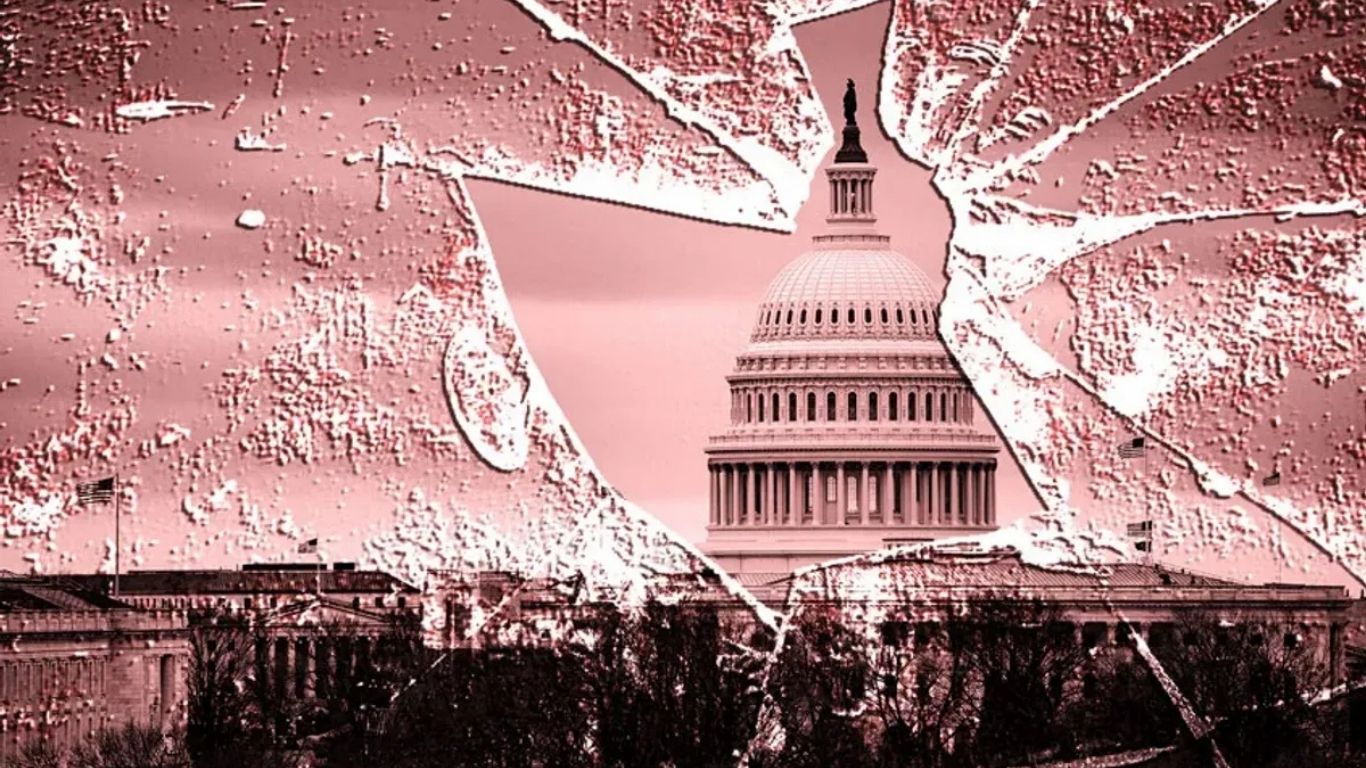
Strong institutions alone can’t ensure economic stability. As inequality and polarization rise in developed countries, political consensus is weakening, and with it, the effectiveness of fiscal and monetary policies. Here’s why the West may need to learn from emerging markets.
In a recent, headline-grabbing move, former U.S. President Donald Trump met with Federal Reserve Chair Jay Powell, seeking to pressure the central bank into lowering interest rates. While the Fed stood firm, reaffirming its independence, the meeting sparked fears among investors about political interference, not unlike the turbulent economic eras of the 1970s.
But here’s the real story: the issue isn’t institutional weakness. The Fed, like other central banks in the developed world, remains structurally sound. What’s deteriorating is something far more consequential the political consensus that gives institutions their power. Without public trust and political support, even the strongest institutions are rendered ineffective.
It’s a lesson developing nations learned decades ago. Ironically, it may now be time for the West to take a page from their book.
The 1990s: When Institutions Were the Heroes
In the golden economic decade of the 1990s, industrialized nations were the global role models. They ran balanced budgets, followed disciplined fiscal rules, and allowed independent central banks to target inflation without political interference. Meanwhile, emerging markets (EMs) were seen as the problem children overspending in booms, collapsing in busts, and suffering frequent debt crises.
Economists pointed to one clear explanation: institutions. Developed countries had strong ones. EMs did not.
This logic sparked a wave of reforms. International financial institutions like the IMF urged EMs to adopt independent central banks, fiscal responsibility laws, and inflation-targeting regimes. But in many cases, even when these reforms were adopted, they failed to deliver stability. Policy remained erratic, crises continued, and trust in institutions remained low.
The conclusion? Institutions on paper are not enough. Without political buy-in, they are powerless.
Brazil’s Wake-Up Call: Institutions Need Consensus
Consider Brazil in the early 2000s. Under President Fernando Henrique Cardoso, Brazil adopted inflation targeting and central bank reforms. But it wasn’t until his successor, the leftist Luiz Inácio Lula da Silva, chose to respect these policies that they became credible.
Lula’s government didn’t tear down the institutions his predecessor built. Instead, it strengthened them by maintaining their independence while simultaneously tackling inequality. Programs like Bolsa Família delivered cash transfers to poor families, while major investments were made in education, healthcare, and housing. As social safety nets expanded, economic precarity declined.
This broader inclusivity helped Lula’s left-wing Workers’ Party embrace macroeconomic stability. With fewer citizens left behind, the incentive for political radicalism fell. A new national consensus emerged and the institutions finally began to work as intended.
The Tide Turns: Developed Countries Go Procyclical
Fast forward to today, and the tables have turned. Developed countries are now struggling with the very issues they once scolded EMs for.
In the U.S., massive government spending has continued well after the peak of the pandemic, contributing to a surge in inflation. Trump’s proposed “big beautiful bill” would further increase a fiscal deficit already teetering on the unsustainable. France and Japan are facing towering debt-to-GDP ratios exceeding 100% numbers that would have triggered panic just a few decades ago.
It’s not that institutions like the Federal Reserve or fiscal frameworks have disappeared. They still exist. But the political consensus that once supported them has eroded.
Even in the U.S., where the Fed has a long-standing reputation for independence, its ability to fight inflation today may be hampered. Unlike in the era of Paul Volcker, when bold rate hikes curbed runaway inflation at political cost, today’s environment is too polarized, and the room for maneuver too narrow.
Meanwhile, fiscal rules have become more symbolic than functional. Politicians on both sides of the aisle are now willing to prioritize short-term political gains over long-term economic discipline. Even self-styled “fiscal hawks” have dropped their resistance to runaway spending.
The Real Culprit: Economic Inequality and Political Polarization
So why is the consensus breaking down?
The answer lies in rising inequality and economic precarity. Over the last two decades, globalization and technological change have displaced millions of middle-class, moderately skilled jobs across the developed world. While highly educated professionals have benefited enormously, those without college degrees have seen wages stagnate or fall.
This growing divide has deepened political polarization. Voters who feel left behind increasingly view elite-driven economic policies with suspicion. Populist leaders, capitalizing on this sentiment, blame the establishment including economic institutions for failing to deliver prosperity.
As trust declines, so does the political support needed for fiscal discipline and central bank independence. Institutions can only function when there’s a shared understanding that they serve the common good. Without that, they become easy scapegoats or political targets.
A Global Lesson: Institutions Follow, They Don’t Lead
What we’re seeing today is not an institutional crisis, but a political one. And this is precisely the mistake many economists made in the 1990s believing that institutions alone could drive stability.
In truth, institutions don’t create political consensus. They require it.
What made Brazil’s macro-stable phase work wasn’t just technocratic policy. It was inclusive growth, a sense of fairness, and a political center that respected long-term stability. That foundation allowed institutions to function.
Developed countries must now work to rebuild the same foundation.
A New Roadmap: Fairness First, Stability Second
To restore trust and reestablish political consensus, developed economies must focus on reducing precarity and offering real opportunities for those left behind. That means bold structural reforms:
- Investing in education and skills training to prepare workers for the modern economy.
- Reforming tax and welfare systems to be more progressive and transparent.
- Ensuring access to healthcare, housing, and childcare, reducing the everyday risks that fuel economic anxiety.
- Reviving industrial policies that promote innovation and create quality jobs in underserved regions.
This isn’t about abandoning macroeconomic stability. It’s about recognizing that stability won’t last unless the majority of citizens feel the system works for them.
Final Thoughts: Stability Begins at the Ballot Box
The hard truth is this: no set of laws or institutions can compensate for a lack of political will or social trust. In a polarized, unequal society, even the best-designed economic policies will struggle to gain traction.
Developed countries, once held up as models of stability, are now confronting the same questions that plagued emerging markets decades ago. The lesson is clear: institutions are only as strong as the consensus that sustains them.
To move forward, leaders must do more than defend central bank independence or debate fiscal rules. They must rebuild the foundations of trust, fairness, and opportunity, the real drivers of economic resilience.
Until then, expecting institutions to hold the line is not just optimistic. It’s delusional.




