India’s deadly pre-dawn strikes kill 31 in Pakistan, sparking fierce retaliation, civilian casualties, and nuclear war warnings. As tensions escalate in Kashmir, global leaders call for urgent de-escalation.
Kashmir Massacre Ignites Regional Fury
The already volatile region of Kashmir plunged into crisis this week after a brutal mass shooting on April 22 attack in Pahalgam that killed 26 including a large number of tourists, was quickly blamed by Indian intelligence on Pakistan-based militant groups.
In response, the Indian government launched what it described as a “surgical and precision pre-dawn airstrike” campaign, targeting nine locations across Pakistan and Pakistan-administered Kashmir, from Bahawalpur in the south to Muzaffarabad in the north.
Nine Strategic Strikes, One Goal
India’s Defence Ministry released a brief but pointed statement claiming the strikes were “carefully calibrated” and “based on verified intelligence,” targeting terror training camps and operational centers.
The key locations struck include:
- Markaz Subhan Allah in Bahawalpur: Allegedly tied to Jaish-e-Mohammed leadership.
- Markaz Taiba in Muridke: Alleged headquarters of Lashkar-e-Taiba, responsible for past attacks on Indian soil.
- Cross-border staging hubs in Muzaffarabad and Kotli: Believed to facilitate infiltration into Indian Kashmir.
Indian Foreign Secretary Vikram Misri emphasized that the strikes were “proportionate, non-escalatory, and targeted solely at terror infrastructure,” adding that they were a preemptive measure to deter further planned attacks on Indian civilians.
Pakistan’s Furious Response
Pakistan wasted no time in issuing a powerful response—both diplomatically and militarily. Prime Minister Shehbaz Sharif labeled the airstrikes “an act of war” and promised India would “suffer the consequences” of its aggression.
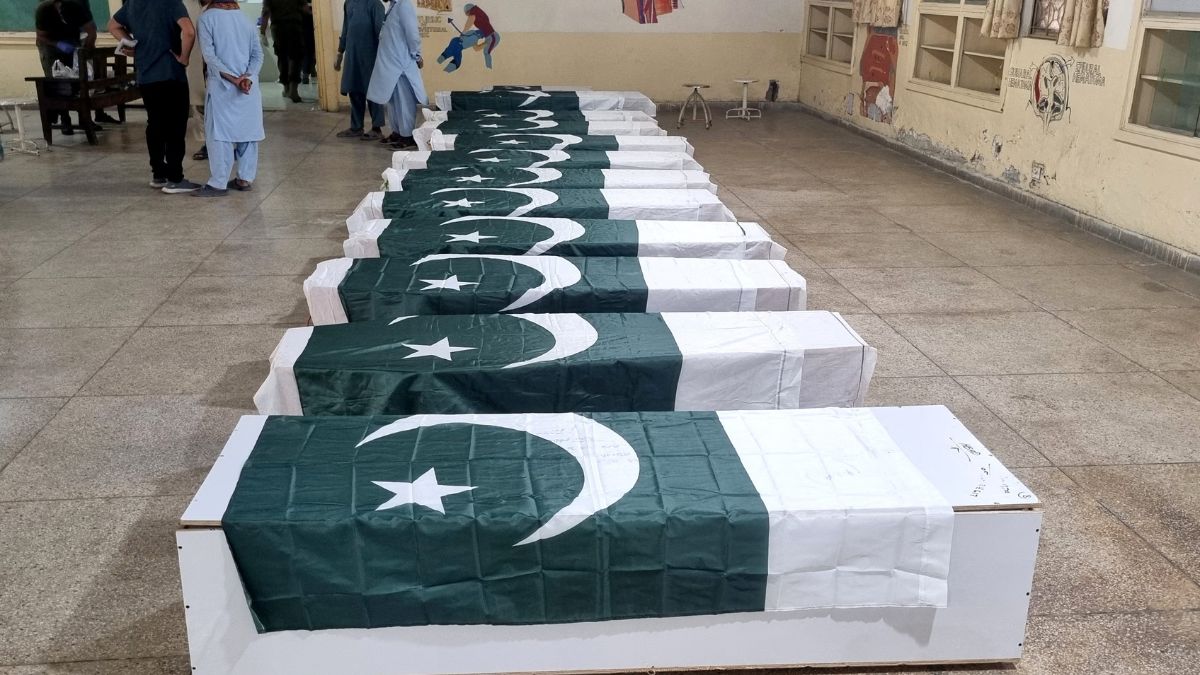
Pakistan’s Defence Minister Khawaja Muhammad Asif said its Air Force had downed five Indian fighter jets and two drones, while acknowledging intense military exchanges along the Line of Control (LoC). Witnesses in Kashmir described explosions lighting up the night sky, and Pakistani authorities reported the destruction of a mosque and the deaths of 31 civilians, including children, in the Indian air raids.
On the Indian side, 15 civilians were reported killed due to indiscriminate Pakistani shelling, according to India’s Army spokesperson. In Poonch district, one Indian soldier and 12 civilians, including four children aged 7 to 14, were among the dead. Over 40 others sustained injuries.
Civilians in the Crossfire
As artillery fire echoed across the de facto border, thousands of civilians on both sides began to evacuate border villages, fearing full-scale war. Reports of mass displacements, injured children, and destroyed homes paint a harrowing picture of the human cost of this spiraling conflict.
Hospitals in Kashmir are reportedly overwhelmed, and both governments have issued emergency alerts in the affected districts. Air raid sirens, a grim reminder of previous Indo-Pakistani clashes, now sound daily in parts of Kashmir.
Airspace Shuts Down
Amid fears of escalation, Pakistan’s aviation authority closed airspace around Lahore and Sialkot, two major commercial and strategic zones. Flights were rerouted or cancelled, with local media reporting that the closure would remain in effect until at least Thursday noon.
Meanwhile, a loud explosion was heard in Lahore, raising further alarms among residents, though officials have not yet confirmed its cause.
Global Reactions
As fears of a nuclear confrontation mount, global powers are now stepping in. US President Donald Trump offered to mediate, saying:
“If I can do anything to help, I will. I will be there.”
Trump’s offer was welcomed by Pakistan, with Defence Minister Asif stating that Washington’s role could be key in “bringing down the temperature”. Asif revealed that Pakistan had the capacity to shoot down 10 Indian jets during the strikes, but chose to limit its response to five, in a bid to avoid uncontrolled escalation.
Meanwhile, UK Prime Minister Sir Keir Starmer joined France in issuing statements urging both India and Pakistan to show restraint. The British government also revised its travel advisories for both countries, citing a rapidly deteriorating security environment.
‘Clear and Present Danger’ Warning from Islamabad
The stakes have never been higher. In a sobering declaration, Pakistani officials warned that the current conflict now represents a “clear and present danger” of nuclear war.
Analysts note that this confrontation is significantly more volatile than past standoffs, including the 2019 Pulwama-Balakot conflict.
Michael Kugelman, a leading South Asia analyst, commented:
“We are higher up the escalatory ladder than ever before. These are two nuclear-armed states willing to engage in sizeable conventional warfare. The risk of uncontrollable escalation is very real.”
India and Pakistan each possess over 100 nuclear warheads, and both maintain no-first-use policies under review, particularly during crises.
Why Kashmir Remains a Flashpoint
The conflict over Kashmir, which both countries claim in full but govern in parts, has sparked three wars and countless skirmishes since Partition in 1947. The region remains one of the most heavily militarized areas in the world, with hundreds of thousands of troops stationed on both sides of the LoC.
The ongoing insurgency in Indian-administered Kashmir and accusations of cross-border terrorism have continued to fuel distrust and violence. India accuses Pakistan of harboring and funding terrorist groups, while Pakistan denies the charge and accuses India of human rights violations in the region.
A Dangerous Crossroads for South Asia
With the latest exchange of airstrikes, mass civilian casualties, and soaring rhetoric from both governments, India and Pakistan now face a perilous tipping point. What began as a retaliatory strike could now escalate into a wider conflict with potentially catastrophic consequences for the region and beyond.
The world is watching closely as calls for restraint grow louder. But without immediate and effective diplomatic intervention, South Asia’s nuclear-armed neighbors may find themselves hurtling toward a war neither can afford to fight—or win.