
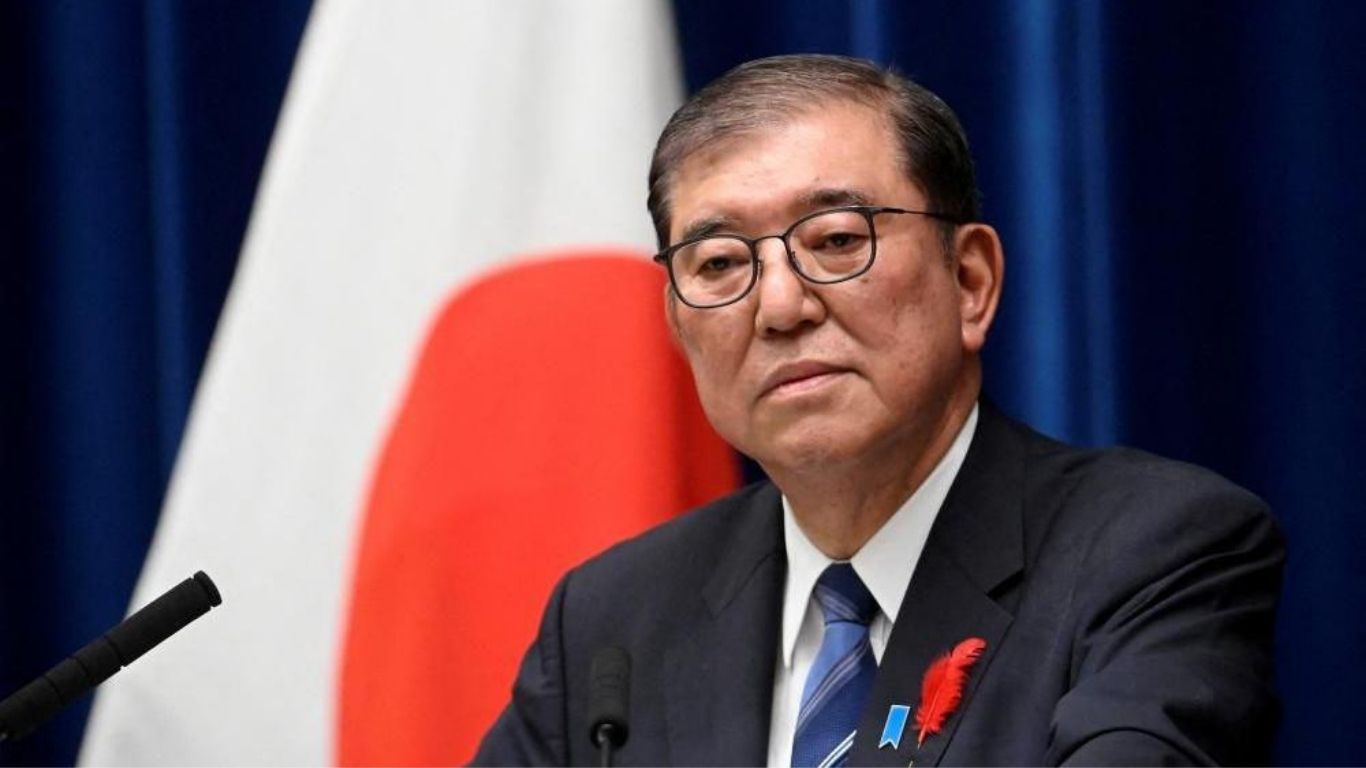
Japanese Prime Minister Shigeru Ishiba announced his resignation on Sunday after a string of election defeats, marking the end of a short-lived and turbulent tenure. His departure throws the world’s fourth-largest economy into fresh political uncertainty at a time when Japan is grappling with rising living costs, sluggish growth, and the lingering effects of U.S. trade tariffs.
Ishiba, 68, told reporters that he had instructed the Liberal Democratic Party (LDP) to hold an emergency leadership race, signaling that he would remain in office until his successor is chosen. His exit underscores the deep frustrations among voters, who have punished the ruling coalition in both lower and upper house elections over the past year.
In his final remarks, Ishiba highlighted the completion of a contentious trade deal with Washington. “With Japan having signed the trade agreement and the president having signed the executive order, we have passed a key hurdle,” he said emotionally. “I would like to pass the baton to the next generation.”
Why Ishiba’s Resignation Matters
Ishiba’s downfall reflects a sharp erosion of confidence in the LDP’s leadership. Despite decades of dominance in Japanese politics, the party has been losing touch with everyday concerns, particularly rising household expenses and stagnant wages. The government’s inability to shield citizens from the impact of global inflation and tariff shocks has proved politically costly.
Markets reacted swiftly to the news. The Japanese yen weakened and government bond yields hit record highs last week, reflecting investor fears of prolonged political instability. A leadership vacuum at such a delicate moment risks delaying fiscal reforms, undermining confidence in the Bank of Japan, and complicating Japan’s economic diplomacy.
For global investors and businesses, Ishiba’s resignation is not just a domestic affair. Japan remains a critical link in global supply chains, especially in the automotive and technology sectors. Uncertainty in Tokyo could ripple through trade networks already strained by U.S.-China tensions and Europe’s energy crisis.
The Battle to Replace Ishiba
The LDP is now preparing for a high-stakes leadership race, with potential successors already emerging. Among the frontrunners:
- Sanae Takaichi – A veteran politician who narrowly lost to Ishiba in last year’s leadership contest. Takaichi has been vocal about her preference for looser fiscal and monetary policy, criticizing recent interest rate hikes. Markets will watch closely whether her policies lean toward more stimulus and government spending.
- Shinjiro Koizumi – The charismatic son of former Prime Minister Junichiro Koizumi. As farm minister, he has tried to cap soaring food prices, boosting his popularity among ordinary voters. While Koizumi may not represent a radical policy shift, his fresh image could rejuvenate the LDP’s appeal.
Whoever takes the reins will face immediate pressure to stabilize the economy, repair voter trust, and potentially call a snap election to secure legitimacy. But the fractured nature of Japan’s opposition parties means the LDP still has a strong chance of clinging to power, even in a weakened state.
The Economic Crossroads
Ishiba’s legacy will likely be defined by the U.S.-Japan trade deal finalized last week. Under the agreement, Japan pledged $550 billion in investments in exchange for lower tariffs from the Trump administration. While Ishiba framed this as a victory, critics argue it ties Japan too closely to U.S. economic interests at the expense of domestic growth.
Looking forward, Japan faces three major economic challenges:
- Managing Inflation – Rising living costs remain the top concern for households. Without decisive intervention, public discontent will continue to grow.
- Monetary Policy – The Bank of Japan’s interest rate strategy is under scrutiny. A potential Takaichi-led government may push for easing measures, creating volatility in bond markets.
- Global Trade Risks – Japan must balance relations with the U.S. while diversifying trade partners to shield itself from future tariff shocks.
Failure to navigate these issues could prolong stagnation and undermine Japan’s global standing.
What This Means for Global Politics
Ishiba’s resignation also carries geopolitical implications. With Japan being a crucial ally of the United States and a counterweight to China’s growing influence in Asia, political instability in Tokyo could affect regional dynamics. Washington will watch closely to see whether Ishiba’s successor honors the spirit of the trade deal and maintains a firm stance on security cooperation.
Meanwhile, the rise of the Sanseito party, a far-right, anti-immigration force that made big gains in the July upper house election, signals a possible shift in Japan’s political landscape. Once considered fringe, Sanseito’s surge reflects growing public anger at establishment politics. If mainstream parties fail to address voters’ concerns, these populist forces could gain even more ground in the future.
Conclusion: A Defining Moment for Japan
Shigeru Ishiba’s resignation is not just the end of a premiership it is a turning point for Japan. The next leader of the LDP will inherit a country at an economic and political crossroads. Rising living costs, shaky financial markets, and shifting global alliances all demand bold leadership and clear vision.
For investors, businesses, and ordinary citizens alike, the coming weeks will be crucial. Will Japan choose continuity with figures like Koizumi, or a new economic experiment under Takaichi? Will the LDP call a snap election to restore credibility, or gamble on stability behind closed doors?
What is certain is that the world will be watching. The choices made in Tokyo in the months ahead will not only shape Japan’s future but also influence the global economy at a fragile moment.