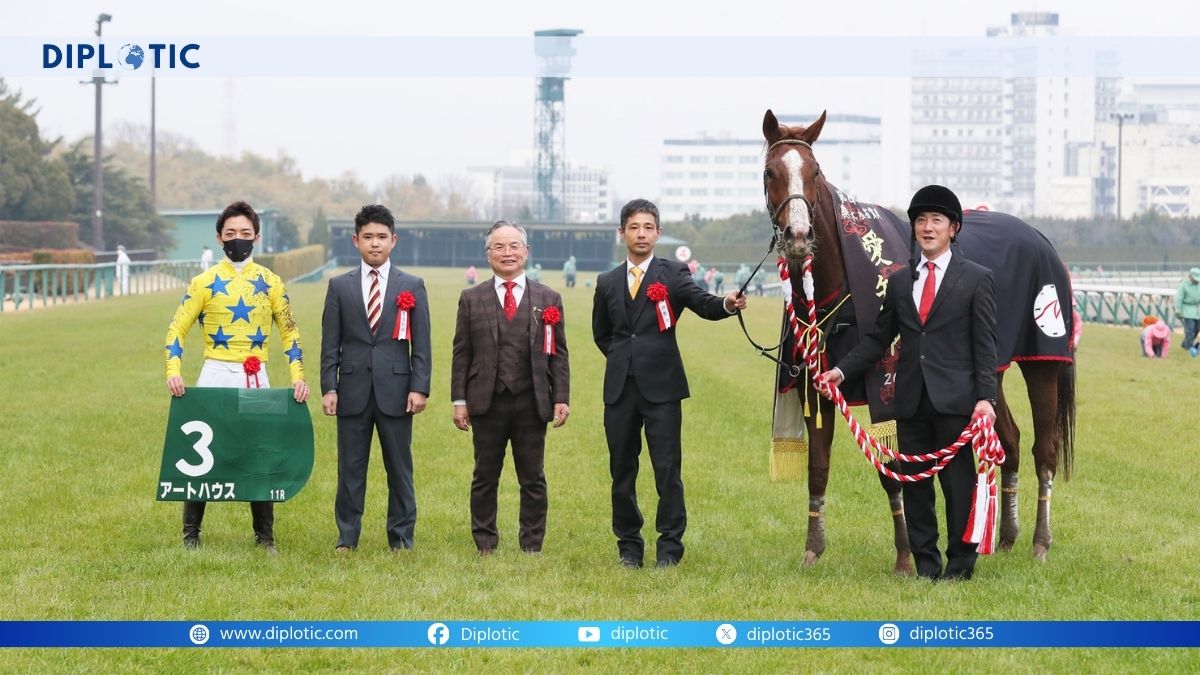
On the carefully maintained grounds of Tokyo’s Imperial Palace, amidst the quiet of a December morning, an eleven-year-old horse named Yukikaze practices his drills. With a steady gait, he approaches and clears a series of obstacles, his focus unwavering. This scene of disciplined training is not for a future race, but for a role steeped in ancient tradition and modern diplomacy. Yukikaze, once known as Yukino Dream during a brief career on Japan’s racetracks, is now an Imperial Guard horse. His story is not unique. He is part of a long and purposeful tradition where the world of competitive horseracing gracefully converges with the ceremonial duties of the Imperial household. This practice highlights a deep, historical bond between the Imperial family and horses—a bond that serves both national heritage and international friendship.
What is the Path from the Racetrack to the Palace Grounds?
The transition from a life of speed on the track to one of solemn ceremony at the palace is a carefully managed process. Of the fourteen horses currently ridden by the Imperial Guard, twelve are retired racehorses. These animals are selected not for their past victories, but for their temperament and training potential. Horses like Yukikaze, fathered by the legendary champion Special Week, or Hakurei, a cousin to contemporary racing stars, bring with them a background of rigorous discipline from their racing days. Their new role, however, requires a different set of skills: immense patience, a calm demeanor, and an unflappable nature amidst the distractions of an urban environment.
Trainers like Mitsuru Sato, who oversees Yukikaze, note that retired racehorses are uniquely suited for this second career. Having been raised and handled extensively by humans from a young age, they are accustomed to noise, crowds, and complex commands. The ideal guard horse must remain composed while escorting carriages through the heart of Tokyo, unaffected by passing traffic or cameras. The training focuses on dressage and obstacle work, building a trust-based partnership between horse and rider. This repurposing of racehorses is a practical and compassionate solution, providing these thoroughbreds with a dignified and active life long after their final race has been run.
Why Does the Imperial Family Have Such a Deep Bond with Horses?
The connection between Japan’s Imperial family and horses is centuries old, rooted in Shinto rituals, transportation, and ceremonial pageantry. Horses have been present at the Imperial court since ancient times, serving as noble steeds in processions and sacred participants in religious events. This historical relationship evolved significantly during the Meiji era (1868-1912), as Japan opened to the world. Emperor Meiji famously used horse travel to inspect the nation and embraced Western-style horseracing as a public symbol of Japan’s modernization. His patronage led to the creation of the prestigious Emperor’s Cup in 1905, a trophy that remains one of Japanese racing’s highest honors today.
This affinity is also a personal family tradition. Emperor Emeritus Akihito served as captain of his school’s equestrian club, and both the current Emperor Naruhito and Crown Prince Akishino have been around horses since childhood. This personal familiarity was warmly displayed during a recent Imperial garden party, where the Emperor and Empress surprised star jockey Yutaka Take by casually discussing the individual personalities of guard horses like Hakurei. Their easy knowledge and evident care revealed a genuine, hands-on interest that transcends ceremonial duty. For the Imperial family, horses are not merely symbols of state; they are intelligent companions with distinct characters, worthy of attention and respect.
How Do Horses Serve as Ambassadors of Tradition and Diplomacy?
Beyond the palace grounds, these horses play a subtle but significant role in Japan’s international relations. One of their most visible duties is the escort of newly appointed foreign ambassadors to the Imperial Palace for their credential-presentation ceremonies. While ambassadors may opt for a car, most choose the traditional horse-drawn carriage, a practice that harkens back to 1952. This ceremony places Japan in a small, distinguished group of nations, including the United Kingdom and Spain, that maintain such equestrian diplomatic traditions. The sight of impeccably turned-out Imperial Guards on majestic former racehorses creates a powerful first impression of continuity, respect, and unique cultural heritage.
Historians note that horses have long been instruments of diplomatic friendship. Since the Meiji era, the Imperial family has hosted foreign dignitaries with displays of yabusame (mounted archery) and other traditional equestrian arts. These events served as a cultural bridge, showcasing Japanese heritage while engaging a shared aristocratic appreciation for horsemanship. Today, the retired racehorses continue this legacy. They are living links in a chain of protocol that blends the historical and the modern, demonstrating Japan’s ability to honor its past while operating with grace in the present global community.
What Does This Tradition Reveal About Broader Values?
The seamless integration of retired racehorses into the heart of Imperial duty speaks to a wider set of values: stewardship, continuity, and pragmatic respect. This practice represents a thoughtful form of animal stewardship, providing exceptional care and a meaningful purpose for animals after their primary careers have ended. It also embodies a practical continuity, connecting the thrill of contemporary sport—the cheers of the racetrack—to the silent, dignified rituals of statecraft. The horses themselves become symbols of this enduring narrative, their biographies intertwining national history with personal legacy.
Ultimately, the sight of a former competitor like Yukikaze calmly navigating the palace grounds is a quiet testament to a culture that values second acts and deep connections. It shows a system where history is not simply preserved behind glass, but is lived and breathed through living creatures. As Japan moves forward, these horses, cared for by the Imperial family and relied upon by the state, continue to carry more than just riders. They carry forward a legacy of elegance, a commitment to duty, and a unique thread of history that remains vibrantly alive with every step they take.