

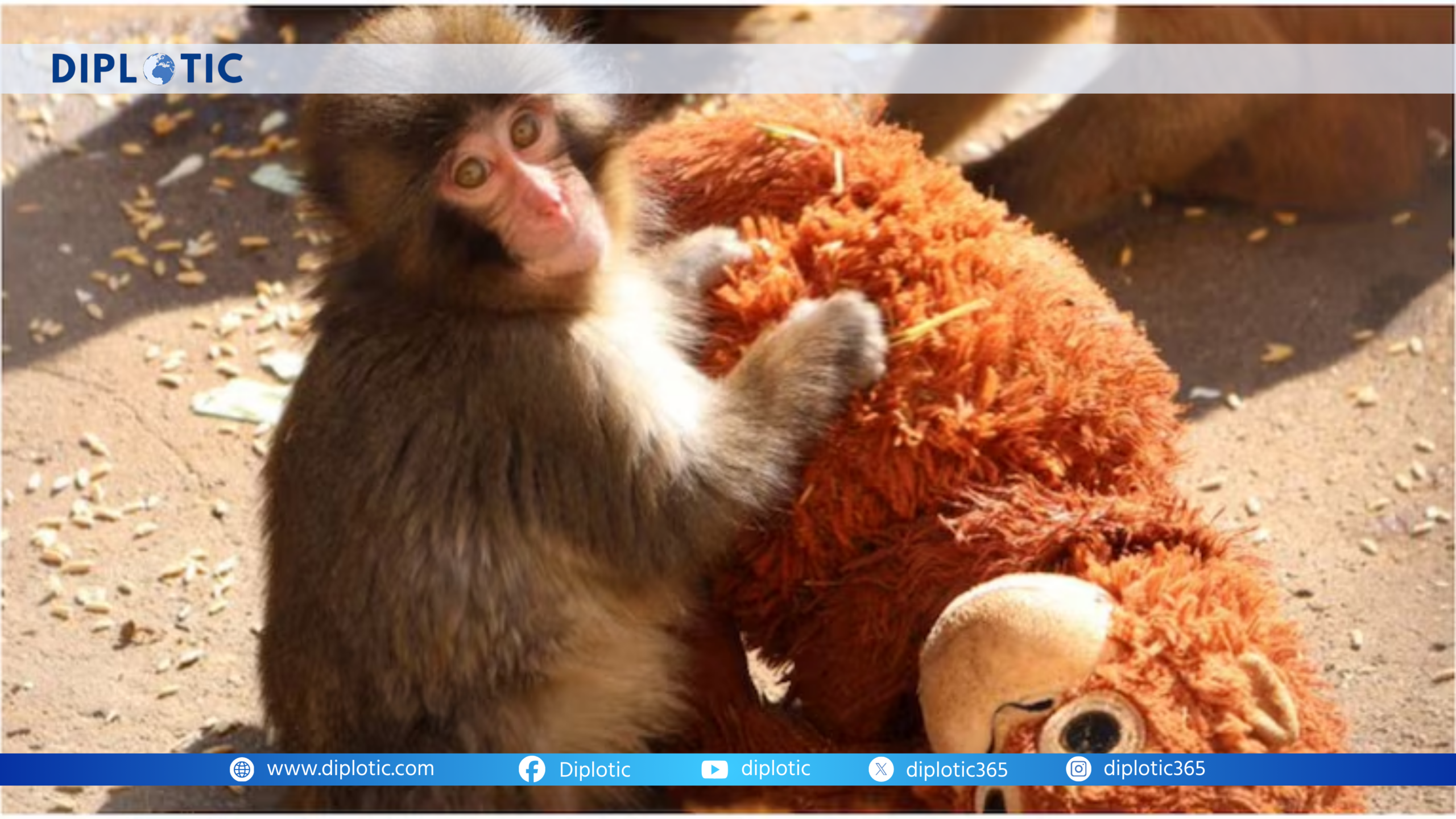
In the vast and often chaotic landscape of social media, where content cycles through attention spans in mere hours, one small creature has managed to stop the scroll and capture hearts across the globe. His name is Punch, a six-month-old Japanese macaque living at Ichikawa City Zoo near Tokyo, and his journey from abandonment to acceptance has unfolded in real-time for millions of online viewers. What began as a simple video of a baby monkey clinging to a stuffed orangutan toy has blossomed into a global phenomenon, complete with viral hashtags, corporate goodwill, ethical debates, and even a quarter-million-dollar acquisition offer from a controversial public figure. But beneath the surface of this seemingly simple animal story lies a deeper narrative about how humans project emotion, wrestle with intervention, and seek connection in an increasingly digital world. Punch’s story offers a unique window into the state of compassion in 2026—its power, its limitations, and its complexities.
Who Is Punch and How Did He Capture the World’s Attention?
Punch, known in Japanese as Panchi-kun, was born in July 2025 at Ichikawa City Zoo . From his earliest moments, his story carried the seeds of tragedy. His mother abandoned him shortly after birth, a circumstance that zoo staff attributed to possible inexperience or the debilitating effects of summer heat on her stamina . In the wild, baby macaques cling to their mothers constantly, finding both physical safety and emotional security in that contact. Without that bond, Punch faced an uncertain future .
Zookeepers stepped in to raise him by hand, feeding him and providing around-the-clock care. But they recognized that a human-raised monkey needed something more—a source of comfort that could approximate the warmth and security of a mother’s fur. They introduced various soft toys, but Punch made his own choice. He selected a long-legged plush orangutan, a toy that was easy for his tiny hands to grasp and, as one keeper noted, perhaps appealing because “it looked like a monkey” . The bond was immediate and profound. Punch began carrying his stuffed companion everywhere, dragging it around his enclosure, sleeping with it, and clutching it tightly during moments of stress or uncertainty .
The zoo named the toy “Ora-mama,” a portmanteau of orangutan and mama, acknowledging the role it played in Punch’s emotional life . When videos of the tiny monkey with his plush friend began circulating on social media, the response was explosive. Viewers saw in Punch’s attachment a mirror of human vulnerability—a orphaned creature seeking comfort in a transitional object, much like a child with a security blanket. The hashtag #HangInTherePunch began trending as fans adopted his story as their own . What made Punch’s story particularly compelling was its narrative arc. This was not a static image but an ongoing saga with ups and downs, triumphs and setbacks—perfect fodder for the serialized attention of social media audiences.
What Happened When Punch’s Story Took a Darker Turn?
For weeks, the narrative focused on Punch’s adorable attachment to his toy and his tentative efforts to integrate with the other monkeys at the zoo. But on February 19, 2026, the tone shifted dramatically. A new video emerged showing Punch being approached by a larger monkey who grabbed him and dragged him in circles across the ground . The baby macaque eventually broke free and ran to a corner of the enclosure, clutching his stuffed orangutan for comfort while both monkeys screamed and onlookers gasped in the background .
The footage spread rapidly across X, formerly Twitter, triggering an outpouring of distress and anger. Viewers perceived the interaction as bullying, a cruel rejection of a vulnerable orphan by a hostile troop. The emotional investment that fans had made in Punch’s story amplified their reaction; this was not just an animal interaction but a perceived injustice against a beloved character .
The zoo moved quickly to provide context. In a statement issued on February 20, officials explained that shortly before the incident, Punch had attempted to interact with another baby monkey and been rebuffed. The adult monkey seen dragging him was likely the mother of that infant, reacting defensively to what she perceived as a bothersome approach . Rather than cruelty, the zoo suggested, this was a form of discipline—a way of teaching Punch boundaries within monkey society. The statement emphasized Punch’s resilience, noting that “while Punch is scolded, he shows mental strength and resilience” . Zoo officials urged viewers not to feel sorry for him but to support his efforts to learn the rules of the troop .
This moment highlighted a central tension in how humans engage with animal stories online. The instinct to anthropomorphize—to project human emotions and motivations onto animal behavior—is powerful, but it can also lead to misunderstanding. What looks like bullying from a human perspective may be normal socialization from a monkey’s. The zoo’s gentle corrective reminded audiences that animals have their own ways of being, ones that do not always align with human sensibilities.
How Did the World Respond to Punch’s Plight?
Despite—or perhaps because of—these complications, the global response to Punch’s story has been remarkable in its breadth and creativity. Major corporations have joined the conversation. IKEA, whose Djungelskog stuffed orangutan retails for about twenty dollars, embraced its role in Punch’s life with notable enthusiasm . IKEA Japan President Petra Färe personally visited the zoo on February 17, delivering additional stuffed animals for Punch and other residents of the facility . The company’s social media accounts across multiple countries posted photos of the toy with captions that tapped directly into the emotional current: “Sometimes, family is who we find along the way,” read one, accompanied by crying face emojis .
Individual supporters have shown their devotion in more personal ways. Visitors have flocked to Ichikawa City Zoo in unprecedented numbers, with staff expressing surprise at the “unexpected crowds” and apologizing for wait times . On a single day in late February, over one hundred visitors gathered around the monkey enclosure, straining for photographs and shouting words of encouragement like “hang in there!” as Punch navigated his social world . Some traveled hours specifically to see him, having studied his photographs in advance to ensure they could pick him out among the troop . For a small zoo outside Tokyo, Punch has become an unlikely tourism magnet.
But perhaps the most extraordinary response came from an unexpected quarter. Tristan Tate, brother of the controversial influencer Andrew Tate, posted on X an offer to purchase Punch for two hundred fifty thousand dollars—approximately two crore rupees . “Which Zoo owns this monkey. @Cobratate and I will buy it,” he wrote, adding for emphasis: “I am NOT joking” . The post garnered over five and a half million views in two days and ignited fierce debate .
Supporters of the Tate offer framed it as a rescue mission, arguing that Punch deserved a more nurturing environment. Critics pointed to the ethical and legal complexities: most zoos do not sell primates to private individuals, and international wildlife laws under CITES protect such animals from private trade . Removing Punch from the zoo, they argued, would separate him from the very troop he was learning to join and deprive him of the specialized care he requires. The zoo has not publicly responded to the offer, but its consistent messaging about supporting Punch’s integration suggests where its priorities lie.
What Does Punch’s Story Reveal About Digital Age Compassion?
Beneath the surface of viral videos and corporate tie-ins, Punch’s journey raises profound questions about the nature of empathy in an era of digital connection. The intensity of global engagement with his story—the tears, the outrage, the offers of rescue—reflects a genuine human capacity for compassion that transcends species boundaries. Millions of people who will never visit Ichikawa have invested emotional energy in the well-being of a single monkey they know only through screens. This is not trivial. It demonstrates that the impulse to care for vulnerable beings remains powerful, even when mediated through technology.
Yet the story also reveals the limitations of that compassion. The zoo’s repeated requests that supporters not feel sorry for Punch but instead support his socialization efforts highlight a disconnect between what animals actually need and what humans want to give them. The impulse to rescue, to intervene, to remove a creature from difficulty can sometimes conflict with the slower, more patient work of allowing natural processes to unfold. The zoo’s philosophy, articulated in a February statement, captures this tension beautifully: “Acceptance does not come from training, but from time, existence, and family ties” .
The happy developments in Punch’s story have reinforced this lesson. In recent days, videos have emerged showing the baby monkey finally receiving the acceptance he sought. An adult monkey named Onsing drew Punch into a firm, reassuring embrace, a moment that fans greeted with jubilation . Other clips show him being groomed by troop members and playing with other young monkeys . His mother, who rejected him at birth, has since given birth to a new baby named Chimi, who was accepted immediately. Zoo staff express hope that Chimi may eventually serve as a bridge between Punch and the troop, not through force but through the natural bonds of family .
This resolution—arrived at through patience, observation, and respect for animal social dynamics rather than dramatic intervention—offers a quiet counterpoint to the more sensational aspects of the story. It suggests that sometimes the most compassionate response is not to rush in and fix things but to trust in the resilience of living beings and the slow work of relationships.
What Lasting Lessons Does Punch Leave Behind?
As Punch continues his gradual integration into monkey society, his viral moment will eventually fade from the front pages of social media. But the questions his story raises will remain. In a digital age characterized by rapid consumption and quick emotional investment, how do we ensure that our compassion translates into meaningful support rather than mere sentiment? How do we balance the instinct to protect vulnerable beings with respect for their autonomy and their own ways of being? And how do we navigate the complexities that arise when animal stories become entangled with human politics, celebrity culture, and corporate branding?
Punch’s journey from abandoned infant to global sensation offers no simple answers, but it does provide a template for thinking through these questions. The most constructive responses to his story have come not from those who sought to extract him from his situation but from those who supported his gradual integration—the zookeepers who provided comfort without removing challenge, the IKEA representatives who donated toys without disrupting care, the visitors who came to observe quietly rather than intervene, and the online community that cheered his small victories without demanding dramatic rescues.
In the end, Punch’s story is a reminder that compassion in the digital age need not be shallow or fleeting. When channeled thoughtfully, the global attention that viral moments generate can support the slow, patient work of care—the work that happens long after the cameras leave and the hashtags stop trending. Punch remains under the care of zoo staff, firmly in the hearts of social media users, and slowly but surely finding his place in the world . That is perhaps the best outcome anyone could have hoped for.




