

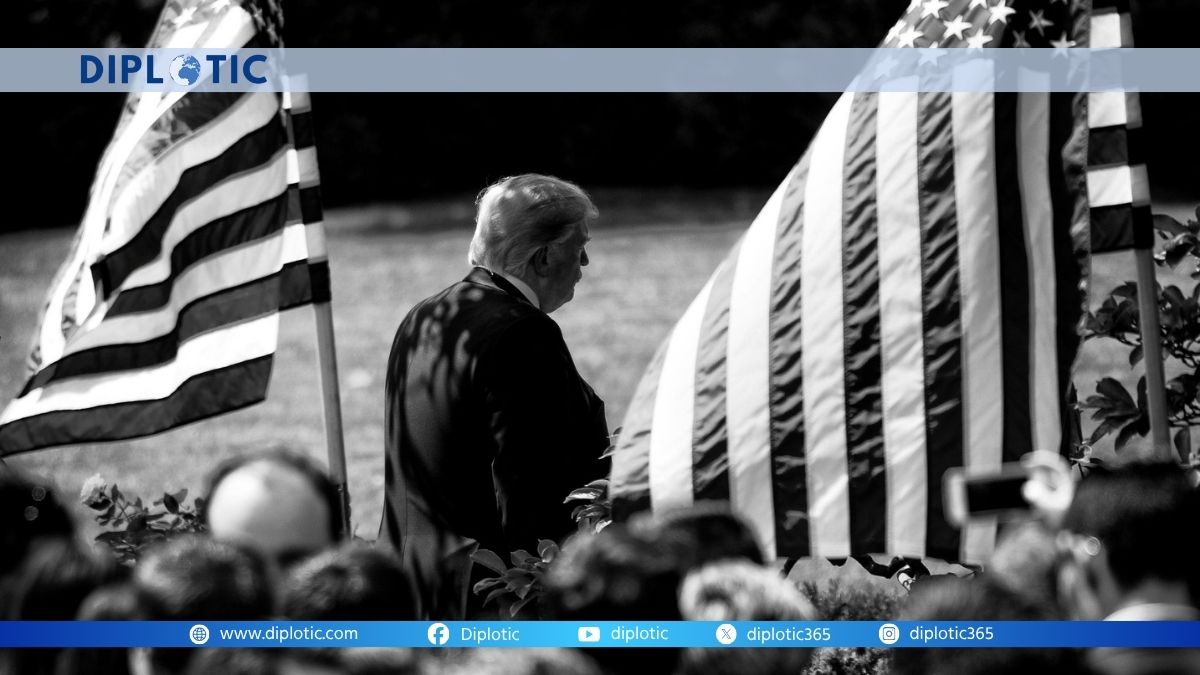
The image of American Military soldiers deployed on U.S. soil against civilian protesters strikes at the core of the nation’s legal traditions and historical fears. This is not a hypothetical concern but the central question of a landmark legal battle now reaching the Supreme Court. The Trump administration‘s decision to federalize and deploy National Guard troops to Chicago, following similar moves in other Democratic-led cities, has ignited a profound constitutional clash. The administration argues it is protecting federal property and personnel amid violent unrest. State and local leaders counter that the move is a blatant abuse of power, a political weaponization of the military to stifle dissent and punish political opponents. With a temporary block on the deployment now left in place by the Supreme Court, the nation faces a critical test of the limits of presidential authority and the delicate balance between federal power and local control in a time of deep political division.
What Legal Authority Does the President Claim?
The administration’s legal argument rests on a specific and rarely invoked statute, the Insurrection Act. This law, with roots stretching back to the 18th century, allows a president to deploy the U.S. military or federalize state National Guard units under three conditions: to suppress an insurrection or rebellion, to repel an invasion, or when the president is “unable with the regular forces to execute the laws of the United States.” The Trump administration has leaned on this third provision. It contends that protests targeting federal immigration facilities in the Chicago area have created a situation where federal law cannot be faithfully executed without military support. Officials have described a “constant threat of mob violence” that hinders the operation of Immigration and Customs Enforcement (ICE) facilities and endangers federal personnel. This framing is essential to their case; it attempts to elevate the protests from a public order issue managed by local police to a fundamental breakdown in federal law enforcement requiring a military response. The administration’s broader narrative paints Democratic-led cities as lawless zones, thereby justifying extraordinary federal intervention.
Why Have Lower Courts Blocked the Deployment?
Federal judges at both the district and appellate levels have expressed deep skepticism of the administration’s characterization of events, leading them to block the deployment. Their rulings highlight a stark factual disagreement. Judge April Perry, in her initial decision, found the administration’s claims of rampant violence and unenforceable laws to be unreliable. She noted that local law enforcement officials described the protests as limited, largely peaceful, and well within their capacity to manage. Judge Perry drew a critical legal distinction, faulting officials for “equating protests with riots,” and emphasized the vital democratic space between criticizing the government and engaging in violent obstruction. The Chicago-based 7th Circuit Court of Appeals, including judges appointed by Republican presidents, agreed. It concluded that “the facts do not justify the president’s actions in Illinois.” These courts have scrutinized the term “regular forces” in the law, interpreting it to mean the standing U.S. military (Army, Navy, etc.). They found the administration made no showing that these regular forces were insufficient or even attempted to be used before leaping to federalize the National Guard. This judicial pushback establishes that the president’s authority under the Insurrection Act is not a blank check; it is triggered by specific, severe conditions that courts have the duty to review.
What Was the Supreme Court’s Ruling and Its Significance?
The Supreme Court’s recent order represents a significant, though preliminary, setback for the administration. By refusing to lift the lower court’s injunction, the majority allowed the block on troop deployment to remain in effect while the legal case continues. In an unsigned order, the court stated that “the Government has failed to identify a source of authority that would allow the military to execute the laws in Illinois” at this stage, and suggested presidential authority to federalize the Guard likely applies only in “exceptional” circumstances. This indicates that a majority of justices found the administration’s legal arguments unpersuasive for immediate action. However, the 6-3 conservative division was visible, with Justices Alito, Thomas, and Gorsuch noting their dissent. The ruling is a rare departure from the court’s recent pattern of deferring to the Trump administration on assertions of executive power. It signals that even a conservative-majority court sees potential overreach and is unwilling to greenlight a domestic military deployment without a stronger factual and legal foundation. The court has asked for further briefing on the meaning of “regular forces,” showing it views the legal interpretation as unsettled and consequential, ensuring the fundamental constitutional questions will be revisited.
What Are the Broader Implications for Federalism and Civil Liberties?
The case transcends the specific dispute in Chicago, touching foundational principles of American governance. At its heart is federalism—the division of power between national and state governments. Governors, like Illinois’s J.B. Pritzker, view the unilateral federalization of their National Guard as a hostile takeover of state resources and an infringement on their authority to maintain public order within their borders. For local officials, it represents an alarming federal intrusion into local policing, based on a politically charged narrative that dismisses their professional assessments. For civil liberties advocates, the deployment of soldiers to police protests creates a chilling effect on First Amendment rights, casting lawful dissent as a pretext for military intervention. The historical precedent is deeply troubling; using the military for domestic law enforcement is a power restricted by the Posse Comitatus Act and reserved for genuine emergencies to avoid the specter of martial law. If the administration’s broad interpretation of the Insurrection Act were to stand, it could normalize the use of the military as a tool in political and policy disputes, eroding the traditional separation between the military and civilian spheres and setting a dangerous precedent for future presidents of any party.
What Happens Next in This Constitutional Standoff?
The legal and political conflict is far from resolved. The Supreme Court’s order is temporary, and the underlying case will proceed through the lower courts, likely returning to the justices for a final ruling on the merits. Simultaneously, parallel lawsuits in other jurisdictions, like Portland, are advancing, creating a multi-front legal war over the same principles. Politically, the dispute galvanizes both sides. The administration frames the court’s block as an obstacle to law and order, while opponents see it as a vital brake on authoritarian tendencies. The outcome will hinge on two key factors: first, whether the courts ultimately accept the administration’s factual portrayal of protests as constituting a breakdown in law enforcement, and second, how narrowly they interpret the antiquated language of the Insurrection Act. A broad ruling for the administration would dramatically expand presidential power in domestic affairs. A ruling for the states would reaffirm that the military is a tool of last resort, that local authorities retain primary responsibility for public safety, and that the line between protest and rebellion must be crossed, not merely alleged, before the president can summon soldiers to American streets. The nation now waits to see where that line will be drawn.




