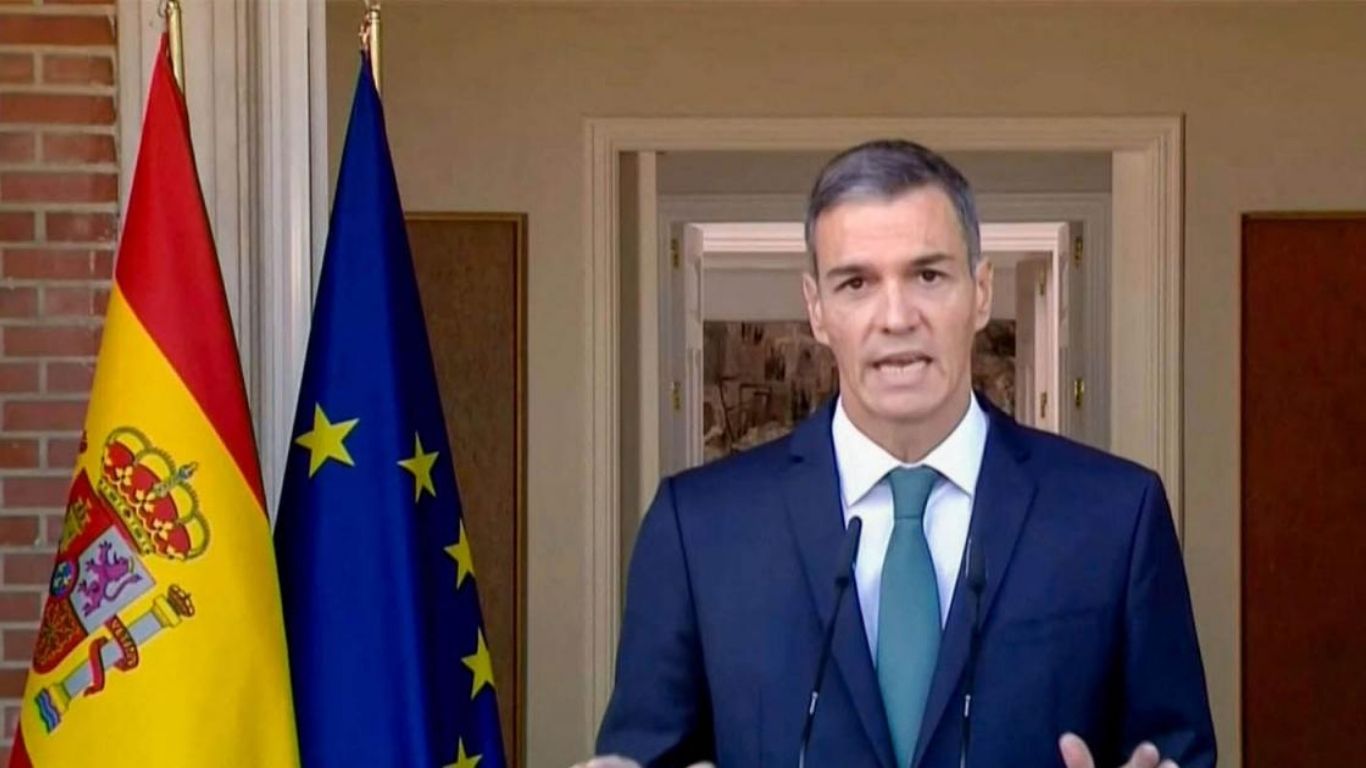
Spanish Prime Minister Pedro Sánchez has intensified his criticism of Israel’s war in Gaza, urging the international community to bar Israel from international sports competitions. Speaking to lawmakers from his Socialist Workers’ Party, Sánchez argued that Israel should be treated the same way Russia was after its full-scale invasion of Ukraine in 2022.
“Israel cannot continue to use any international platform to whitewash its image,” Sánchez declared, in remarks that are already reverberating across Europe and the wider sporting world.
The call represents one of the strongest stances yet taken by a European leader against Israel’s participation in global cultural and sporting events, and it comes as outrage grows over the humanitarian crisis unfolding in Gaza.
A Parallel with Russia’s Isolation
Sánchez explicitly drew a comparison with Russia’s sporting ban, imposed after Moscow’s invasion of Ukraine. Russia was swiftly excluded from international football, the Olympic Games, and other events. The Spanish prime minister argued that Israel deserves similar treatment because of its military campaign in Gaza, which he and several members of his government have described as genocide.
The controversial comments followed the cancellation of the final stage of the Vuelta a España, Spain’s premier cycling race, after pro-Palestinian protests erupted in Madrid. Demonstrators targeted the race because an Israeli team was participating, with officials estimating the crowd at nearly 100,000 people.
Sánchez praised the demonstrations, saying they showed Spain “shines as an example, with pride” on the Gaza issue.
Israel’s Fierce Response
Israel reacted angrily. Foreign Minister Gideon Saar branded Sánchez “a disgrace” and accused him of inciting unrest that forced the Vuelta’s cancellation. Saar also accused the Spanish government of spreading “wild and hateful rhetoric” and of fueling antisemitism.
Israel has consistently rejected accusations that its actions in Gaza amount to genocide, insisting instead that its campaign is a legitimate act of self-defense following Hamas’s October 7, 2023 attacks, which killed about 1,200 Israelis and saw 251 hostages taken.
According to the Hamas-run health ministry in Gaza, more than 64,800 people have been killed in Israeli attacks since the war began, though Israel disputes those figures.
Spanish Ministers Echo Sánchez’s Hard Line
Members of Sánchez’s cabinet echoed his hard-hitting remarks. Digital Transformation Minister Óscar López praised the Madrid protests, calling the war in Gaza “genocide and it has no other name.”
Meanwhile, Culture Minister Ernest Urtasun repeated earlier demands for Israel to be excluded from the Eurovision Song Contest, another international platform often mired in political controversy.
“We have to make sure that Israel does not take part in the next Eurovision,” Urtasun said.
Public broadcasters in Ireland and the Netherlands have already announced they would boycott Eurovision if Israel participates, citing the “appalling” civilian toll of the war in Gaza.
Strained Spain-Israel Relations
Relations between Madrid and Jerusalem have been strained since late 2023, when Sánchez openly questioned Israel’s conduct in Gaza. In 2024, Spain joined Norway and Ireland in recognizing the State of Palestine, further souring ties.
Just last week, Sánchez accused Israel of committing genocide and imposed a series of punitive measures, including an arms embargo.
Israel’s government, in turn, accused Madrid of bias and “using hateful rhetoric.”
European Backlash Against Israel
Sánchez’s remarks come amid a broader European reckoning with the Gaza war. European Commission President Ursula von der Leyen recently called for suspending free trade and bilateral support agreements with Israel. She described the situation in Gaza as a “man-made famine” and lamented Europe’s “painful inability” to respond effectively to Israel’s actions.
The famine has been confirmed by the UN-backed Integrated Food Security Phase Classification (IPC), which reported in August that parts of Gaza are already experiencing starvation. Israel is accused of exacerbating the crisis by restricting food and medical aid entering the enclave, despite hundreds of aid trucks reportedly waiting at border crossings.
Under international law, as the occupying power, Israel bears responsibility for preventing starvation and protecting civilian life. Prime Minister Benjamin Netanyahu has denied that famine exists, blaming aid agencies and Hamas for failing to distribute supplies.
Sports, Culture, and Diplomacy Collide
By targeting Israel’s participation in global sports, Sánchez has touched on a powerful symbolic arena. International competitions like the Olympics, football tournaments, and Eurovision are more than entertainment they are platforms of national prestige and soft power.
During Russia’s isolation, sports bans amplified its diplomatic marginalization. Sánchez and his ministers clearly hope to generate similar momentum against Israel.
But such a push could split Europe. While some governments, particularly in Western Europe, are increasingly critical of Israel, others remain wary of setting precedents that politicize sports.
Public Opinion in Spain
Domestically, Sánchez’s remarks align with strong public opinion. A poll by the Elcano Royal Institute found that 82% of Spaniards believe Israel is committing genocide in Gaza.
This overwhelming sentiment has emboldened the Spanish government to adopt a tougher stance than most EU nations. With large-scale protests erupting across Spanish cities, Sánchez is positioning himself as a European leader willing to challenge Israel’s global standing.
Conclusion: A New Front in the Gaza Debate
Pedro Sánchez’s call to ban Israel from international sport marks a dramatic escalation in Europe’s response to the Gaza war. By invoking the precedent of Russia’s isolation, Spain is urging the world to hold Israel accountable not just through diplomacy or sanctions, but through the highly visible arena of global culture and competition.
Whether other countries follow Madrid’s lead remains to be seen. But with famine deepening in Gaza, Arab states rallying behind Palestine, and even European allies now considering suspension of trade ties with Israel, the momentum of global pressure is unmistakably building.
For Israel, the stakes are not only military and diplomatic they now extend to the playing fields, stages, and screens where nations project their image to the world.