Pakistan’s bold proposal for a new South Asian bloc anchored with China and Bangladesh seeks to revive regional cooperation outside the stalled SAARC architecture. But with India out and deep strategic divides, experts question whether this plan can deliver real impact or deepen fragmentation.
A Bold Vision for Regional Realignment
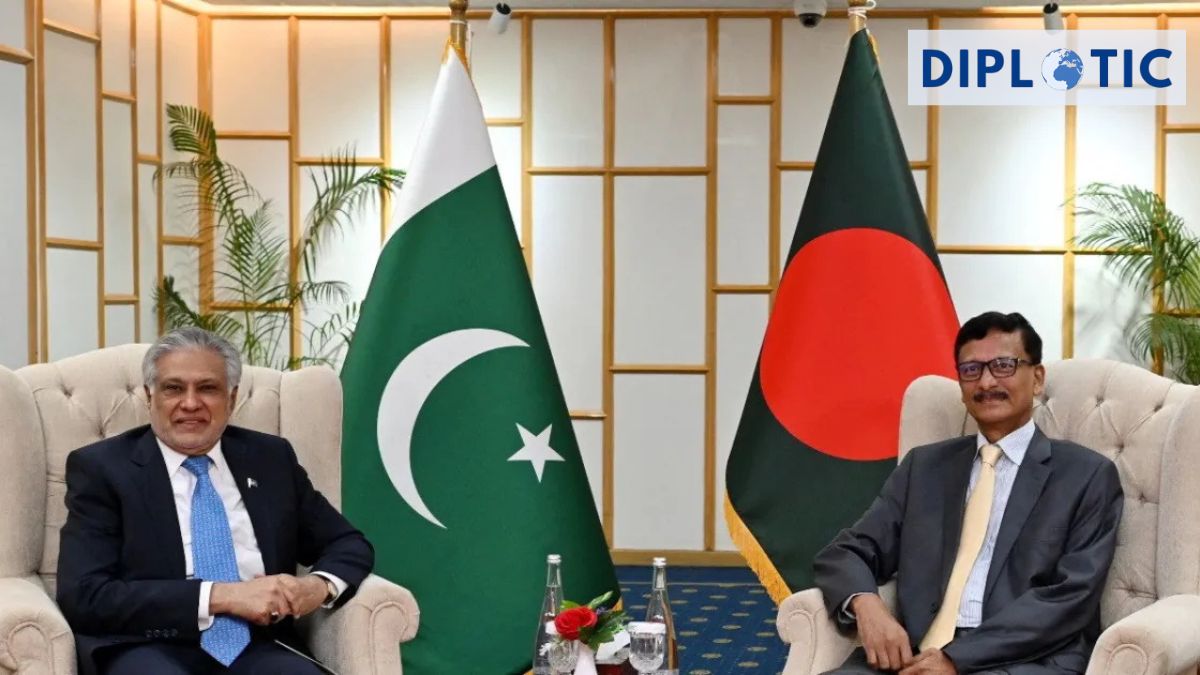
At the recent Islamabad Conclave in December 2025, Pakistan’s Deputy Prime Minister and Foreign Minister Ishaq Dar unveiled a provocative diplomatic move: to expand the nascent trilateral cooperation among Pakistan, Bangladesh, and China into a wider South Asian regional bloc, intentionally sidestepping India.
Dar emphasized that the new grouping would adopt a “variable geometry” approach, allowing flexible, issue-based cooperation on economy, technology, connectivity, and regional development rather than an all-or-nothing consensus.
The implication is clear: when the established multilateral framework of SAARC remains paralyzed, alternative regional architecture might emerge with China and like-minded countries at the center.
Why Now? The Collapse of SAARC and the Drive for Alternatives
The push for a new bloc cannot be divorced from the lingering dysfunction of SAARC. Once the flagship institution for South Asian cooperation including trade, infrastructure, and cultural exchange SAARC has been moribund since 2014.
The 2016 summit in Islamabad was cancelled after India withdrew following terror attacks attributed by New Delhi to Pakistani-based militants. Since then, SAARC has failed to convene meaningful summits or implement major agreements such as the Motor Vehicles Pact or regional rail connectivity.
With trade within South Asia estimated at just ~5% of total regional commerce, a far cry from the ~25% intra-blocs like the ASEAN enjoy many analysts argue the region’s economic potential remains untapped.
Thus, the impetus behind a “SAARC alternative” grows: to overcome the stalemate and inject fresh momentum into South Asian integration.
What the Proposed Bloc Promises: Aspirations vs. Realism
Supporters of Pakistan’s proposal highlight several prospective benefits for South Asia:
- Issue-based cooperation & flexible alliances. By adopting “variable geometry”, the bloc could allow nations to cooperate on specific issues — trade, infrastructure, climate, technology — without needing full consensus from all states. This flexibility could circumvent the gridlock that plagued SAARC.
- Revitalised trade and connectivity potential. With improved cross-border connectivity, energy linkages, and infrastructure investment, member states could unlock significant economic growth and regional trade — something that SAARC largely failed to deliver.
- Strategic realignment and geopolitical balancing. For Pakistan — and likely China — the new bloc could serve as a counterweight to India’s dominant influence in South Asia. For smaller states, it may also offer diversification of partnerships beyond New Delhi.
- Adaptation to contemporary challenges. Issues such as climate change, energy security, digital economy and regional infrastructure demands require new cooperation models; a fresh bloc could respond more dynamically than the moribund SAARC. However, experts caution the plan faces serious structural and political obstacles.
The Hard Reality: Why Many Doubt Its Viability
Economic and Strategic Cost of Excluding India
Excluding India the region’s largest economy by a wide margin, substantially reduces the bloc’s economic heft. Without India’s vast market and trade networks, any alternative grouping risks being commercially and politically marginalized.
Smaller South Asian nations, Bhutan, Nepal, Sri Lanka, the Maldives, and possibly even Bangladesh, may hesitate to join a bloc openly excluding India, fearing diplomatic backlash and economic isolation.
Uncertain Incentives for Member States
For most South Asian countries, cooperation must translate to clear economic or developmental gains. At this stage, the proposed bloc remains aspirational: no formal charter, no institutional depth, and no binding commitments have been publicly announced.
Moreover, participation might carry political costs, especially for states balancing ties with India and China. Opting into a Pakistan-China-backed bloc could disrupt the delicate foreign-policy equilibrium.
Risk of Regional Fragmentation, Not Integration
Rather than fostering regional unity, the new grouping may deepen division: multiple overlapping subregional and regional structures could proliferate, eroding any chance for a cohesive, comprehensive South Asian cooperation framework.
Sub-regional efforts (e.g., in trade or connectivity) may succeed, but without harmonized institutional frameworks, these risks remain ad hoc, piecemeal, and insufficient to address deeper structural issues such as dispute resolution, regional security, or governance standards.
Geopolitical Complexity and Competing Agendas
Any new bloc would likely be shaped by competing geopolitical agendas — notably those of Pakistan and China. Other regional states might hesitate to align with a grouping perceived as a strategic counterweight to India, particularly if it risks entanglement in broader China–India or China–West competition.
In short: even if a skeletal grouping emerges, building durable trust, equitable governance, and inclusive incentives across diverse countries with divergent interests will be a formidable challenge.
What This Means for Bangladesh and the Wider Region
For Bangladesh, which played a key role in the 2025 trilateral with Pakistan and China, this bloc presents both opportunity and risk. On one hand, infrastructure investment, connectivity, trade expansion, and new diplomatic alignments could bring tangible benefits. On the other hand, overt alignment with China-Pakistan efforts might strain Dhaka’s relations with India — which remains one of Bangladesh’s largest trade and transit partners.
For other countries (Nepal, Sri Lanka, Maldives, Bhutan), the bloc may initially appear as an option to diversify alliances; yet actual commitment depends on whether the bloc offers more than rhetoric — and whether participating countries are willing to bear potential diplomatic costs.
If such a bloc remains limited to issue-based cooperation (trade corridors, energy linkages, infrastructure deals), without broader institutional structure or conflict-resolution mechanisms, it risks becoming another loosely connected coalition — rather than a coherent regional framework.
Ambitious Blueprint But Far From a Game-Changer
The proposed new South Asian bloc by Pakistan in partnership with China and potentially other willing countries represents an ambitious attempt to reimagine regional cooperation beyond the constraints of SAARC. The vision of flexible, issue-driven alliances holds appeal in a region long haunted by political rivalry and institutional gridlock.
Yet, the practical challenges are profound. Without India, the bloc lacks the economic critical mass; without institutional depth or shared governance mechanisms, it risks remaining symbolic. Most importantly, for many South Asian states, the diplomatic cost of overt alignment with a China-Pakistan axis may outweigh the potential gains.
At present, the proposal should be viewed as a strategic signal, not a fully formed alternative to SAARC. For it to evolve into a meaningful, lasting platform, it will need concrete commitments: a charter, institutional infrastructure, transparent governance, and incentives strong enough to outweigh geopolitical risk. Until then, South Asia’s journey toward genuine regional integration remains uncertain and its future more fragmented than ever.