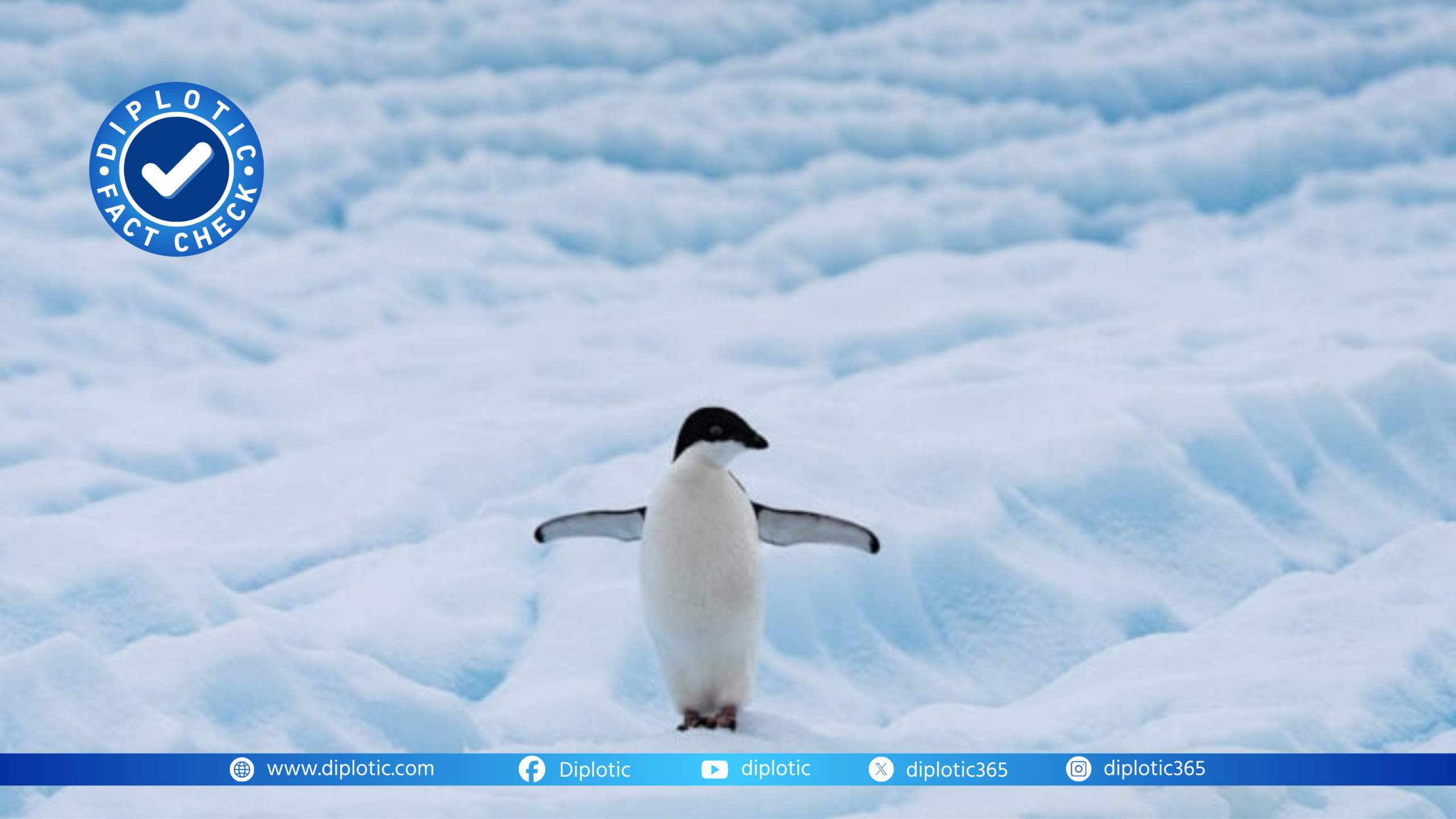
A short, evocative video clip has become a global internet sensation. It shows a lone penguin, distinct from the dark masses of its colony, walking steadily away across the vast, empty Antarctic ice. The narrative attached to it is compelling: this is a “nihilist penguin” or “penguin going on a solo journey,” abandoning society and its duties in a moment of existential despair or bold individualism. The imagery has spawned AI-generated variations, philosophical commentary, and jokes from public figures. But does this clip depict a recognized animal behavior, or is it a profound case of anthropomorphism—the attribution of human emotions and motives to animals—gone viral? This investigation traces the clip’s origins, examines the science of penguin behavior, and explores why this particular misreading has resonated so deeply in contemporary culture.
Claim 1: The footage depicts a rare but documented behavior where a penguin deliberately abandons its colony for unknown reasons.
Evaluation: The original, most-shared footage is sourced from the 2007 BBC documentary series Planet Earth, specifically the “Ice Worlds” episode. In the documentary’s context, narrated by Sir David Attenborough, the penguin is identified as an Emperor penguin that has become disoriented. The narration explains that the penguin is lost and heading inland towards certain death, away from the life-sustaining sea. This is a documented, if tragic, occurrence. Penguins navigate using a complex combination of the sun, landmarks, and possibly the Earth’s magnetic field. In featureless white landscapes during blizzards or overcast conditions, individuals can become disoriented. The behavior is not a conscious rejection of colony life but a navigational failure. Animal behaviorists confirm that Emperor penguins are intensely social, colonial animals whose survival depends on the colony for warmth (huddling) and collective vigilance against predators. An isolated penguin is in grave danger, not on a quest for enlightenment.
Verdict: False. The behavior is a documented navigational error, not a deliberate abandonment. The “nihilist” narrative is a complete misinterpretation of a survival failure.
Claim 2: The “walk” is a normal part of penguin behavior, such as a scout looking for new nesting grounds or a parent fetching food.
Evaluation: This claim attempts to rationalize the footage within normal ethological (animal behavior) frameworks. However, it does not align with known Emperor penguin biology. During the breeding season, adults take turns marching to the sea to forage for food, but they travel in groups or follow established paths, not alone into the unknown. “Scouting” for new colony sites is not a known behavior undertaken by lone individuals; colony movement is a slow, generational process. Furthermore, the direction and determined, uninterrupted gait of the penguin in the video, moving into the empty continental interior, is antithetical to any life-sustaining goal. The visual context of the shot—the receding colony, the endless white void—is edited for dramatic effect in the documentary, emphasizing the penguin’s fatal mistake. The clip’s power, and its misinterpretation, stem from this poignant, cinematic framing.
Verdict: False. The specific behavior shown—sustained, solitary travel inland—is not a normal functional activity. It is a pathological deviation caused by disorientation.
Claim 3: The meme is harmless fun; applying human emotions like nihilism or existential angst to animals is just creative storytelling.
Evaluation: On one level, anthropomorphism is a timeless human tendency and a staple of children’s stories and fables. The “nihilist penguin” has sparked creativity and provided a relatable metaphor for feelings of disillusionment or the desire to escape social pressures. However, the meme ceases to be harmless when it obscures real wildlife biology and the genuine threats animals face. It repurposes a scene depicting a real animal in a life-threatening situation as a form of comic or philosophical content. This creates a “greenhouse” for misinformation, where a fictional narrative becomes more widely known than the biological truth. It can subtly shape public understanding, making people less likely to appreciate the precise adaptations and vulnerabilities of species like the Emperor penguin, which is classified as Near Threatened due to climate change impacting its sea-ice habitat.
Verdict: Misleading. While creative interpretation is natural, the meme’s scale and detachment from the disturbing reality of the footage risks fostering a disconnect between viral content and actual animal welfare and conservation science.
Claim 4: The popularity of the meme, including AI-generated images, proves people are projecting their own modern anxieties onto nature.
Evaluation: This claim touches on the deeper cultural sociology of the trend. The “nihilist penguin” archetype—the individual walking away from the collective—resonates with powerful contemporary themes: burnout, social media fatigue, rejection of societal expectations, and a search for meaning in a chaotic world. The penguin becomes a perfect, blank avian canvas for these projections. Its monochrome suit-like appearance adds to the “everyman” quality. The explosion of AI-generated images of penguins in desolate, moody landscapes or walking towards dystopian cities explicitly caters to and amplifies this projection. It is no longer about animal behavior at all; it is a purely symbolic use of the penguin’s form to visualize human emotional states. The trend’s viral nature, including adoption by world leaders, shows it functions as a culturally shared shorthand for a specific kind of modern resignation or quiet rebellion, entirely divorced from its zoological origins.
Verdict: True. The meme’s endurance and evolution are overwhelmingly driven by its utility as a metaphor for human, not penguin, experience. It is a cultural Rorschach test projected onto the Antarctic ice.
Claim 5: Investigating this meme reveals a broader pattern: how documentary filmmaking and internet culture can distort public understanding of science.
Evaluation: This is the core systemic issue exposed by the phenomenon. The process involves several stages: First, documentary filmmakers must create engaging narratives. The original Planet Earth segment is masterful, using music, editing, and Attenborough’s solemn narration to evoke tragedy and solitude. This necessary storytelling heightens emotional impact but primes the clip for narrative hijacking. Second, social media users excise the clip from its explanatory context. Stripped of narration, the imagery is open to any interpretation. Third, the algorithms favor engaging, emotionally charged narratives (like a “rebellious penguin”) over nuanced, tragic facts. Finally, the feedback loop of memes and AI art completely severs the image from its source, creating a self-sustaining myth. This pattern is not unique to the penguin; it happens with “dancing” bears, “mourning” elephants, and “friendships” between predators and prey. The trade-off is constant: raising awareness and wonder about nature sometimes comes at the cost of accurate biological literacy.
Verdict: True. The “nihilist penguin” is a textbook case of how scientific observation, filtered through documentary storytelling and then viral internet culture, can be transformed into its opposite—a myth that feels more resonant to a human audience than the complex, often harsher, truth of the natural world.
Conclusion: The Lonely Walk as a Mirror
The “nihilist penguin” is not a real animal behavior phenomenon. It is a profound cultural metaphor born from a mislabeled documentary clip. The penguin is not on a quest; it is catastrophically lost. Its journey is not philosophical; it is fatal.
The investigation reveals less about penguins and more about us. The meme’s stunning popularity reflects a modern desire to find narratives of individual agency and existential meaning, even in places where they do not exist. It highlights a dangerous comfort: we would rather see a rebellious spirit than a victim of a harsh environment, because the former is a story we can use, while the latter is a simple, unsettling tragedy.
The real lesson lies in the importance of context. A few seconds of footage, without the framework of expert narration or scientific explanation, can become anything the internet needs it to be. In an age of AI-generated imagery, the line between observed reality and projected fantasy blurs further. The fate of the actual penguin in the video remains unknown, but its digital ghost walks on, a lasting symbol not of avian despair, but of the human need to tell stories about ourselves, using the natural world as a backdrop.