

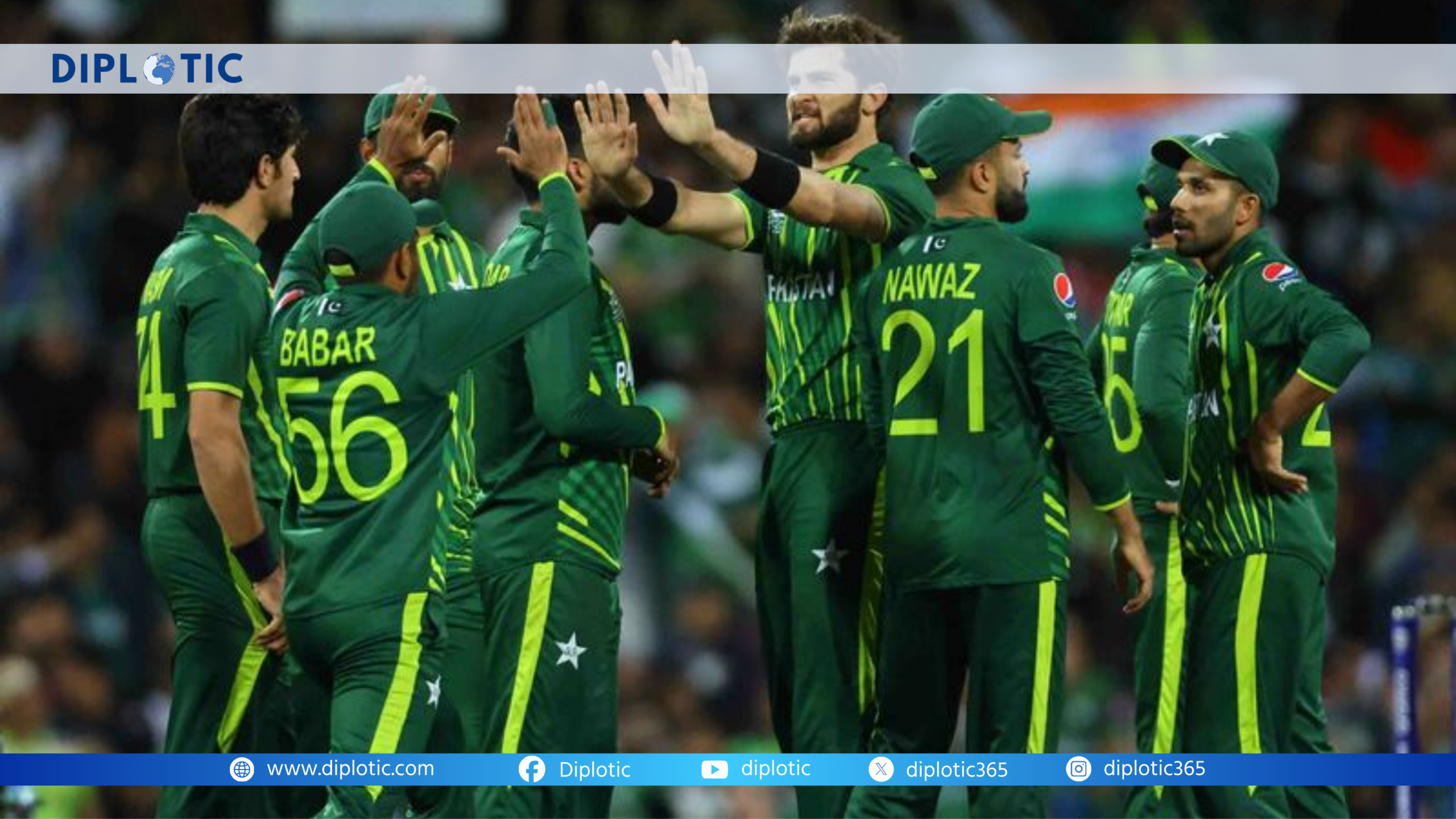
When Pakistan walked off the field after their narrow defeat to England in Kandy, the scoreboard showed a two-wicket loss. What it did not show clearly was something more painful: elimination not just by defeat, but by decimals. In modern T20 cricket, teams do not exit tournaments only because they lose matches. They also exit because of calculations. Net Run Rate, often shortened to NRR, has become one of the most discussed and least understood parts of global tournaments.
In the recent T20 World Cup group stage, Pakistan finished level on points with another team in their group. That alone did not decide their fate. The deciding factor was Net Run Rate. For many fans, the question was simple: how can one or two runs in a match change an entire campaign? For analysts and team managers, the answer lies in mathematics, planning, and sometimes missed opportunities earlier in the tournament.
The T20 format is short. Each team gets only 20 overs. That means every over, and often every ball, carries extra weight. A team that wins a match comfortably by chasing a target quickly improves its NRR. A team that loses heavily damages its NRR. Over a short group stage of four or five matches, even one poor performance can tilt the balance.
Pakistan’s exit has once again pushed Net Run Rate into public debate. Supporters often feel frustrated because elimination by NRR can appear unfair. Yet tournament organizers rely on it because it offers a statistical method to separate teams tied on points. The drama of elimination in T20 cricket is not only about big shots and last-over thrillers. It is also about quiet calculations running in the background from the first game of the tournament to the last.
To understand how Pakistan were knocked out, and why such situations keep repeating in global events, it is necessary to look closely at how NRR works, how teams manage it, and why T20 cricket makes it more dramatic than any other format.
What Exactly Is Net Run Rate and Why Does It Matter So Much?
Net Run Rate sounds technical, but its logic is simple. It measures how fast a team scores compared to how fast it allows the opposition to score across the tournament. The formula is straightforward: average runs scored per over minus average runs conceded per over.
If a team scores 800 runs in 100 overs across matches, its scoring rate is 8 runs per over. If it concedes 760 runs in the same number of overs, its conceding rate is 7.6 runs per over. The Net Run Rate would then be +0.4. A positive number is good. A negative number is risky.
In T20 tournaments, where teams often finish with the same number of wins and losses, this number becomes critical. Points decide the primary ranking. When points are equal, NRR usually acts as the first tiebreaker.
Pakistan’s situation followed this pattern. They did not fall far behind in terms of wins. Instead, the difference came from the margins. In one earlier match, they struggled to chase quickly. In another, they conceded runs at the death. Those small differences built up. By the time they faced England, they were not only playing to win but also to improve their NRR enough to overtake a rival.
This is where strategy becomes complex. Suppose a team knows that winning by a certain margin is necessary to qualify. The captain must decide whether to attack aggressively or play safely. If chasing, they might try to finish the game in fewer overs. If defending, they might push for a large victory margin rather than simply closing out the game.
In Pakistan’s case, the loss to England ended direct qualification hopes. But even before that final result, the team was under pressure from previous margins. The difference in NRR between them and the qualifying team was small but significant. In a tournament with only a few matches, every over where a team scores slowly or concedes heavily has lasting impact.
The fairness of Net Run Rate is often debated. Some argue it rewards consistent performance across the tournament. Others feel it punishes teams for one bad day. Yet the system forces teams to treat every match as important, not just the headline clashes. It prevents a team from relaxing after securing a few wins. In that sense, NRR shapes behavior from the very first ball of the group stage.
Why Does T20 Cricket Make Elimination More Dramatic?
T20 cricket is built on speed. A Test match unfolds over five days. A One Day International offers 50 overs per side. T20 compresses the contest into about three hours. That compression magnifies every moment.
In longer formats, a single poor over can be corrected over time. In T20, one expensive over can shift momentum and affect NRR. A final burst of boundaries can raise a team’s scoring rate by a full run per over. Similarly, losing early wickets can reduce scoring pace and damage NRR even in a winning effort.
This format also creates close finishes. In the match against England, Pakistan posted a competitive total. England chased with difficulty and won in the final overs. For fans, the focus was on the tension of the chase. For tournament tables, the key detail was that England completed the chase with overs to spare. Those unused balls improved England’s NRR and limited Pakistan’s chances.
Another feature of T20 is the small group size. In many World Cups, teams play only four or five group matches. That is a small sample. In such a short phase, statistical swings are sharp. A heavy defeat can push a team to the bottom. A dominant win can lift it near the top. There is little time to recover.
The result is that qualification often depends on scenarios calculated before the last match. Broadcasters show charts explaining how many runs are needed or in how many overs a target must be chased. Players say they ignore these numbers, but in reality, team management tracks them closely.
Pakistan’s exit fits into a broader pattern seen in past tournaments. Teams like New Zealand, India, South Africa, and Australia have all benefited or suffered because of NRR at some stage. The drama lies not only in winning or losing but in how convincingly a team performs.
T20 cricket, by design, values aggression. That same aggression influences NRR. A team that plays boldly can secure large wins and improve its standing. A team that plays cautiously may win matches but fall short on rate. The format rewards clarity of purpose from start to finish.
Can Teams Control Their Fate, or Is It Just Mathematics?
After elimination, fans often ask whether their team could have done more. In Pakistan’s case, attention turned to earlier matches. Could they have chased a target faster? Could bowlers have restricted runs more tightly in the final overs? These questions are not emotional reactions alone. They reflect the structure of tournament cricket.
Teams do have control over NRR, but only to a degree. Weather interruptions, pitch conditions, and toss results all play a role. A slow surface may prevent quick scoring. A wet outfield may favor bowlers. These factors influence run rates in ways that are hard to predict.
However, planning remains important. Strong teams often aim for dominant wins against weaker opponents to build a healthy NRR cushion. They rotate strike carefully to avoid dot balls. They manage bowlers to prevent late scoring surges. Modern cricket analytics departments calculate ideal scoring patterns for different match situations.
Pakistan’s campaign showed flashes of strong cricket but lacked consistent dominance. A narrow win adds two points but may not significantly boost NRR. A narrow defeat not only costs points but can also push NRR into negative territory. Over a short group stage, these details accumulate.
For the tournament itself, the use of NRR encourages attacking cricket. It reduces the chance of passive play once a team feels safe on points. It also adds tension for neutral fans, who follow not only one match but parallel fixtures to understand changing qualification scenarios.
In the end, Pakistan’s elimination was not decided only on the final night. It was shaped across several matches. Net Run Rate did not appear suddenly. It was present from the first ball of the tournament. The loss to England confirmed their exit, but the groundwork was laid earlier.
T20 cricket thrives on drama. Net Run Rate adds a layer of silent pressure that builds across days. It forces teams to think beyond victory and consider margin. Pakistan’s departure from the tournament serves as a reminder that in modern cricket, performance is measured not just by results but by rate, rhythm, and consistency. In a format defined by speed, even decimals can decide destiny.




