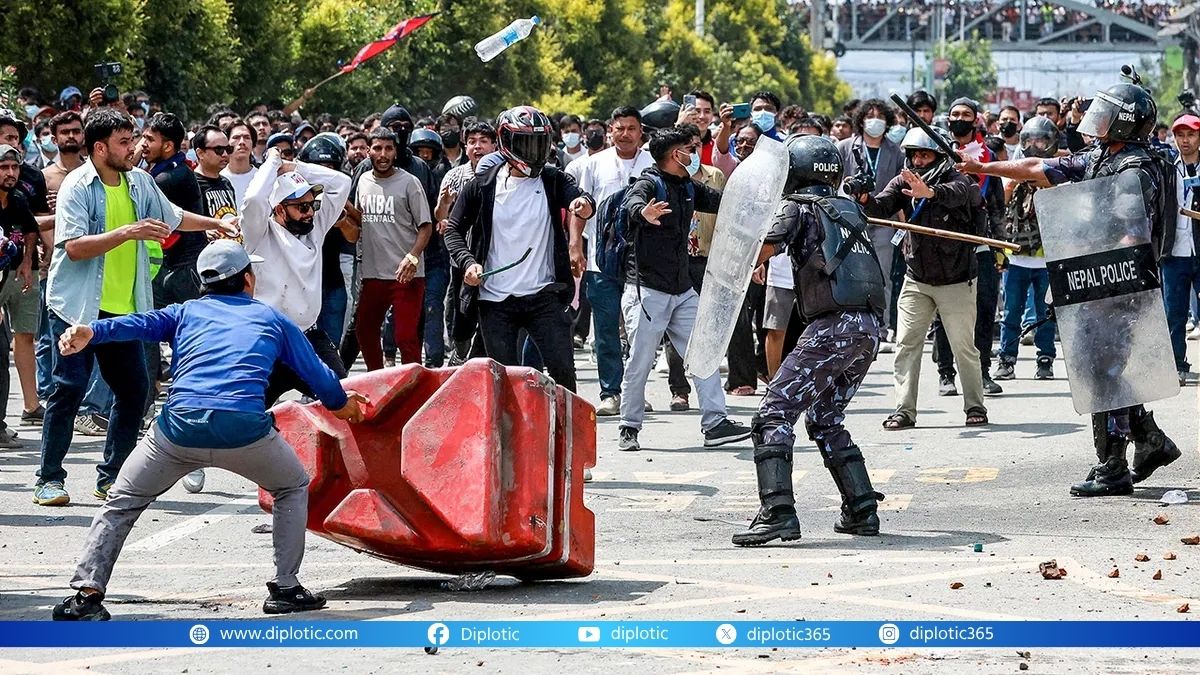
Nestled between the towering Himalayas and the bustling plains of India, Nepal is a land of breathtaking mountains, ancient temples, and resilient people. Yet, for decades, this small nation has been gripped by a whirlwind of political drama—governments toppling like dominoes, protests shaking the streets of Kathmandu, and leaders swapping alliances faster than a mountain goat scales a cliff. Since the end of its monarchy in 2008, Nepal has seen over a dozen prime ministers in less than two decades. This instability isn’t just a local headache; it ripples across South Asia, affecting trade routes, water resources shared with giants like India and China, and the dreams of millions living in poverty.
Why does this matter? In a world where superpowers jostle for influence, Nepal’s chaos raises a burning question: Is foreign meddling pulling the strings, turning a sovereign nation into a geopolitical chessboard? Or is the real villain closer to home—deep-rooted domestic flaws like corruption, ethnic rifts, and a hunger for power? This isn’t just about one country’s woes; it’s a mirror to how small nations navigate the shadows of big neighbors. As we dive into the claims swirling around this debate, we’ll peel back layers of history, strategy, and human folly. Buckle up—this investigation uncovers not just facts, but the messy truths that make Nepal’s story so human.
Claim 1: India Secretly Engineers Nepal’s Government Flip-Flops to Keep Control
Whispers in Kathmandu tea shops often point fingers at New Delhi. The claim goes like this: India, Nepal’s giant southern neighbor, pulls off quiet coups by backing friendly politicians, cutting off supplies during crises, and whispering in the ears of kings and presidents alike. Remember the 2015 blockade after Nepal’s new constitution? Trucks stopped at the border, fuel prices soared, and blackouts plunged homes into darkness. Critics say it was India’s punishment for Nepal cozying up to China or ignoring Madhesi rights in the south.
To check this, let’s cross-reference solid ground. India’s Ministry of External Affairs has long denied direct interference, framing its role as “supportive neighborly ties.” But history tells a sharper tale. Back in the 1950s, when Nepal shook off Rana rule, India helped broker the transition—lending military aid and advisors. This set a pattern: Delhi sees Nepal as a buffer against China, vital for its own security. Geopolitically, it’s like a big brother watching the backyard gate.
Yet, dig deeper into reports from the BBC and Al Jazeera (up to 2024), and you find nuance. The 2015 blockade was real—India’s trucks did halt, citing security concerns amid protests. But Nepali leaders, including then-Prime Minister K.P. Sharma Oli, admitted internal missteps, like rushing the constitution without southern buy-in. A 2023 Carnegie Endowment analysis notes India’s “soft power” through cultural ties and aid (over $1 billion since 2008), but no smoking gun for “engineering” flips. Instead, it’s influence via incentives—like faster border trade for compliant governments.
Here’s the contradiction: If India were the master puppeteer, why tolerate anti-India rhetoric from Oli’s own pro-China stances in 2018-2021? It smells more like reactive nudges than total control. Theoretically, this echoes colonial hangovers—India’s borders were drawn by British maps that lumped diverse groups, sowing seeds of today’s ethnic tensions. Ethically, it raises a trade-off: Does “helping” a neighbor justify arm-twisting? For Nepal, the implication is stark—relying on Indian aid (70% of its fuel) trades sovereignty for survival, breeding resentment that fuels more instability.
Verdict: Misleading. Foreign influence exists, but it’s opportunistic, not omnipotent. Domestic choices amplify the drama.
Claim 2: China’s Belt and Road Billions Are a Debt Trap Sinking Nepal’s Politics
Shift east, and the spotlight falls on Beijing. The buzz is that China’s massive loans under the Belt and Road Initiative (BRI) are a Trojan horse—dangling infrastructure dreams to hook Nepal into debt, then demanding political favors. Pokhara’s shiny airport, built with $200 million Chinese cash in 2023, is exhibit A: Critics call it a white elephant, underused and now a symbol of overreach. With Nepal’s debt at 40% of GDP in 2024 (per World Bank), the fear is that defaults will let China call the shots in parliament.
Reliability check: China’s embassy in Kathmandu touts BRI as “win-win,” with no strings attached. But let’s lean on diverse voices. A 2024 Reuters investigation traced how Chinese firms won contracts without open bids, echoing Sri Lanka’s Hambantota port handover. Nepal’s own Auditor General flagged Pokhara’s airport as risky—loans at 2% interest, but repayments stretch decades. Historically, this fits a pattern: Mao’s ideological exports in the 1960s inspired Nepal’s own Maoist rebels, leading to a bloody civil war (1996-2006) that killed 17,000. Post-war, China pivoted to “checkbook diplomacy,” investing $3 billion by 2025 in roads and hydropower.
Reasoning it out: Geopolitics here is a high-stakes tango. China eyes Nepal for Himalayan access, countering India’s sway. But is it a trap? Not fully—Nepal’s leaders signed on eagerly, chasing growth after the 2015 earthquake wrecked 900,000 homes. A Brookings Institution report (2023) argues the real snare is Nepal’s weak governance: Corruption scandals, like the 2022 gold smuggling bust tied to officials, siphon funds meant for projects. The deeper implication? Debt isn’t just numbers; it’s a philosophical bind. Borrowing from a rival power pits Nepal in a zero-sum game, where today’s highway becomes tomorrow’s leverage. Witty aside: If debt traps were that foolproof, half the world would be Beijing’s backyard barbecue.
Trade-offs emerge: BRI builds bridges (literally), boosting jobs in a 25% youth unemployment nation. But it widens divides—southern plains get Indian aid, hills get Chinese cash, stoking regional envy. Ethically, should small nations shun “gifts” that smell like golden handcuffs? For Nepal, the wider consequence is eroded trust: Citizens protest not just loans, but the sense that leaders auction off the homeland.
Verdict: Partially True. Investments carry risks of influence, but Nepal’s internal mismanagement loads the dice.
Claim 3: Western NGOs and the US Are Fueling Chaos Through “Democracy Promotion”
Less flashy than India or China, but no less accused: The West, via USAID and NGOs, stirs the pot by funding activists and media, all under the guise of human rights. The claim? Programs like the $50 million Millennium Challenge Corporation (MCC) compact, signed in 2022 after years of delay, are really tools to embed American values, backing protests against “undemocratic” regimes and prolonging instability.
Cross-check time: US State Department docs hail MCC as economic aid for roads and power, no politics attached. Yet, Freedom House reports (2024) note how Nepal’s score dipped to “partly free” amid media crackdowns. Historical context: During the Cold War, the US backed the Shah of Iran for stability; in Nepal, post-2006 peace deals, Western funds helped disarm Maoists—laudable, but it also empowered urban elites over rural voices. A 2025 Human Rights Watch update highlights how NGO training for journalists exposes corruption, but also amplifies voices that clash with government, sparking backlash.
Logically, it’s a double-edged sword. Western “promotion” assumes democracy is a one-size-fits-all export, ignoring Nepal’s mosaic of 125 ethnic groups and caste scars from centuries of hill-centric rule. Contradictions abound: The US criticizes China’s debt but pours in its own aid—$800 million since 2010—creating a hypocrisy of selective sovereignty. Theoretically, this nods to Foucault’s ideas of power through knowledge: NGOs don’t invade with tanks; they shape narratives, turning local gripes into global headlines.
Deeper layers: Ethical quandary—who decides “democracy”? In Nepal, where 40% live below poverty, free speech sounds noble until it funds elite lawyers suing poor farmers. Wider fallout? It fragments society, as ethnic minorities feel Western aid favors urban Hindus. Strategic miscalculation: By delaying MCC over Tibet clauses, the US handed China propaganda wins, making Nepal warier of all outsiders.
Verdict: Uncertain. Aid fosters accountability but can inflame divides; intent matters less than unintended sparks.
Claim 4: It’s All India’s and China’s Fault—Nepal’s Leaders Are Blameless Victims
This one’s the ultimate deflection: Foreign powers are the bogeymen, and Nepal’s revolving-door politics (seven governments since 2018) is pure collateral damage. No mention of homegrown rot like bribery scandals or coalition horse-trading.
Verification pulls from all angles. Nepal’s Transparency International rank? A dismal 110th in 2024, with scandals like the 2023 Lauda Air graft probe implicating top brass. History unmasks this: The 2006 People’s Movement ousted the king amid domestic fury over royal massacres, not foreign plots. Social context: Nepal’s 2015 constitution aimed to federalize power, addressing Gorkha dominance, but implementation faltered on ethnic quotas and resource fights—purely internal fumbles.
Reasoning reveals hypocrisies: Leaders like Oli rail against India while inking Chinese deals that locals call corrupt. It’s a classic trade-off—blaming outsiders dodges reform, like fixing the judiciary clogged with 500,000 backlog cases. Philosophically, this echoes dependency theory: Small states cry “interference” to mask elite capture. Implications? It perpetuates a victim narrative, stunting growth. Witty jab: If foreigners ran everything, why do Nepali politicians still lose elections to their own scandals?
Beyond obvious: Culturally, Nepal’s “bikas” (development) obsession turns aid into patronage, where villages vote for the biggest donor, not the best plan. Ethical twist: Are leaders stewards or salesmen? The real cost—eroded faith—breeds cynicism, as seen in 2024’s low voter turnout.
Verdict: False. Outsiders nudge, but domestic greed and shortsightedness drive the bus.
Claim 5: Colonial Ghosts and Ethnic Fault Lines Make Foreign Meddling Inevitable
A subtler claim: Nepal’s woes trace to British-Indian borders that ignored ethnic maps, priming it for endless interference. Madhesis in the south feel more Indian than Nepali; hill tribes eye China warily. Instability? Not plots, but geography’s curse.
Sources align: British Raj treaties (1816 Sugauli) carved Nepal, leaving buffer zones ripe for rivalry. A 2024 Asia Society paper links this to today’s divides—30% of Nepalis are Madhesi, yet underrepresented. Post-1950, India’s “special relationship” treaty (updated 2023) cements economic ties, but fuels “big brother” gripes.
Context enriches: Socially, it’s Nepal’s caste pyramid clashing with federal dreams. Theoretically, realism in IR theory fits—small states are pawns in great-power games. Contradictions: Nepal plays both sides masterfully, like Oli’s 2018 map tweak irking India without full Chinese embrace. Deeper: Ethical bind of identity—who owns the Terai plains? Wider consequences: Unresolved, it risks balkanization, echoing Yugoslavia’s ethnic implosion.
Trade-offs shine: Borders breed resilience, birthing Nepal’s non-aligned foreign policy. But ignoring them invites meddlers. Implication: True peace demands owning the ghosts, not exorcising foreigners.
Verdict: True. Historical fractures invite interference, but don’t excuse inaction.
Unraveling the Web: What Nepal’s Chaos Teaches Us
Peering through this lens, Nepal’s instability emerges not as a simple foreign-or-domestic binary, but a tangled web where both pull threads. India and China don’t dictate; they exploit cracks widened by leaders chasing thrones over tables. Western aid enlightens but divides, while colonial echoes whisper that geography is destiny—unless confronted.
The fearless truth? Hypocrisies abound: Powers preach sovereignty while hoarding influence; Nepali elites decry meddling amid their own graft. Strategic blunders, like rushing federalism without consensus, compound woes. Yet, hope flickers in youth movements demanding clean air—literal and political—post-2024 floods.
For the region, it’s a cautionary tale: Ignore domestic wiring, and foreign sparks ignite infernos. Nepal matters because its survival tests if small voices can roar amid giants. As 2025 unfolds with coalition wobbles, the question lingers: Will Kathmandu rewrite its script, or let the neighbors hold the pen? One thing’s clear—this isn’t just instability; it’s a symphony of choices, echoing far beyond the Himalayas.