

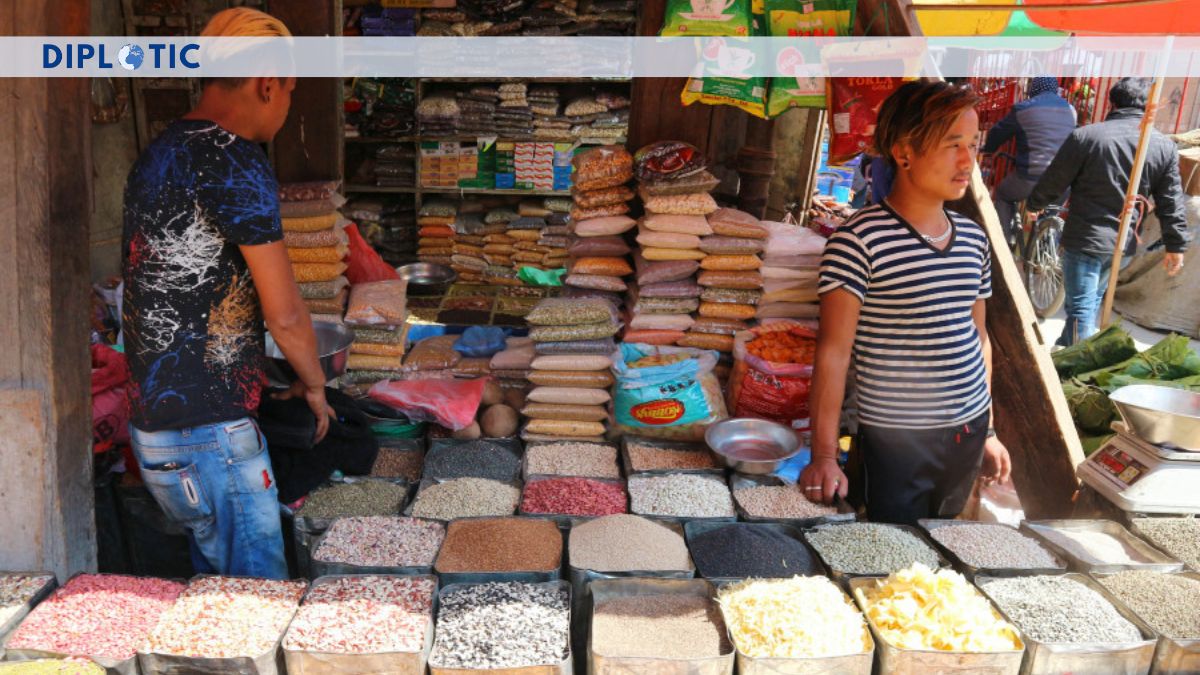
Nepal’s Gen Z protests triggered political instability that disrupted supply chains and sent food prices soaring by up to 800%, exposing deep flaws in the country’s food market and regulation system.
A Nation on Edge—and So Were Its Markets
When thousands of young Nepalis poured onto the streets in September, leading one of the most consequential waves of Gen Z–driven protests the country has seen in years, the immediate focus was political reform. But as strikes multiplied, roads were blocked, and policy decisions shifted rapidly, another crisis quietly took hold one that reached directly into household kitchens.
In the first four months of the current fiscal year, food prices across Nepal surged at an alarming pace, with some everyday items rising as much as eightfold, according to a government analysis. The spike was not merely a story of inflation, but of instability where political uncertainty collided with fragile supply chains and a market long dominated by intermediaries.
What the Government’s Price Report Reveals
The Price Analysis Report, published in December by the Department of Commerce, Supplies, and Consumer Protection, paints a picture of sustained volatility rather than short-term fluctuation. Reviewing price movements from mid-July to mid-November, the report found that, with few exceptions, prices of almost all major food items trended upward, often sharply.
Staples such as rice and lentils rose steadily, while meat, edible oils, vegetables, and fruits experienced erratic but persistent increases. The report notes that although producer prices remained relatively stable, retail prices ballooned an imbalance largely attributed to the role of middlemen.
“The prices of vegetables, fruits and food items have increased significantly compared to the producer price due to the involvement of middlemen,” the department concluded, echoing a criticism that has long dogged Nepal’s food distribution system.
A Brief Respite Before the Shock
There was a short-lived lull. Between mid-July and mid-August, prices of seasonal vegetables and fruits declined, reflecting improved supply and harvest conditions. But that stability proved fragile.
By late August and early September, prices began climbing again. The turning point, according to the report, coincided closely with the outbreak of Gen Z–led protests, which disrupted transportation networks and created uncertainty across wholesale markets.
As political tension escalated, traders responded not with restraint, but opportunism. Vegetables, among the most price-sensitive commodities, were hit hardest.
When Prices Defied All Logic
The scale of some price increases stunned even seasoned observers. Bitter gourd prices surged by up to 800 percent during the review period a rise the report bluntly described as “not normal.” Yardlong bean pieces recorded a similar eightfold jump.
These were not isolated cases but symbols of a broader breakdown in market discipline. With roads blocked, supply chains interrupted, and enforcement weak, price-setting increasingly reflected speculation rather than scarcity.
The result was a market where consumers bore the full cost of instability, even when production and transportation costs failed to justify such extreme hikes.
Fuel Prices Fell—but Food Didn’t Follow
One of the more perplexing findings of the report was that food prices continued to rise despite relatively stable or declining fuel costs. During the same period, diesel and kerosene prices fell by Rs3 per litre, while petrol rose only modestly. Cooking gas prices remained unchanged.
Under normal circumstances, lower transport costs would ease pressure on food prices. But that relief never reached consumers.
The depreciation of the Nepali rupee—about 2 percent against the US dollar—added some pressure on imported goods. Yet analysts argue this alone cannot explain the scale of domestic price hikes, particularly for locally produced vegetables and fruits.
Middlemen at the Heart of the Crisis
If one theme dominates the report, it is the entrenched power of intermediaries. The department openly acknowledged that middlemen exploited political volatility to manipulate prices, widening the gap between farm-gate and retail rates.
To address this, the report called for alternative trading mechanisms, including cooperatives, commercial networks, and public-private partnerships that could reduce dependence on informal intermediaries and stabilize prices.
But critics argue that such recommendations have appeared in reports for years, with little concrete action to follow.
Conflicting Narratives on Inflation
Adding to the confusion is a disconnect between government agencies. While the commerce department documented sharp food price instability, the Nepal Rastra Bank’s macroeconomic report tells a different story.
According to the central bank, year-on-year consumer price inflation stood at 1.63 percent in mid-December 2025, down sharply from 6.05 percent a year earlier. Food and beverage inflation, the bank noted, had actually declined by over 2 percent.
Former central bank executive director Gunakar Bhatta explains the discrepancy as a matter of methodology. The Rastra Bank compares year-on-year data, while the commerce department focuses on month-to-month changes within the current fiscal year. Both, he says, can be correct and yet tell very different stories.
For consumers facing higher grocery bills each week, however, statistical nuance offers little comfort.
The Human Cost of Price Volatility
Behind the data lies a tangible erosion of living standards. Prices of rice varieties rose steadily across cities, with basmati rice seeing particularly sharp increases in Bhairahawa. Pulses an essential protein source for many households became significantly more expensive, as did cooking oils, spices, eggs, and meat.
Vegetables and fruits, traditionally relied upon as affordable nutrition, also slipped further out of reach. Tomatoes, apples, and bananas all recorded steep average price hikes, compounding the burden on urban and rural consumers alike.
For low- and middle-income families, the effect has been cumulative: fewer dietary choices, reduced nutrition, and growing financial stress.
Calls for Accountability Grow Louder
Consumer rights advocates argue that reports alone will not solve the problem. Bishnu Prasad Timilsina, general secretary of the Forum for Protection of Consumer Rights–Nepal, says middlemen continue to operate with political protection, allowing price manipulation to flourish unchecked.
“The gap between farm-gate prices and consumer prices is too wide and must be strictly monitored,” he said, calling for punitive action against traders who artificially inflate prices.
He also urged authorities to enforce existing laws requiring shops to display price lists and warned that large wholesalers must be held accountable for abrupt hikes that disregard consumer welfare.
More Than an Economic Issue
Nepal’s food price crisis in the wake of Gen Z protests reveals deeper structural weaknesses an economy vulnerable to political shocks, regulatory institutions slow to act, and markets where transparency remains elusive.
What began as a youth-led demand for political change ended up exposing how quickly instability can ripple through daily life. As Nepal looks ahead, the challenge is not only to stabilize politics, but to reform the systems that allow uncertainty to be converted into profit at the public’s expense.
Until that happens, the cost of protest may continue to be measured not just in slogans and strikes, but in the price of rice, vegetables, and oil on the nation’s tables.




