
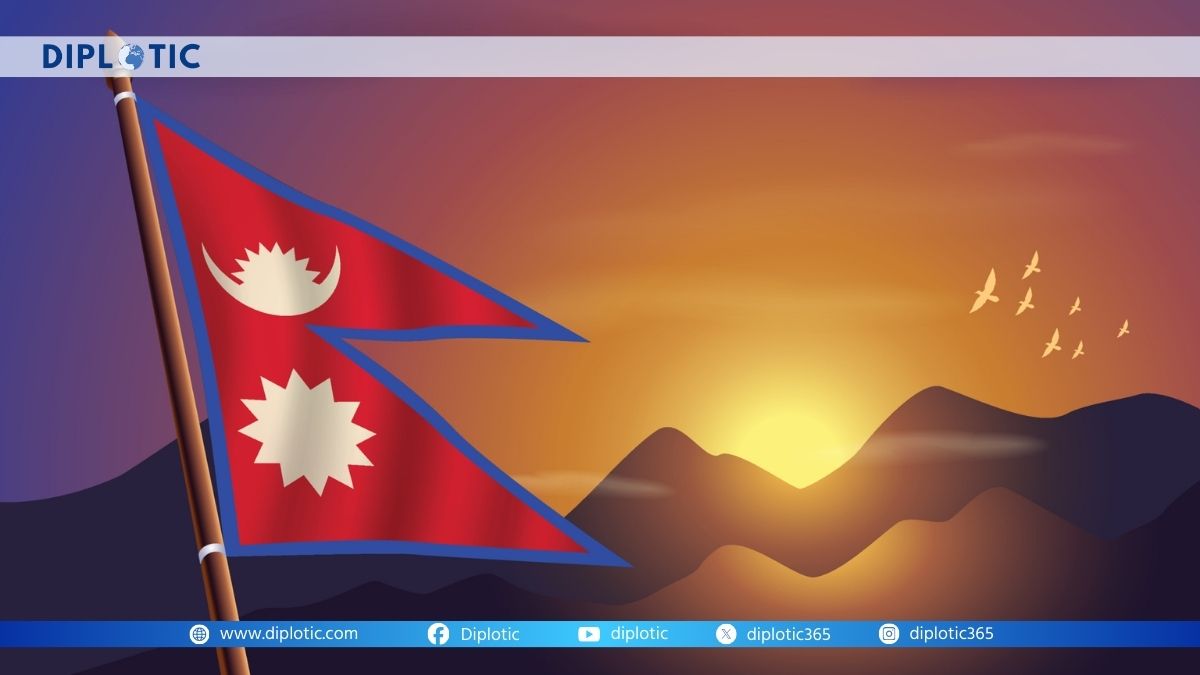
Nepal stands at a pivotal moment. On March 5, 2026, the Himalayan nation will hold an early national election, a vote forced not by a scheduled calendar but by profound public unrest. This election is more than a routine political exercise; it is a direct response to the seismic Generation-Z protests of September 2025, which shattered a governing coalition and left 77 citizens dead. Over 18.9 million eligible voters now prepare to choose their path forward from a field of 68 parties and over 3,400 candidates. The contest encapsulates a nation in transition, pitting established political dynasties and veteran former prime ministers against a wave of new faces demanding systemic change. The outcome will test whether a movement born in the streets can translate its energy into tangible political power within the halls of the 275-member House of Representatives.
A Fractured Legacy: Why Did the Old Order Crumble?
To understand the stakes of this election, one must look at the collapse that made it necessary. The government led by KP Sharma Oli, a four-time prime minister heading an alliance of his Communist Party of Nepal (Unified Marxist–Leninist) and the Nepali Congress, fell in September 2025 under the weight of massive youth-led protests. These were not ordinary political rallies. Fueled by widespread frustration over corruption, economic stagnation, and a perceived failure of a political class seen as self-serving, the demonstrations mobilized students and young professionals on an unprecedented scale. The protests turned deadly, resulting in significant loss of life and immense damage to property, estimated at over 84 billion Nepali rupees. President Ram Chandra Paudel dissolved the lower house of Parliament, and an interim government under retired Supreme Court Justice Sushila Karki was installed to shepherd the country to these early polls. Oli himself has pointed to foreign conspiracies, suggesting Nepal was targeted after Sri Lanka and Bangladesh to destabilize democracy, and has been notably critical of India. However, local observers largely view the uprising as a homegrown, organic outburst against a political system that many feel has failed to deliver on the promises of the federal republic established after the 2006 peace accord and the abolition of the monarchy in 2008. The protests revealed a deep chasm between the ruling generation and a young, connected populace demanding accountability and new ideas.
The Contenders: Dynasty Versus Disruption
The electoral battlefield presents a clear contrast between continuity and change. On one side are the seasoned veterans, many of whom have dominated Nepali politics for decades. No fewer than four former prime ministers are in the fray: Oli himself, Pushpa Kamal Dahal (Prachanda) of the Maoist Centre, Baburam Bhattarai, and Madhav Kumar Nepal. Their careers span the nation’s journey from monarchy to Maoist rebellion to federal republic. Their networks are deep, and their political machines are well-established. On the other side is a wave of newer figures who have risen from local governance or activism. The most symbolic contest is in the Jhapa-5 constituency, where Oli faces Balendra Shah. Shah, 35, is an engineer, a popular rapper, and the former mayor of Kathmandu who resigned to join the relatively new Rastriya Swatantra Party. He emerged as a prominent voice during the anti-corruption Gen-Z protests and represents a direct challenge to the old guard. His candidacy is a test of whether a leader with a non-traditional background and a platform focused on transparency and technocratic governance can defeat a political titan. He is not alone; other mayors like Harka Sampang of Dharan are also contesting, indicating a trend of local leaders seeking national influence.
The Monarchy’s Shadow and the Geopolitical Tightrope
Amid this flux, another historical force is stirring. The last king, Gyanendra Shah, who lives as a private citizen, used a recent National Unity Day speech to deliver a sharp critique of the political leadership of the past two decades, accusing them of failed governance and imbalanced foreign policy. His comments have energized segments of the population, particularly some disaffected youth and conservative groups, who view the chaotic republic with disillusionment. The Rastriya Prajatantra Party is actively campaigning for the restoration of a constitutional monarchy, arguing it is the only stable alternative to partisan failure. While a full return to monarchy remains a distant prospect, its resonance as a critique highlights the depth of current discontent. Simultaneously, Nepal continues its delicate diplomatic dance between its powerful neighbors. India, a traditional partner, is providing substantial logistical support for the election, including hundreds of vehicles, continuing a pattern of assistance since 2008. China has also pledged full support for the poll’s success, emphasizing its priority for Nepal’s stability. The next government will inherit the perpetual challenge of navigating these relationships while safeguarding national sovereignty, a task made more complex by Oli’s recent anti-India rhetoric and China’s growing engagement.
What Does This Election Promise for Nepal’s Future?
The March 5 vote is ultimately a referendum on direction. Will Nepal double down on the established political factions, despite the anger aimed at them, out of voter familiarity or calculated alliance-building? Or will it carve out significant space for the new parties and faces that channel the spirit of the 2025 uprising? The presence of figures like Balendra Shah suggests a hunger for a different kind of politics—one less defined by ideology, dynasty, or long-held vendettas, and more by administrative competence and direct accountability. The election also tests whether the passionate, decentralized energy of a protest movement can be organized into a coherent electoral force capable of winning beyond urban centers. Furthermore, the results will send immediate signals to Kathmandu’s international partners about the nation’s political stability and policy leanings. A fragmented parliament could lead to another period of shaky coalition governments, while a strong mandate for any bloc could provide a window for decisive action.
As Nepal prepares to vote, the air is thick with both the echoes of a recent, painful rebellion and the uncertain promise of renewal. The candidates range from former rebels who ended a kingdom to a mayor who is a rapper, from ex-prime ministers seeking a comeback to quiet advocates for a king. This election, arriving nearly two years ahead of schedule, is a direct consequence of a nation demanding to be heard. Its results will determine not just who governs, but whether Nepal’s political system can adapt, evolve, and genuinely respond to a generation that has already shown its power to bring change to the streets, and now seeks to bring it to the state itself.




