A global political shift is underway as minorities and heartland voters turn against elite metropoles, reshaping elections from the US to Poland.
In an era defined by seismic political shifts, a powerful new paradigm has emerged across Western democracies — one that journalists, pollsters, and politicians can no longer afford to ignore. It’s the rising “Metropole vs. Heartland” divide, a pattern now unmistakable in elections from the United States and the United Kingdom to France, Canada, and Poland.
This trend, often reduced to the equation M+M vs. H — metropole plus minorities versus the heartland — is redefining alliances, reshaping political maps, and shattering once-unchallenged assumptions about demographics and destiny. As we dive into this global realignment, it’s clear we are witnessing an electoral revolution with far-reaching consequences.
Understanding the Formula: M+M vs. H
At its core, this political formula pits the metropole — dominant cultural, political, and media hubs like New York, London, Paris, Seoul, or Toronto — allied with racial, ethnic, and regional minorities against the broader heartland, often comprising suburban, rural, and post-industrial voters.
Traditionally, the metropole-minorities alliance (M+M) has been seen as a progressive bulwark: cosmopolitan, diverse, elite-driven, and aligned with liberal globalism. Meanwhile, the heartland (H) has been portrayed as nationalistic, socially conservative, economically anxious, and resistant to unchecked immigration or technocratic governance from distant capitals like Brussels or DC.
Yet in recent years, this coalition is showing signs of fragmentation, with minority groups and younger voters increasingly breaking from metropole-aligned ideologies and gravitating toward heartland populism.
The United States: From Clinton to Trump to Realignment
The U.S. offers perhaps the clearest case study. In 2016, Hillary Clinton crushed Donald Trump in the elite metropoles of NY/DC/LA/SF, winning 65% to 30%. However, Trump swept the heartland, winning key Midwestern states that had voted for Obama just four years prior.
The 2020 election saw a reversal, with Biden defeating Trump — but not without signs of heartland resilience. In 2024, that tide turned again. Trump increased his heartland share from 49-45 in 2016 to 52-46, while Kamala Harris underperformed Clinton’s 2016 numbers in the same metropoles, clocking in at 61-36.
A brilliant New York Times graphic paints the picture starkly: Trump gained vote share across three consecutive elections in 1,433 counties housing 42 million people, while Democrats improved in just 57 counties with 8 million residents.
The minority shift is pivotal. Once expected to guarantee a Democratic future, Hispanics, Asians, and even younger Black voters are now trending right — a shocking reversal of the “demographics is destiny” narrative.
Brexit and Beyond: Britain’s Metropole Crack
The 2016 Brexit vote revealed deep fractures in the UK’s political terrain. While 60%+ of voters in metro London and Scotland opted to remain in the EU, the heartland of England outside London swung decisively for Leave — 57% voted out. That division exploded traditional party loyalties.
Fast-forward to 2024, and Nigel Farage’s Reform Party is polling dramatically ahead of Labour outside metro London, capturing the alienation of the English working class. Labour’s dominance remains largely confined to London’s cosmopolitan bubble — nearly 40% of its seats are from the capital alone.
France, Germany, and the Lawfare Tactic
In France, Emmanuel Macron won re-election in 2022 but by only half the margin of 2017. Populist rival Marine Le Pen gained serious traction in the heartland, even as elite media and political structures sought to undermine her with court rulings and bans.
Germany faced a similar reckoning. The right-wing AfD, once relegated to the political fringe, became the second-place party in the February elections. EU elites, however, threatened to bar it from future participation — a move that critics call anti-democratic lawfare.
These tactics echo those seen in the U.S., with critics decrying the prosecution of Donald Trump by Manhattan DA Alvin Bragg as a “kangaroo court” designed to stifle electoral choice rather than uphold justice.
Canada and South Korea: Emerging Fronts
In Canada, Toronto and Anglophone Montreal remain metropole strongholds. But like their American counterparts, Canadian heartland voters are voicing their dissatisfaction. A similar undercurrent is rising in South Korea, where Seoul dominates culturally and politically, but rural and industrial regions are increasingly assertive in elections.
Poland: Historic Borders, New Patterns
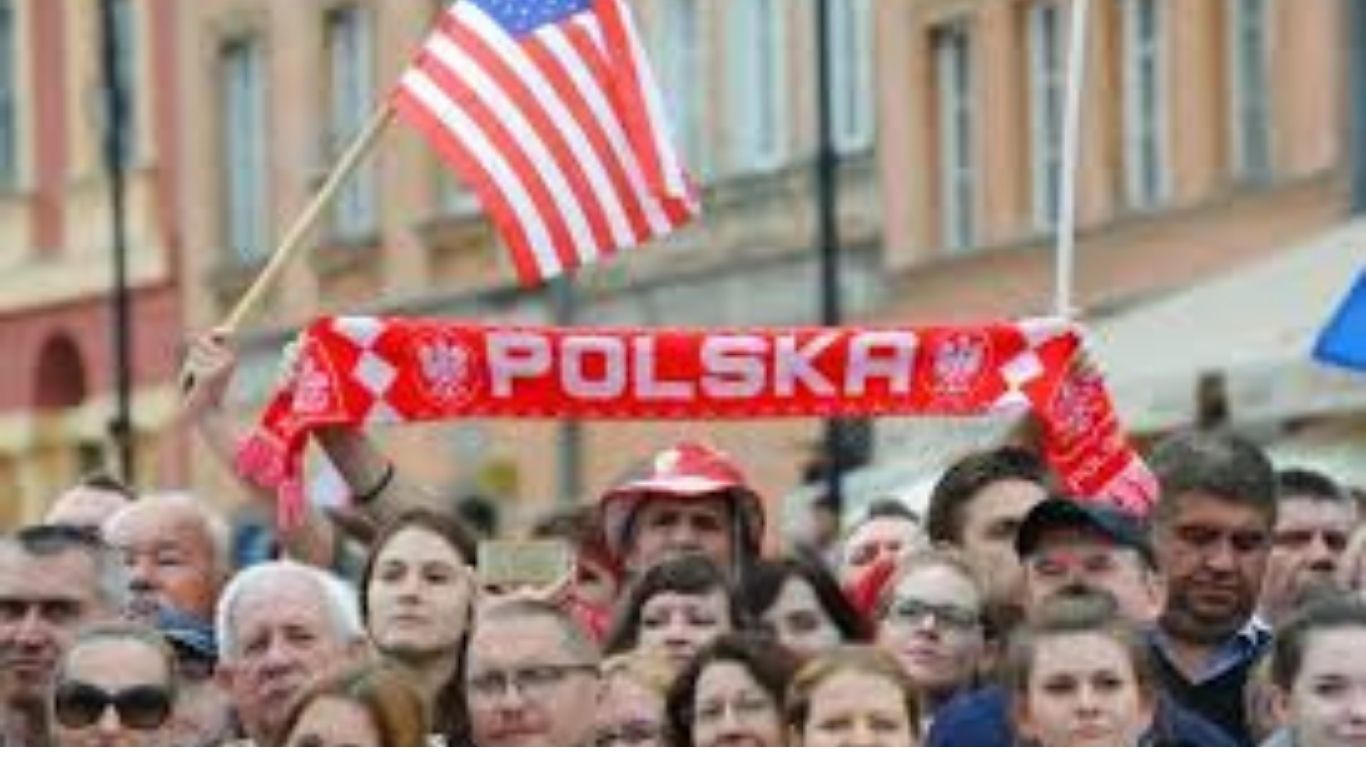
The 2025 Polish election offers a nuanced layer to this analysis. Karol Nawrocki’s surprise victory — despite trailing in polls — underscores the youth-driven rightward shift. Young voters, once allies of center-left coalitions, swung toward the Right.
Intriguingly, Poland’s electoral map mirrors pre-World War I imperial boundaries. Regions once ruled by tsarist Russia lean right, while those formerly under Germany trend left. The southeast, a devoutly Catholic area once part of the Austro-Hungarian Empire, remains the country’s strongest conservative bastion.
The Cracks in the Coalition: Minorities and the Young Move Right
One of the most stunning developments in this global realignment is the movement of minority groups away from progressive metropole ideologies. As Jewish Insider’s Josh Kraushaar put it on X, “For years, the belief was Democrats have had demographic destiny on our side. Now, the inverse is true.”
Why? Many minorities — often younger, religious, entrepreneurial, and culturally traditional — find little in common with the woke elitism or regulatory overreach of the metropole. As crime, education, and economic issues worsen in big cities, their support is shifting to politicians who prioritize law, order, and national identity.
What This Means: A Future in Flux
We are witnessing a tectonic shift in global politics. The metropole-minorities alliance, once seen as unassailable, is fracturing. The heartland — long dismissed as backward or reactionary — is increasingly ascendant.
From Brexit and Trump to Farage, Le Pen, Bardella, and Nawrocki, a new generation of populist leaders is capitalizing on frustration with elites, mass immigration, economic stagnation, and political correctness.
But this isn’t merely a clash of policies — it’s a battle of worldviews. One side champions globalism, centralization, and cultural fluidity; the other defends sovereignty, tradition, and local control.
What comes next? No one knows for sure. But one thing is clear: the old rules of politics no longer apply. We’re living through an age of realignment — and history, once again, is being written far from the metropole.