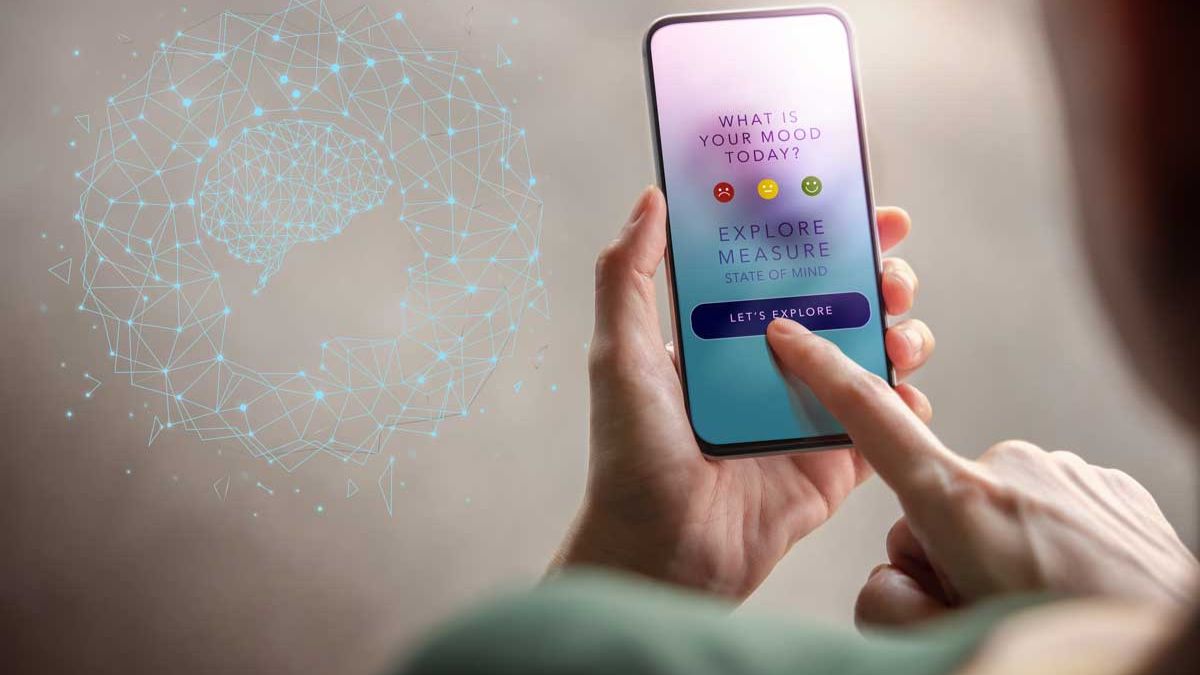
The mental care arena is also undergoing a digital transition. Long confined to in-person counseling sessions and do-it-yourself book lists, mental care is at a swipe on a screen. Mobile apps that are mindfulness-based, counseling-based, mood tracking, and emotional care-based have seen unprecedented growth, paving new ground in dealing with mental care in a speeding world.
With the great demand that mental healthcare is experiencing, these apps are bridging crucial gaps, bringing accessibility, affordability, and ease. But with digital solutions at the forefront comes some crucial questions: Can mental health apps replace traditional counseling? Are mental health apps effective? And do mental health apps have ethical challenges? In this article, we explore the impact, strengths, and limitations of growing mental health apps, as well as whether these apps can be a catalyst in shaping mental healthcare in the future.
The Boom in Mental Wellbeing Applications
A Growing Industry
The mental healthcare apps market experienced rapid growth in recent years. The global mental healthcare apps market is at about $5.2 billion in 2022 and is poised at more than $17 billion in 2030. The growth is attributed to increased awareness about mental healthcare, developments in AI, as well as increased smartphone usage.
Top-ranking apps with a global following in the millions, from meditation with a guide at its lead at Calm, to AI-enhanced cognitive-behavioral therapy (CBT), are at users’ fingertips. Other new ventures are also exploring new methods of providing digital mental care, from virtual reality (VR) therapy to mood tracking with biometrics.
Key Drivers of Growth
Several factors have contributed towards making mental health apps ubiquitous:
1. Increased awareness with reduced stigma
Over the past decade, global conversations about mental health have gained momentum. Celebrities, athletes, and public figures have openly discussed their struggles, encouraging others to seek help.
Social media activism as well as in-house mental illness awareness activities, have also reduced stigma, making mental care more acceptable.
2. The Post-Pandemic Digital Transformation
The COVID-19 pandemic highly encouraged digital healthcare utilization. Social distancing as well as lockdowns drove users into availing mental healthcare through digital means.
Teletherapy became mainstreamed, opening up opportunities for smartphone apps as a mainstreamed source of mental health as a sole source or ancillary source.
3. Affordability & Access
Traditional therapy is also expensive with a cost between $75-$200 per hour in most nations. Mental health apps are also affordable with free costs or at minimal costs, making care accessible to more people.
Additionally, licensed practitioners are also in urban areas in high concentration, which means that mental care is in short supply in rural areas. The apps cover these gaps with on-demand care regardless of location.
4. AI and Personalisation
Artificial intelligence and machine learning have made mental health experiences tailored. AI chatbots such as Woebot can provide CBT-based methods in a live tracking manner.
Many apps also track biometric data (such as a heartbeat rate from a smartwatch-based device), in order to deliver targeted mental treatments, for instance, soothing respiration training whenever a consumer’s heartbeat rate speeds up.
How Mental Health Applications Are Shaping Therapy and Self-Care
Mental health apps have varied functionality, from independent mindfulness training to AI-based counseling. Following are ways in which mental apps are shaping mental well-being:
1. Meditation and Applications of Mindfulness
Mindfulness apps, that is, Calm and Headspace, also provide users with guided meditation, breathing methods, as well as sleep-inducing methods. Experiments have proved that meditation can reduce anxiety by as much as 60%, as also boost concentration, as also overall emotional stability.
These apps often have:
Daily guided meditations as per varied requirements (for instance, alleviation from stress, enhanced sleep, enhanced concentration).
Background soundscapes and sleep stories that are soothing.
Breathing exercises which assist users in letting go in the present.
2. Online counseling and counseling
Platforms like Talkspace and BetterHelp have made professional counseling accessible. The apps pair users with licensed counselors through text, phone calls, or video calls, with flexibility in case in-person counseling is not an option.
Key benefits are:
Convenience – Work can be accomplished with flexibility in scheduling.
Anonymity – The anonymity does not frighten users because they can approach tentatively.
Cost-effectiveness – The subscription-based model is cost-efficient in relation to traditional therapy.
3. AI-Powered Chatbots & Virtual Support
AI-driven apps, such as Woebot, employ conversational AI in order to give users live assistance. The chatbots are intended to mimic human conversation in order to give users evidence-based methods from cognitive-behavioral therapy (CBT).
While chatbots cannot substitute human therapists, chatbots do provide:
Instant emotional support, available 24/7.
CBT-based exercises that aid users in dealing with unhealthy thinking styles.
Mood tracking to identify emotional triggers over time.
4. Mood Monitoring & E-Diaries
Apps like Moodfit and Daylio allow emotion, thought, as well as activity tracking. The above apps in digital format:
Identify patterns in mood shift.
Offer data-driven insights into why you are feeling anxiety, stress, or depression.
Provide journaling prompts that will allow you to reflect on yourself.
Challenges and ethical challenges
Despite their usefulness, mental illness apps have a serious flaw:
1. Effectiveness & Inadequate Regulation
Not all apps are FDA approved. Compared with licensed counseling or prescription drugs, comparatively few mental illness apps are FDA approved or are government regulated.
Many apps report having evidence-based treatments with no peer-reviewed studies that can attest to success.
2. Data Risks & Privacy
Mental health apps collect highly intimate information, from mood logs to counseling sessions alongside thoughts.
Concerns about illegal sharing of data have also surfaced. In 2021, it was reported that a variety of highly-rated mental healthcare apps shared users’ information with third-party ad networks.
3. Over-Reliance on Technology
There is also a risk that users will over-rely on apps at the expense of in-person counseling or professional healthcare as a last resort.
Some AI-driven chatbots lack human-like empathy, which is crucial in emotional depth.
The Future of Mental Wellbeing Applications
The future mental health apps will be shaped by:
1. Stronger Clinical Validation and Regulation
More rigorous research studies and FDA-style approvals can be necessary in order to determine whether apps really do deliver genuine therapeutic benefits.
2. Advanced AI & Personalisation
Future apps will increasingly employ AI in a bid to deliver more tailored counseling experiences, reading users’ words, emotions, as well as body biometrics.
3. Integration with Wearing Tech
Smartwatches and tracking devices can be made available in monitoring mental illness in a live situation, monitoring early warning signs in terms of depression.
4. Hybrid Therapy Models
The combination with human counselors (for instance, AI-based counseling followed by human counsel consultation) will probably be a new care norm.
Conclusion
Mental health apps are also changing how we approach therapy and self-help. They are a cost-effective, accessible, and convenient substitute for traditional counseling, making it a possibility for millions to treat anxiety, depression, and stress. But issues around efficacy, privacy, as well as over-reliance on digital solutions, have to be solved. As technology develops, mental care in the future will likely be a blended approach in which digital resources will aid, not replace, human practitioners. Mental apps are at present a wonderful ally that gives users more independence in having mental care in a more digitalized existence.