The Warehouse Hands That Broke the Overton Window
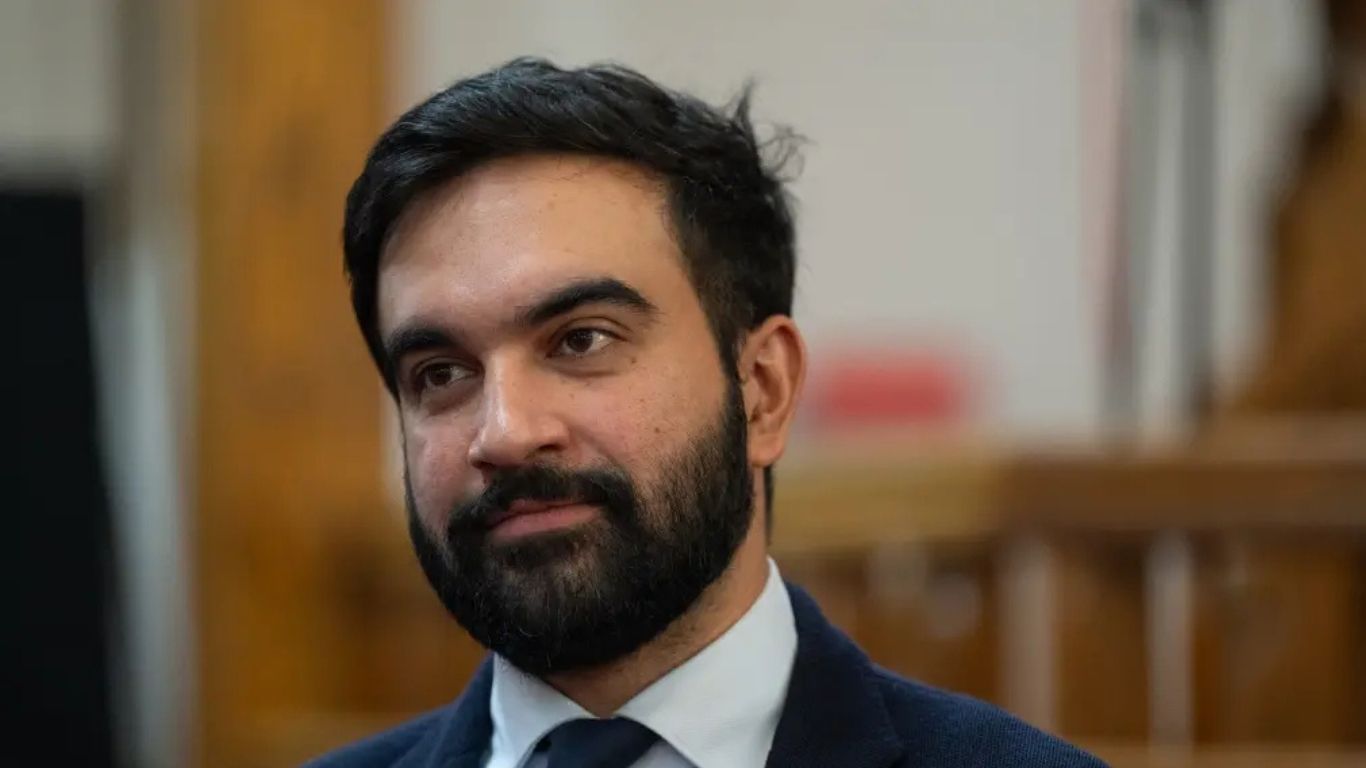
At 11:12 p.m. the Brooklyn Paramount smelled like cardamom and victory sweat. Zohran Mamdani stepped to the microphone and did not thank the donors. He thanked the warehouse packers whose fingers bruise purple under Amazon tape, the bike couriers whose knees click like loose subway doors, the line cooks whose forearms carry the pale scars of 400-degree griddles. “These are not hands that have been allowed to hold power,” he said. “Tonight you pried the door open with them.”
Across the river, David Axelrod stared at the returns and spoke the quiet part aloud: “Everyone at this table is going home to great comfort.” The chyron beneath him read 56–42 in New Jersey, 58–41 in Virginia, 50–42 in New York City. Three blue waves crashing on the first Tuesday after Trump’s second inauguration. The moderators reached for the old map—suburban moms, soccer dads, Rust Belt swing voters—and discovered the ink had run.
The new electorate had shown up in sneakers and hijabs. In Jackson Heights, Aditi Sangal live-streamed from Kabab King at 2 a.m. while a halal-cart vendor explained why he voted for the first time in twenty-three years: “The mayor said my $2,800 rent is a crisis. My landlord said it’s the market. One of them now owes me an answer.” That clip reached four million views before sunrise. The panel shows never played it.
From Zero Cameras to Four Hundred RSVPs
Eight months earlier Mamdani held a press conference on the steps of City Hall. Two reporters showed. One asked about his stance on Israel; the other filmed on an iPhone. Lekha Sunder, his twenty-six-year-old communications director, posted the side-by-side photos on March 15 and November 4. The caption—“How far we’ve come”—garnered 1.8 million likes.
The transformation was not magic. It was arithmetic. Every weekday at 7 p.m. the campaign dropped a thirty-second reel: Mamdani riding the 7 train, translating a tenant’s eviction notice into Bengali, then cutting to the line “Ab ki baar, rent control sarkar.” By October the account had more followers than the New York Times. Traditional outlets woke up when the Times Square billboard flashed Mamdani’s face next to the words “Your rent is too damn high—vote November 4.” The advertiser was not a super PAC. It was 42,000 New Yorkers who donated an average of $11.
Fox News booked Bhaskar Sunkara for the 10 p.m. hour expecting a socialist caricature. Instead he quoted the Federal Reserve’s own data: the top 1 percent of landlords own 22 percent of Manhattan apartments while 62,000 children sleep in shelters. Jesse Watters blinked twice and changed the subject to crime. The chyron froze on “SOCIALIST MAYOR?” for six straight minutes. Viewers in Staten Island texted their group chats: “My super just raised rent again. Maybe the kid has a point.”
The Polls That Measured Yesterday’s Voters
In New Jersey the Real Clear Politics average gave Mikie Sherrill a 3.3-point edge. She won by fourteen. In Virginia the final surveys showed Abigail Spanberger up five. She won by seventeen. The error was not random. Pollsters dialed landlines and screened for “likely voters” using turnout models trained on 2021. They missed the 732,000 early ballots cast in New York City alone—65 percent of the entire 2021 mayoral total—because the people filling them out had never voted in an off-year before.
The tell was hiding in plain sight. Every poll that asked about rent, groceries, or child-care costs showed double-digit swings toward Democrats. Every poll that asked about “defunding the police” showed the old 2022 gaps. The electorate had moved from culture-war terrain to kitchen-table terrain, and the maps had not caught up.
On MSNBC, Joe Scarborough replayed the New Jersey map county by county. Hudson and Passaic—Trump gainers in 2024—swung back fifteen points. “The Cuban grandmothers in Union City told me they’re tired of choosing between insulin and arepas,” he said. The camera cut to a split-screen of Sherrill high-fiving a pharmacy tech in Newark. No one mentioned the Trump endorsement of her opponent. They did not need to. The endorsement had become a lead weight.
The Fox News Cope-a-Thon
Fox called Virginia at 8:03 p.m., New Jersey at 8:17, New York at 9:04. By 10 p.m. the shutdown clocks—day thirty-six—ticked in the corner while Sean Hannity searched for silver linings. “These are blue states,” he repeated three times. Jesse Watters added, “Abigail Spanberger ran as a moderate. She’s basically a Republican.” The graphic beneath him showed Spanberger’s pledge to veto any federal-funding cut to Virginia’s 140,000 federal workers.
At 11:42 Trace Gallagher threw to commercial with a promise: “President Trump will call in any minute.” He never did. Instead Trump posted at 11:49: “Rigged turnout in Queens. We will investigate!” The post received 1.2 million likes and 400,000 quote-tweets of Mamdani’s victory speech. The algorithm had chosen a side.
The Mirror the Country Held Up
Morning headlines told two stories. The New York Post screamed “RED ZOHRAN RISING” over a photo of Mamdani raising a fist. The Nation led with Eric Blanc’s essay: “The oligarchs are right to be worried.” Both were true.
In Richmond, Abigail Spanberger took the stage in a navy blazer and promised to expand Medicaid to 400,000 more Virginians. In Trenton, Mikie Sherrill stood beside a Hudson-Bergen Light Rail car and vowed to finish the Gateway tunnel Trump tried to kill. In Brooklyn, Mamdani walked to the podium while the DJ dropped Jay-Z: “I’m not a businessman, I’m a business, man.”
Three victories, three accents, one message: the shutdown that starved SNAP benefits for forty-two million people had also starved the old political equations. The moderate ex-CIA officer, the Navy helicopter mom, the Bollywood socialist—they did not split the party. They proved it had grown large enough to hold all three.
By noon the Democratic Governors Association announced record fundraising. By 2 p.m. the DSCC circulated a memo titled “2026 Map Just Got Bigger.” By 4 p.m. a twenty-six-year-old organizer in the Bronx opened a Google Doc titled “Run for Something—NYC Council 2027.” She shared it with 11,000 volunteers who had knocked two million doors.
The pundits returned to their green rooms and ordered lunch. In Jackson Heights, Kabab King ran out of biryani by 3 p.m. The line stretched around the block. No one was talking about the panels. They were talking about January, when the new mayor takes the oath on the City Hall steps and the rent-stabilization law he promised lands on his desk first.
The cameras that once ignored him now fight for space on the sidewalk. The hands that packed the boxes, flipped the patties, and delivered the groceries have learned a new motion: they open doors. And this time they are walking through.