The question of whether the United States could ever adopt laws resembling lèse-majesté once felt unthinkable. Such laws, used in countries like Thailand and Cambodia, make it a crime to insult or defame the monarchy or ruling elites. They are often broad, vague, and enforced with severe penalties. In the American context, especially under the First Amendment’s strong protection of free speech, such laws seemed far outside the nation’s political imagination. But with rising political tension, expanding battles over disinformation, and sharper conflicts between public figures and the media, the idea no longer appears entirely abstract. When former president Donald Trump publicly condemned criticism as dangerous to the nation and repeatedly sought legal or administrative ways to respond to critics, scholars began asking whether a future administration could push harder than before.
This debate intensified as Trump’s political rhetoric grew more pointed. He has long framed attacks on his character or leadership as political persecution, at times suggesting that such criticism harms the country itself. While the United States has no legal mechanism that resembles lèse-majesté, Trump’s claims raised questions about what could happen if a president sought to stretch federal power to punish speech that he views as harmful or unfair. The issue is not simply about Trump as an individual, but about whether changes in political norms make the country more vulnerable to leaders who want to limit criticism through the legal system.
In countries where lèse-majesté laws exist, defenders argue they protect national unity, cultural identity, or political order. Critics counter that the laws mainly shield political leaders from legitimate scrutiny. The United States has long chosen the opposite approach: an open environment where even harsh criticism of leaders is not only tolerated, but expected. The central question now is whether the United States remains as strongly committed to that principle as it once was, or whether political pressures could push it in a different direction.
Lessons from Thailand and Cambodia
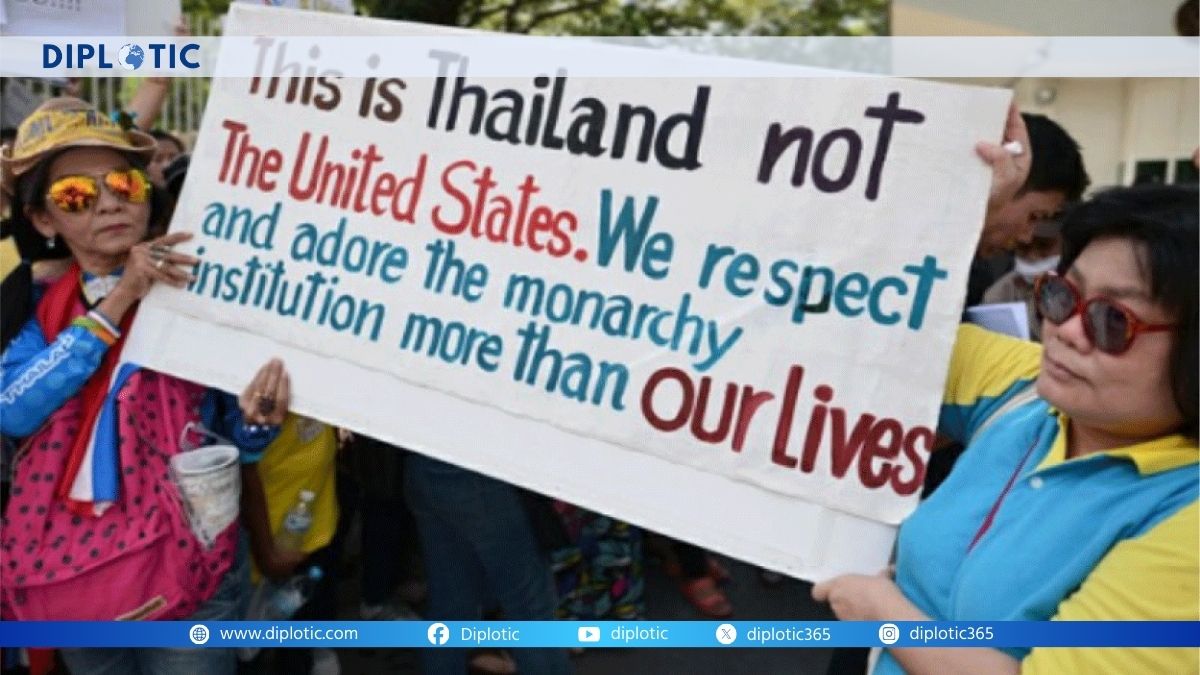
To understand why some analysts worry about a shift toward speech-related punishment, it helps to look closely at the countries most associated with lèse-majesté. Thailand’s laws, among the strictest in the world, allow long prison sentences for speech deemed insulting to the king or royal family. Cases often involve public statements, social media posts, artistic works, or even private conversations. Over the past decade, the law has been used during political crises, sometimes leading to arrests of students, activists, and ordinary citizens. In Cambodia, the law is tied more directly to the political leadership, with authorities framing criticism of the government as an attack on national stability. While the legal language differs, the effect is similar: it discourages people from speaking openly, empowers authorities to silence opponents, and strengthens the position of those in power.
These examples offer a clear pattern. Lèse-majesté laws are rarely about protecting a specific person. They are tools of political control, shaping the public narrative by defining criticism as harmful. When a leader can frame personal attacks as threats to the country, the boundary between protecting national interests and protecting political standing becomes blurred. The laws also expand over time. What starts as a narrow ban can grow into a wide shield, covering more speech and more types of criticism.
The United States currently has strong legal barriers preventing similar laws. The First Amendment protects political speech more than any other category. Courts have repeatedly ruled that criticism of leaders is central to democracy. Attempts to criminalize such criticism would likely face immediate constitutional challenges. But American history also shows moments when political pressure pushed the government toward restricting speech, including the World War I era with the Sedition Act and periods of intense national fear when dissent was equated with disloyalty. These moments remind us that legal protections alone do not guarantee political restraint. It often depends on the leaders in power.
In this context, the experiences of Thailand and Cambodia act as cautionary stories. They show how quickly political norms can shift when a leader argues that criticism of him is criticism of the nation. They also show how public trust can erode when speech becomes a legal risk rather than a civic right. The United States is not on the same path, but these examples give insight into how such changes begin—and how they take hold.
Could an American President Realistically Pursue Similar Punishments?
Even with strong constitutional safeguards, some experts argue that a determined president could still test the boundaries. The American system gives the executive branch significant influence over federal law enforcement. A president could encourage prosecutors to pursue civil or criminal cases under existing laws, such as defamation-related statutes, national security rules, or federal regulations governing threats and harassment. While none of these laws resemble lèse-majesté, they could be interpreted more aggressively if the administration is willing to push test cases into the courts.
Donald Trump’s public statements during and after his presidency show that he views personal criticism as deeply unfair, often describing it as harmful to the nation. He has referred to the press as an enemy, accused critics of treason, and encouraged legal action against political opponents. These statements do not prove that he would seek laws similar to lèse-majesté, but they provide a basis for asking whether a future administration could try to narrow the boundaries of acceptable criticism through administrative pressure or reinterpretation of existing statutes.
Another concern involves political culture. Even without formal laws, leaders can influence the climate of public speech by encouraging allies to launch lawsuits, pressuring government agencies to investigate critics, or supporting state-level efforts to regulate political expression. In some cases, speech can be chilled not by direct legal bans but by fear of retaliation. For example, if public employees or contractors believe criticism may harm their livelihoods, they may avoid speaking openly even without a formal prohibition.
The American system also faces new pressures from misinformation, online harassment, and political polarization. When leaders argue that criticism contributes to instability or undermines national unity, they tap into fears already present among parts of the population. If those fears grow, public support for stronger speech restrictions could rise. This is where the question becomes more than theoretical. Lèse-majesté laws emerge in environments where leaders can convince citizens that their authority is necessary for stability. Political division in the United States has made this kind of argument easier to frame, especially during moments of national uncertainty.
What the Debate Reveals About Democracy’s Future in America
The discussion about Trump and lèse-majesté is ultimately a debate about the direction of American democracy. Even if the United States is unlikely to adopt laws that mirror those in Southeast Asia, the very fact that the question is being asked shows how much the political climate has changed. In a healthy democracy, criticism of leaders is a sign of strength, not weakness. When leaders begin equating criticism with danger, the door to restriction opens, even if only slightly.
The issue also forces Americans to reflect on the role of political norms. Laws can protect liberties, but norms determine how leaders behave within those laws. If citizens accept the idea that criticism of a leader is excessive, harmful, or disloyal, the culture of free expression weakens. If political pressure rises to punish opponents, future administrations—regardless of party—may find more room to test the limits. This is not a hypothetical concern. Countries with strong democratic traditions have faced backsliding when leaders gain popular support for restricting dissent in the name of order or unity.
What happens next depends on public awareness, institutional independence, and the strength of civic culture. The United States has the tools to resist any shift toward speech-based punishment. But the debate itself is instructive. It shows that democratic principles are never static. They require ongoing defense, especially in times of political tension.
In the end, the question is not only whether Trump would pursue laws resembling lèse-majesté. It is whether the American public will continue to protect the right to criticize leaders as one of the foundations of the nation. The answer will shape the future of political power, public speech, and democratic resilience in the years ahead.