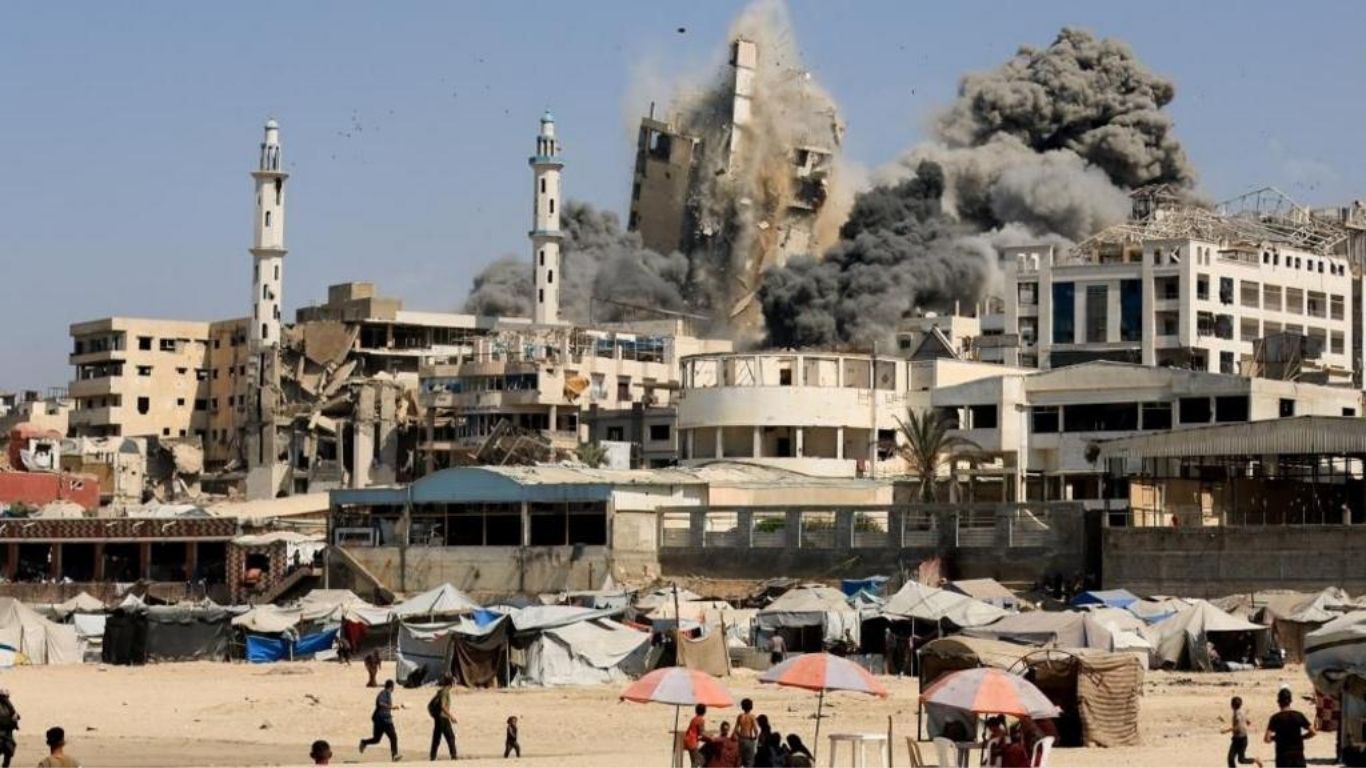
Israel has launched an expanded ground offensive into Gaza City part of Operation Gideon’s Chariots II triggering mass displacement, heavy bombardment from land, air, and sea, and growing international alarm over civilian suffering.
In what observers describe as a major escalation, Israel has launched a full-scale ground offensive into Gaza City. Early Tuesday, the Israel Defense Forces (IDF) moved multiple divisions into the city in what they are calling the “main phase” of their operation. This push deeply tied to the broader campaign known as Operation Gideon’s Chariots II aims to dismantle Hamas’s command infrastructure and regain control of what Israel views as its largest remaining stronghold in the Gaza Strip.
What’s happening on the ground
Ambitious military push: Israeli forces say they are combining airstrikes, naval fire, and ground troops including armor to press into Gaza City. According to the IDF, up to 3,000 Hamas fighters remain in the city and are expected to resist from both above ground and underground.
Mass displacement: Around 350,000 people are estimated to have fled Gaza City since the warning to evacuate was issued. The Israeli military has urged those remaining to follow designated southward evacuation routes, such as via the Al-Rashid corridor.
Heavy bombardment and casualties: Hospitals report dozens of deaths and many injuries from strikes that began overnight. In one instance, Shifa Hospital received at least 69 bodies in one wave of attacks. Reports describe near-continuous bombing, and residents speak of scenes of chaos, with families fleeing with their belongings.
The strategic picture & motivations
Part of larger campaign: Operation Gideon’s Chariots was first launched in May 2025, with the goal to take control over much of the Gaza Strip. The new phase, often referred to as Gideon’s Chariots II, is explicitly focused on Gaza City.
Hostage aspect: The Israeli government continues to assert that part of its justification for this operation includes creating the conditions for the release of hostages held by Hamas.
International response: While many nations and international bodies have expressed concern over the humanitarian toll, the United States has reaffirmed support for Israel’s right to self-defense, while also insisting there is a narrowing window to negotiate a ceasefire or hostage deal.
Humanitarian toll & risks
Children and the vulnerable: UNICEF and other aid agencies are pressing alarm. They warn that expecting families including tens of thousands of children to flee amid ongoing bombardment, with limited safe passage, water, shelter, or medical care is both dangerous and inhumane.
Health system stretched: Hospitals like Shifa are struggling to cope with influxes of wounded, bodies, and continuous damage from strikes. The larger health infrastructure across Gaza City is reported to be under severe strain.
No clearly safe zones: Those fleeing southward often report that the supposed “safe areas” are themselves chaotic, overcrowded, or under threat. The mass displacement continues, but nowhere seems entirely secure.
What to watch next
Pace and duration of fighting: Analysts believe this phase could be protracted. Urban warfare is notoriously difficult, particularly in densely populated areas where combatants and civilians are deeply intertwined. Expect continued resistance, especially in the neighborhoods and tunnels of Gaza City.
Hostage negotiations: With growing pressure both domestically within Israel and from international actors on achieving a deal for the remaining hostages, how this offensive affects those talks will be critical.
Humanitarian access and relief: The ability of aid agencies to deliver food, water, shelter, and medical supplies will be a key measure of how this operation shapes civilian suffering. Access routes, security for aid convoys, and international pressure will play a major role.
Global diplomatic fallout: Already, there is strong criticism from human rights bodies and several countries. Allegations of violations, including accusations of genocide by UN commissions, have been leveled. How Israel, the U.S., and other key players respond will shape diplomatic alignments and possibly sanctions or international intervention efforts.
Conclusion
The ground offensive into Gaza City marks one of the most significant escalations in the Israel–Hamas conflict in recent months. For many civilians, it brings renewed fear, displacement, and uncertainty amid destruction. Strategically, while Israel claims that moving into the city is essential to degrade Hamas’s power and secure hostages, the human cost is stark and likely to attract even more international scrutiny. The coming days will test not only military resolve but also humanitarian capacity and diplomatic will.