

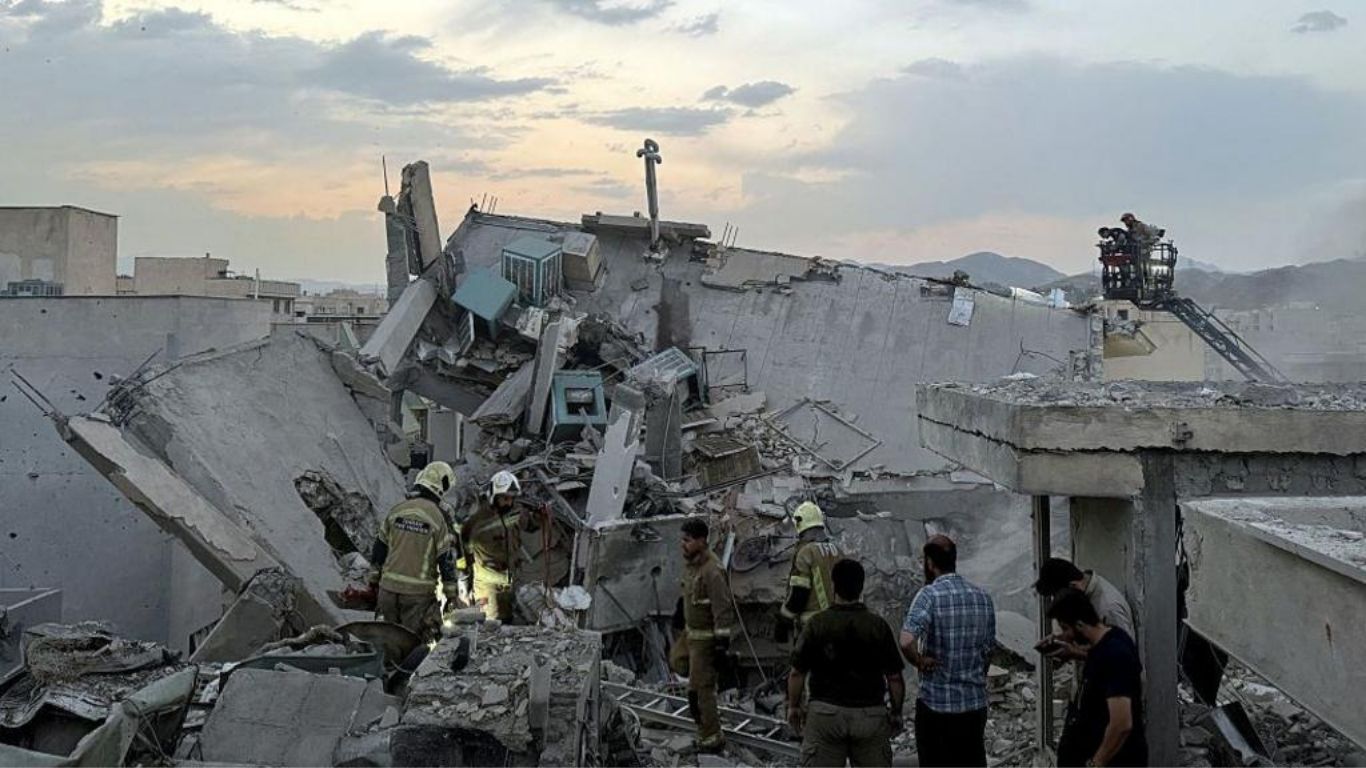
On June 13, 2025, Israel launched a massive and unprecedented military offensive against Iran, striking over 100 targets across the country, including key nuclear facilities, military installations, and the private residences of senior officials. The coordinated airstrikes, dubbed Operation Rising Lion, resulted in the deaths of at least 78 people, including top Iranian military commanders and nuclear scientists, marking the most significant escalation in Israeli-Iranian hostilities since the Iran-Iraq War.
Operation Rising Lion: A Preemptive Strike to Halt Iran’s Nuclear Ambitions
Israeli Prime Minister Benjamin Netanyahu announced the operation in a televised address, declaring it a focused campaign to neutralize what Israel perceives as an imminent existential threat posed by Iran’s nuclear weapons program. The strikes targeted Iran’s primary uranium enrichment site at Natanz, as well as nuclear facilities in Khondab and Khorramabad, alongside military bases and missile infrastructure.
The Israel Defense Forces (IDF) deployed over 200 fighter jets, dropping more than 330 munitions on approximately 100 strategic targets. The Mossad intelligence agency coordinated covert sabotage missions, including a drone base near Tehran, to disable Iran’s air defenses and missile launchers, ensuring air superiority for the operation.
High-Profile Casualties: Decapitation of Iran’s Military and Nuclear Leadership
The strikes killed several of Iran’s most powerful figures, delivering a severe blow to the country’s military command and nuclear program leadership:
- Major General Hossein Salami, commander-in-chief of the Islamic Revolutionary Guard Corps (IRGC), a key architect of Iran’s military strategy and close confidant of Supreme Leader Ayatollah Ali Khamenei.
- Major General Mohammad Bagheri, Chief of Staff of the Iranian Armed Forces.
- Gholam Ali Rashid, head of the Khatam al-Anbiya Central Headquarters.
- Amir Ali Hajizadeh, IRGC Aerospace Force commander, along with leaders of the IRGC’s air defense and drone units.
- Fereydoon Abbasi and Mohammad Mehdi Tehranchi, prominent nuclear scientists linked to Iran’s atomic energy and university research programs.
Iranian state media also reported the critical injury and subsequent death of Ali Shamkhani, a senior adviser to Supreme Leader Khamenei.
Widespread Damage and Civilian Impact
The airstrikes caused extensive damage not only to military and nuclear sites but also to residential areas in Tehran and other cities such as Tabriz and Shiraz. Local media reported civilian casualties, including women and children, with over 50 injured in the northern district of Tajrish in Tehran alone. Hospitals have been overwhelmed with hundreds of wounded, intensifying humanitarian concerns amid the military escalation.
Regional and Global Implications: Rising Fears of a Wider Conflict
The scale and precision of the Israeli strikes have sent shockwaves through the Middle East and the international community. Israel declared a nationwide state of emergency, with sirens blaring and schools closed in anticipation of Iranian missile and drone retaliation. Israeli Defense Minister Israel Katz warned of ongoing operations “for as many days as it takes” to eliminate the Iranian threat.
Iranian Supreme Leader Ayatollah Khamenei vowed a “bitter and painful” response, warning that Israel “will not escape punishment.” The attacks have heightened fears of a broader regional war, potentially drawing in allied powers and destabilizing an already volatile Middle East.
Strategic Analysis: Israel’s Calculated Escalation
Operation Rising Lion represents a strategic attempt by Israel to decapitate Iran’s military leadership and cripple its nuclear weapons development before Iran can cross critical thresholds in uranium enrichment. The simultaneous targeting of scientific personnel and military commanders underscores Israel’s intent to delay or dismantle Iran’s nuclear capabilities comprehensively.
The use of advanced intelligence, precision airstrikes, and covert Mossad operations reflects Israel’s emphasis on minimizing its own casualties while maximizing damage to Iranian strategic assets. However, the inclusion of residential areas and resultant civilian casualties complicates the moral and legal dimensions of the operation, potentially galvanizing Iranian public opinion and hardening resistance.
Conclusion
Israel’s unprecedented air campaign against Iran on June 13, 2025, marks a critical escalation in the long-standing conflict over Iran’s nuclear ambitions. By eliminating top military commanders and nuclear scientists, Israel aims to delay or derail Iran’s path to nuclear weapons, but at the risk of igniting a wider regional conflict. The coming days will be pivotal in determining whether diplomatic efforts can contain the fallout or if the Middle East will plunge into further instability.




