

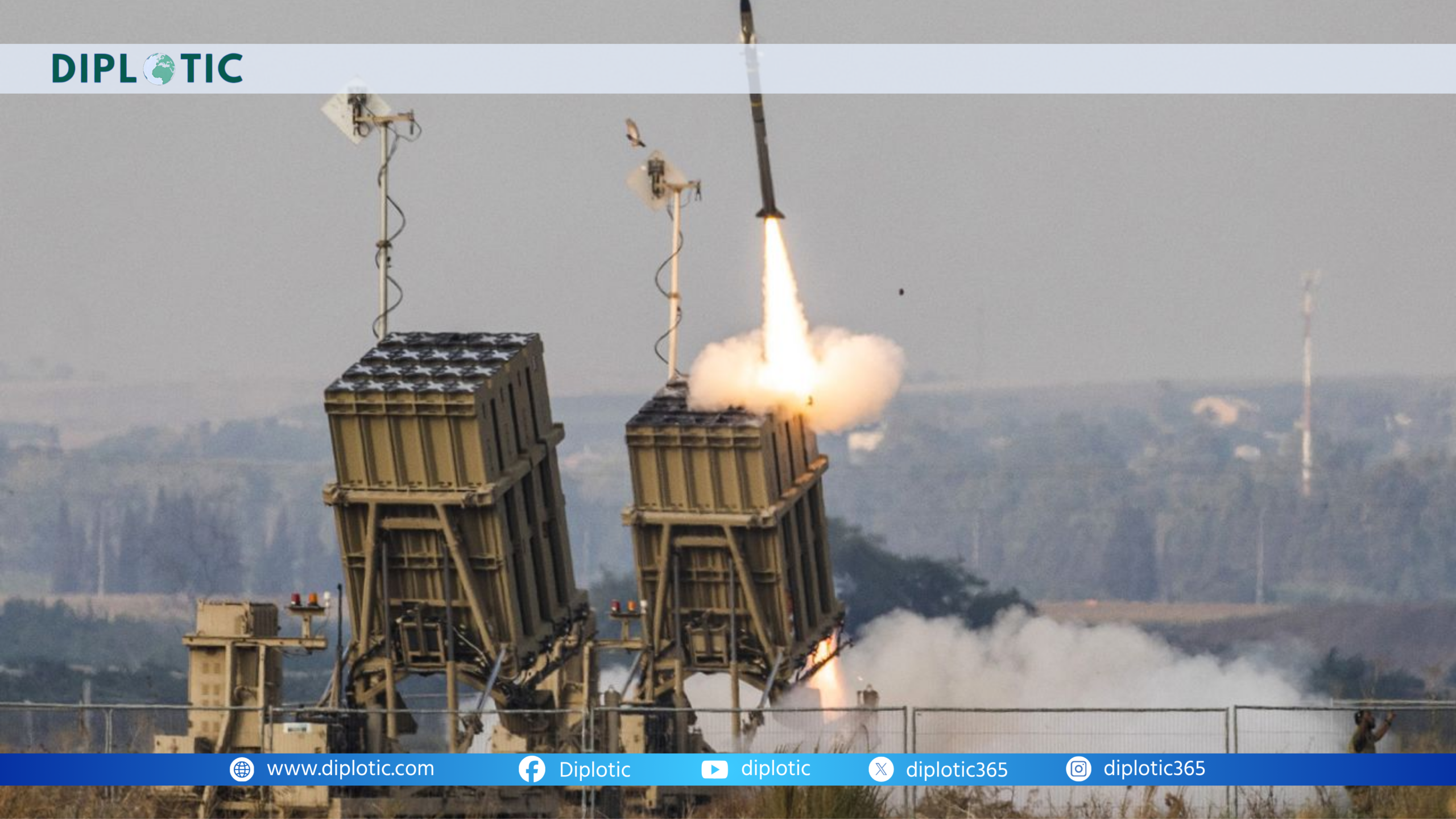
As the US-Israeli war with Iran enters its third week, a critical question has emerged from the fog of conflict: does Israel have enough missile interceptors to sustain its defenses? Reports suggesting potential shortages have surfaced, prompting denials from Israeli officials and a reported approval of $826 million for urgent defense procurement . The question matters not just for Israel but for the entire region, because air defense is the shield that allows offensive operations to continue. Without it, the calculus of war changes. This investigation examines the evidence, the dynamics of interceptor consumption, and what running low could mean for the conflict’s trajectory.
What Is the State of Israel’s Air Defense Arsenal?
Israel operates one of the most sophisticated air defense systems in the world. It is layered, meaning different systems intercept different threats at different altitudes. The famous Iron Dome handles short-range rockets and artillery shells. David’s Sling intercepts medium-range rockets. The Arrow system targets long-range ballistic missiles outside the atmosphere. Patriot batteries provide additional coverage. Each system relies on interceptors—surface-to-air missiles that physically destroy incoming threats .
These interceptors are not ordinary weapons. Ballistic missile interceptors, in particular, are incredibly complex and expensive to build. They require advanced guidance systems, powerful rocket motors, and precision manufacturing. Production takes time. Stockpiles are finite. And when a war begins, consumption rates can far outpace production .
The 12-day war Israel fought with Iran last year significantly depleted both its stockpile of anti-ballistic missiles and that of the United States . One Washington-based research center calculated that Israel and the US intercepted 273 of 322 Iranian missiles they attempted to stop, an 85 percent success rate . That success came at a cost: hundreds of interceptors were fired. Given the scale of consumption so recently, stockpiles are unlikely to have been fully replenished before the current war began .
Why Might Israel Be Running Low Now?
The current conflict has already seen Iran launch more than 500 missiles and 2,000 drones . Each of these attacks requires a defensive response. Ballistic missiles, because of their speed and altitude, often require multiple interceptors to ensure a single target is destroyed. Cluster munitions on some Iranian missiles compound the problem by creating multiple objects to track and intercept .
Iran is also using cheap, easy-to-replace drones in large numbers to try to overwhelm Israeli and American air defense systems . These drones can be launched from dispersed locations that are difficult to detect, making them harder to destroy on the ground than ballistic missiles. Jet fighters have helped defend against these attacks, but the missiles they fire are more expensive than the drones themselves .
The US is reportedly moving parts of its THAAD missile defense system from South Korea to the Middle East . This suggests that American assets in the region are being stretched, and that Washington expects to carry more of the defensive burden. But the US also has finite interceptors, and its stockpiles were also depleted in last year’s war .
The Iranians have specifically targeted missile defense radars across the region, with reports they have successfully destroyed or damaged several systems . This is significant because air defense relies on radar to detect and track incoming threats. Without functioning radars, interceptors cannot be aimed effectively. Targeting the sensors rather than the missiles themselves is a cost-effective way to degrade defensive capabilities .
Could the US and Israel Have Prevented This Shortage?
This raises a difficult question: why would Israel and the US start a new conflict if their interceptor stockpiles were not fully replenished? Several explanations are possible, though none can be confirmed .
One possibility is that they had managed to rebuild their stockpiles faster than anyone anticipated. This would require production rates that are difficult to sustain, especially given the complexity of these weapons . Another possibility is that they were confident they could destroy a sufficient amount of Iran’s offensive weapons before running out of defensive munitions . Preemptive strikes on Iranian missile launchers and drone storage sites would reduce the number of attacks that need to be intercepted .
A third possibility is that they believed Iran would want to end the war sooner than it has . If Iranian leadership had calculated that continued attacks would provoke a devastating response, they might have pulled back. Instead, Iran has sustained its campaign, launching more than 500 missiles and 2,000 drones since the war began .
There may also be a calculation that the United States will replenish Israeli stocks as they deplete. Washington has deep resources and has historically been a reliable supplier. But the US also has its own strategic stockpiles to manage, and demand is not coming only from Israel. The Persian Gulf states have also come under Iranian attack and are burning through their defensive assets .
What Does Interceptor Depletion Mean for the War’s Trajectory?
If Israel is indeed running low on interceptors, the strategic implications are significant. Air defense is not just about protecting cities and military bases; it is about enabling offensive operations. A country that cannot defend itself cannot sustain attacks on its adversary without accepting unacceptable levels of risk .
The depletion of interceptors could force a shift in tactics. Instead of trying to intercept every incoming missile, defenders might prioritize protecting only the most critical targets. This would leave other targets exposed, potentially increasing casualties and damage .
It could also increase pressure on the United States to provide more direct support, either by transferring interceptors from its own stocks or by deploying additional defensive systems to the region . The reported movement of THAAD batteries from South Korea suggests this is already happening .
For Iran, the knowledge that its adversaries are burning through interceptors might encourage continued attacks. The longer the war continues, the more defensive assets are consumed. If Iran can sustain its campaign long enough, it might degrade Israeli air defense to the point where the balance of power shifts .
Iran seems to be in a better position for a longer conflict, given the costs involved for the US and Israel and their reported reluctance to commit to a ground invasion . Drone and missile production is cheaper than interceptor production. Iran can absorb losses more easily than Israel can replace expended interceptors .
What Is Iran’s Strategy and How Long Can It Sustain Attacks?
There is no way of knowing exactly what Iran’s strategy is, beyond extending the war as long as possible and creating chaos in the region and with global energy markets . Some analysts have speculated that Iran may be deliberately holding back its more advanced missile technologies to use after US and Israeli interceptors are depleted . If true, this would mean the worst is yet to come .
Other analysts say there is no evidence this is the case . Holding back advanced missiles would be a risky strategy, because it leaves Iran’s most capable weapons unused while its adversaries still have defenses. But it would also mean Iran has not yet committed its full arsenal .
One thing is certain: both sides have finite resources. Iran will not be able to sustain the same level of attacks indefinitely. But its production lines for drones and missiles are less expensive to maintain than the US and Israeli production lines for interceptors. Iran may be able to continue attacks longer than its adversaries can continue defending .
Conclusion
The question of whether Israel is running low on missile interceptors remains officially unanswered. The IDF does not disclose this type of information, and officials have denied reports of shortages . But the evidence suggests cause for concern. Last year’s war depleted stockpiles. Production has not had time to catch up. The current conflict has already seen more than 500 missiles and 2,000 drones launched. Each intercept consumes a weapon that takes months to build .
The approval of $826 million for urgent defense procurement signals that the government sees a need to replenish stocks quickly . It also suggests that current inventories are being drawn down faster than anticipated . The outcome of this war may depend less on which side can inflict more damage and more on which side runs out of essential supplies first . For Israel, that supply includes the interceptors that protect its cities and its ability to continue the fight. How long those stocks last will shape not just the war’s duration but its final result .




