The Looming Question: Who Will Defend Europe?
For decades, Europe has counted on the United States as the ultimate backstop for its security. That arrangement now looks increasingly shaky. With concerns mounting over whether Washington will continue to stand by NATO, European countries—including the UK—may soon find themselves digging deep into their pockets to ramp up military spending.
Since Russia’s full-scale invasion of Ukraine in February 2022, the West has funneled over $250 billion into Ukraine in military, humanitarian, and financial aid. But what happens if the US steps back? What happens if Europe is forced to defend itself?
The US: Still Ukraine’s Biggest Military Supplier—For Now
Let’s cut to the chase. The United States has been the backbone of Ukraine’s war effort. Between early 2022 and late 2024, Washington shelled out a staggering $69 billion in military aid alone. To put that into perspective, that’s more than five times what Germany—Ukraine’s next biggest military backer—contributed ($13.6 billion). The UK followed with $10.8 billion, while Denmark and the Netherlands gave $8.1 billion and $6.3 billion, respectively.
When you factor in humanitarian and financial assistance, the US total balloons to about $120 billion—roughly 43% of all aid sent to Ukraine since the war began. The European Union, in contrast, has contributed just 18.3% through its institutions, with individual EU countries making separate, smaller contributions.
Now, here’s the problem: if Washington scales back its support, the rest of the West would have to cough up significantly more to fill the gap. And that’s where things get tricky.
NATO’s 2% Rule—And Who’s Actually Paying Up
Last year, all European NATO members vowed to meet the alliance’s 2% of GDP target for defense spending. Sounds good on paper, but how many are actually delivering?
The UK, for instance, spent 2.33% of GDP on defense in 2024—around £64.6 billion—ranking ninth among NATO members. The Labour government has promised to increase this to 2.5%, though it hasn’t exactly spelled out when that will happen. Had the UK hit that target last year, it would have meant an extra £4.6 billion (or £6 billion, depending on who you ask). Not pocket change by any means.
If the US pulls back, Europe will have no choice but to spend more. The question is, will they?
What’s in Ukraine’s Arsenal?
Western military aid isn’t just about money—it’s about firepower. So, what exactly has been sent to Ukraine so far?
Missiles and Artillery
Both Ukrainian and Russian forces rely heavily on artillery and guided missiles to block advances and hit supply lines. Ukraine has been using US-made ATACMS missiles, which have a range of around 190 miles.
Then there’s the UK and France, who sent Storm Shadow and Scalp missiles (range: 155 miles). These have been used to strike targets deep in Russian-controlled territory.
Western countries have also supplied Ukraine with over 80 multiple-launch rocket systems—including the US’s HIMARS and the UK’s M270—as well as more than 500 field guns, such as the US-made M777 howitzer.
The problem? Ukraine still faces a severe artillery shell shortage. Russia, with its deeper stockpiles, has maintained a battlefield advantage by simply firing more rounds.
Fighter Jets
Ukraine’s Air Force took delivery of its first F-16 fighter jets last summer, but Kyiv says it needs many more. Several NATO members—including Belgium, Denmark, the Netherlands, and Norway—have pledged to send at least 65 of the US-made planes.
The US finally gave permission in August 2023 for these F-16s to be transferred, and Ukrainian pilots have since been training to fly them. But even with more jets, Ukraine’s air force is expected to use them mainly for defense rather than launching counterattacks.
Air Defense Systems
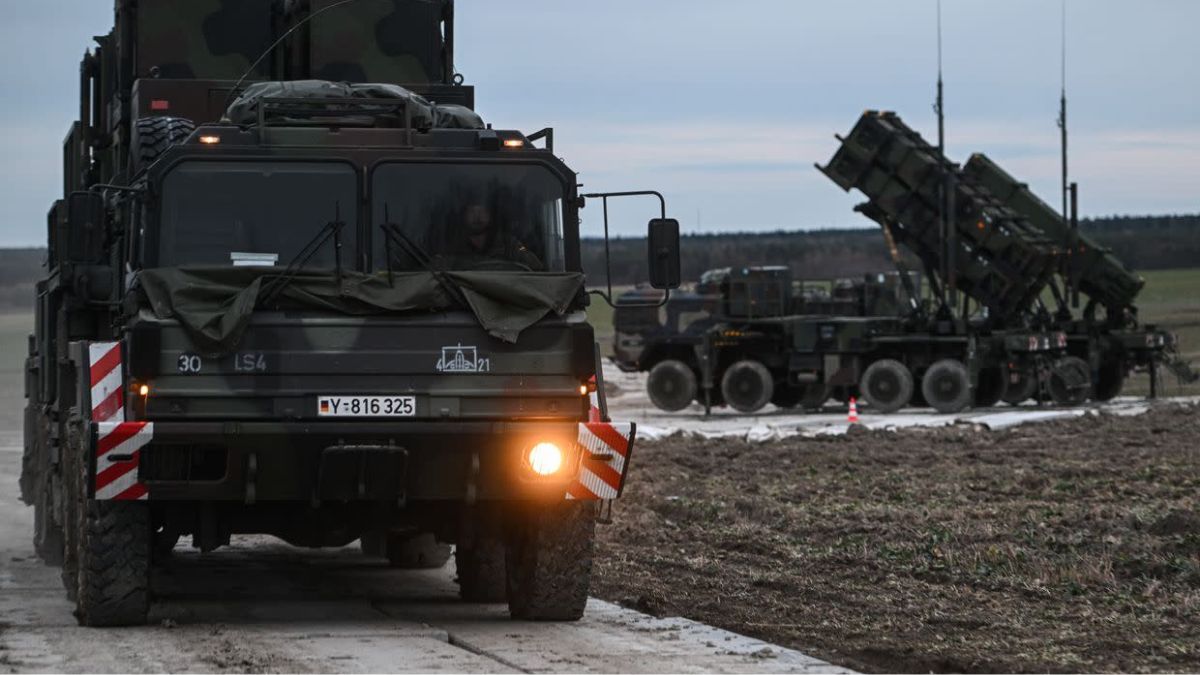
To counter Russia’s relentless drone and missile barrages, Ukraine has been handed several air defense systems—from the UK’s short-range Starstreak to the US’s Patriot missile system. The problem? Patriots are brutally expensive—each missile costs about $3 million.
The US and Norway have also sent NASAMS, while Germany has supplied the IRIS-T. All of these are crucial, but none of them can fully shield Ukraine from Russia’s aerial onslaught.
Tanks
Western tanks were supposed to be game-changers for Ukraine’s counteroffensive. The UK sent 14 Challenger 2s, while European nations shipped more than 200 German-made Leopard 1 and Leopard 2 tanks. The US contributed 31 M1 Abrams tanks, one of the world’s most advanced models.
But tanks alone can’t win a war—especially when Ukraine lacks the air power to support them.
Anti-Tank Weapons
When Russia invaded in 2022, the first Western response was to send Ukraine defensive weapons—like the US-made Javelin and the UK’s NLAW anti-tank missiles. These proved crucial in stopping Russia’s initial push towards Kyiv.
Drones
Drones have been a defining feature of this war. From surveillance to missile strikes, they’ve changed modern combat. Ukraine started out with Turkish Bayraktar TB2 drones but has since received US-made Switchblade drones and commercial surveillance drones from various allies.
In February 2024, the UK joined a coalition to send thousands of “first-person view” drones, mainly for reconnaissance and target spotting.
The Big Picture: Can Europe Fill the Void?
If the US pulls back on military aid, Europe has two choices: step up or step back. There’s no middle ground.
The cold, hard truth? Most European nations aren’t ready for this responsibility. They’ve grown used to US protection—financially and militarily. If Washington decides it’s no longer in its best interest to bankroll Europe’s defense, then NATO members will have no choice but to boost their spending—fast.
The days of relying on American largesse may be coming to an end. The only question left is whether Europe will realize this before it’s too late.