

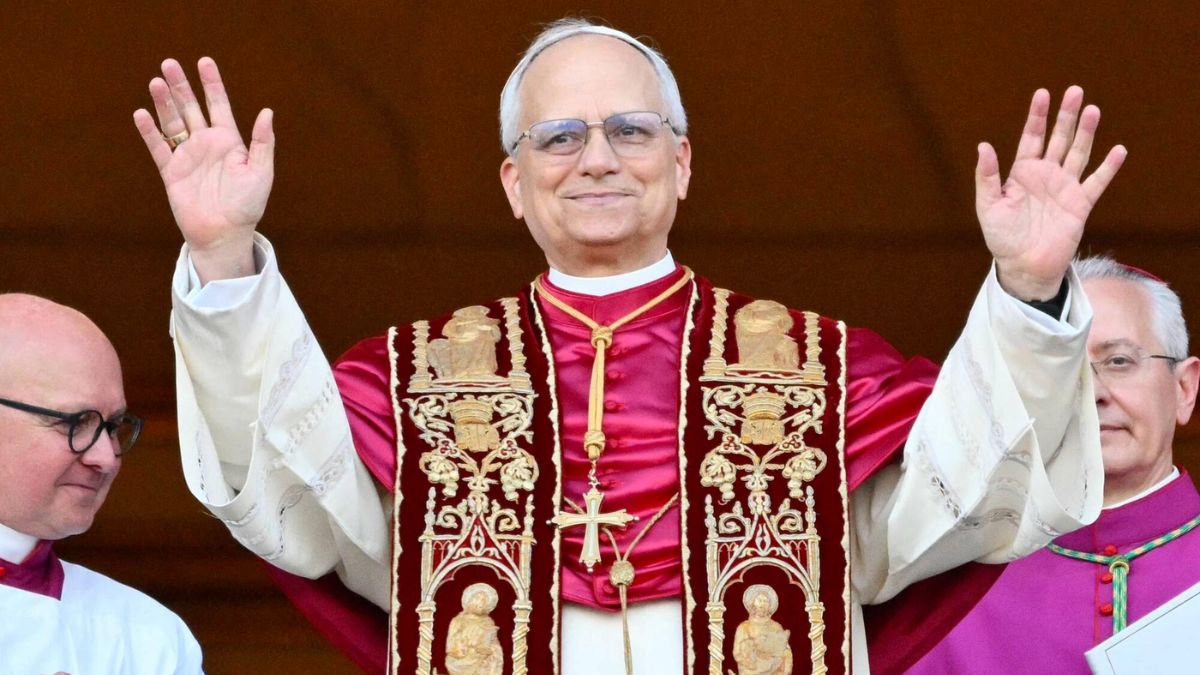
The election of Pope Leo XIV, the first American pope, has sent ripples through global politics and U.S. policymaking. Will his nationality and values influence America’s political discourse on immigration, democracy, and moral authority? Discover the complex intersections between faith, power, and politics in this deep-dive analysis.
A Pontiff from Pennsylvania, a Papacy for the World
The election of Pope Leo XIV marks an unprecedented moment not just for the Catholic Church, but for geopolitics. For the first time in over 2,000 years, the Bishop of Rome hails from the United States—a country already central to most global debates, from immigration and climate to authoritarianism and the defense of democracy.
At a time when the international community reacts almost daily to policy shifts from Washington, the emergence of an American pope adds a new layer of complexity. Is this merely symbolic? Or is it the beginning of a new form of spiritual and moral influence that could recalibrate U.S. politics and beyond?
How Pope Leo XIV Shifts the Vatican’s Global Axis
Pope Leo XIV, formerly Cardinal Robert Prevost of Chicago and a graduate of Villanova University, brings an entirely new dynamic to the Vatican. He is calm, reflective, and notably American—not only by birth but in cultural formation. His rise signals a potential reorientation of the Church’s soft power.
For years, the Vatican has been seen as a European-centric institution. But now, its spiritual compass points toward the Western Hemisphere in a much more direct way. While cardinals like Wilton Gregory downplay any suggestion that Leo XIV’s election was politically motivated, the implications are hard to ignore. Symbolically, the Church’s highest office is now occupied by someone intimately familiar with the machinery of American democracy—and its flaws.
What Role Will the Pope Play in U.S. Political Debates?
Immigration and Border Ethics
Pope Francis was vocal on issues like immigration, famously criticizing walls and border separations. His rebuke of Vice President J.D. Vance on U.S. immigration policies was one of his last significant public gestures.
Will Pope Leo XIV follow that lead?
The early signs suggest he may not be as outspoken, but Congressman Brendan Boyle—who has met both popes—believes the core values will remain unchanged. Catholic doctrine on welcoming the stranger and protecting the dignity of migrants is deeply rooted. If Leo XIV begins to subtly comment on American immigration policy, it could stir reactions across party lines, particularly as immigration remains one of the most divisive issues in U.S. politics.
Democracy in Decline: A Papal Voice for Liberal Order
Boyle points to a troubling global trend: a “democracy recession.” From Hungary to India, and even within the United States, democratic norms are under siege. In this context, the moral authority of the papacy becomes even more critical.
Can Pope Leo XIV act as a spiritual bulwark against the rise of authoritarianism?
As a global religious leader who understands the mechanics of American politics, he is uniquely positioned to defend democratic values not just through sermons, but through diplomacy, interfaith outreach, and subtle political influence. In an era where misinformation and political polarization dominate public discourse, his voice could become a stabilizing force.
Cultural Currency: From Villanova to the Vatican
There’s something deeply relatable to many Americans about a pope who once studied in Pennsylvania and likely stood in line at a Wawa. Congressman Boyle quipped about the internet memes connecting Pope Leo XIV to everyday American experiences—and that relatability may prove to be a political asset.
Pope Francis captured the hearts of Americans with his humility and authenticity. Leo XIV, with his calm and deliberate style, may continue that tradition, but he brings something even more potent: cultural familiarity. He understands the American mindset from the inside, which gives him a clearer lens through which to comment on U.S. society, especially on the moral dilemmas tearing at its social fabric.
A Papal Visit to Congress? The Politics of a Return to Capitol Hill
In 2015, Pope Francis became the first pontiff to address a joint session of Congress, delivering a message of unity, compassion, and responsibility. Many lawmakers called it one of the most moving days in Capitol Hill’s history.
Could Pope Leo XIV do the same?
Given his roots in the U.S., the speculation is growing that he could return to America sooner than later—perhaps addressing Congress again or visiting Villanova, where he studied. A second papal address would carry profound weight, particularly in the lead-up to contentious election cycles. His presence would not only command bipartisan attention—it could frame the moral discourse in ways that no politician could.
Strategic Neutrality or Subtle Engagement?
Unlike elected officials, popes aren’t bound by reelection. That gives them the freedom to speak—and act—based on long-term moral considerations rather than short-term political gains.
Pope Leo XIV may prefer a quieter papacy, but even silence can be a powerful political statement.
If he chooses to comment sparingly yet meaningfully on issues like gun violence, healthcare, racial justice, or political extremism, his words could serve as rallying points—or rebukes—for U.S. leaders.
His leadership may offer the opportunity for a recalibration of the Church’s public role—shifting from activism to moral anchoring. Yet in doing so, he may find himself in political crosshairs, especially if his principles challenge the platforms of dominant political forces in the U.S.
Spiritual Revolution or Strategic Symbolism?
Pope Leo XIV’s election is a watershed moment. Whether he chooses to fully engage with global and American politics or maintain a more reserved pastoral approach, his influence is undeniable.
He is not just the leader of Catholics; he is now a symbolic bridge between America’s democratic ideals and the Catholic Church’s global spiritual mission.
At a time when politics often feels devoid of principle, the presence of a deeply principled figure—who is also American—could reshape not only how Americans view the Church, but how the world sees America.




