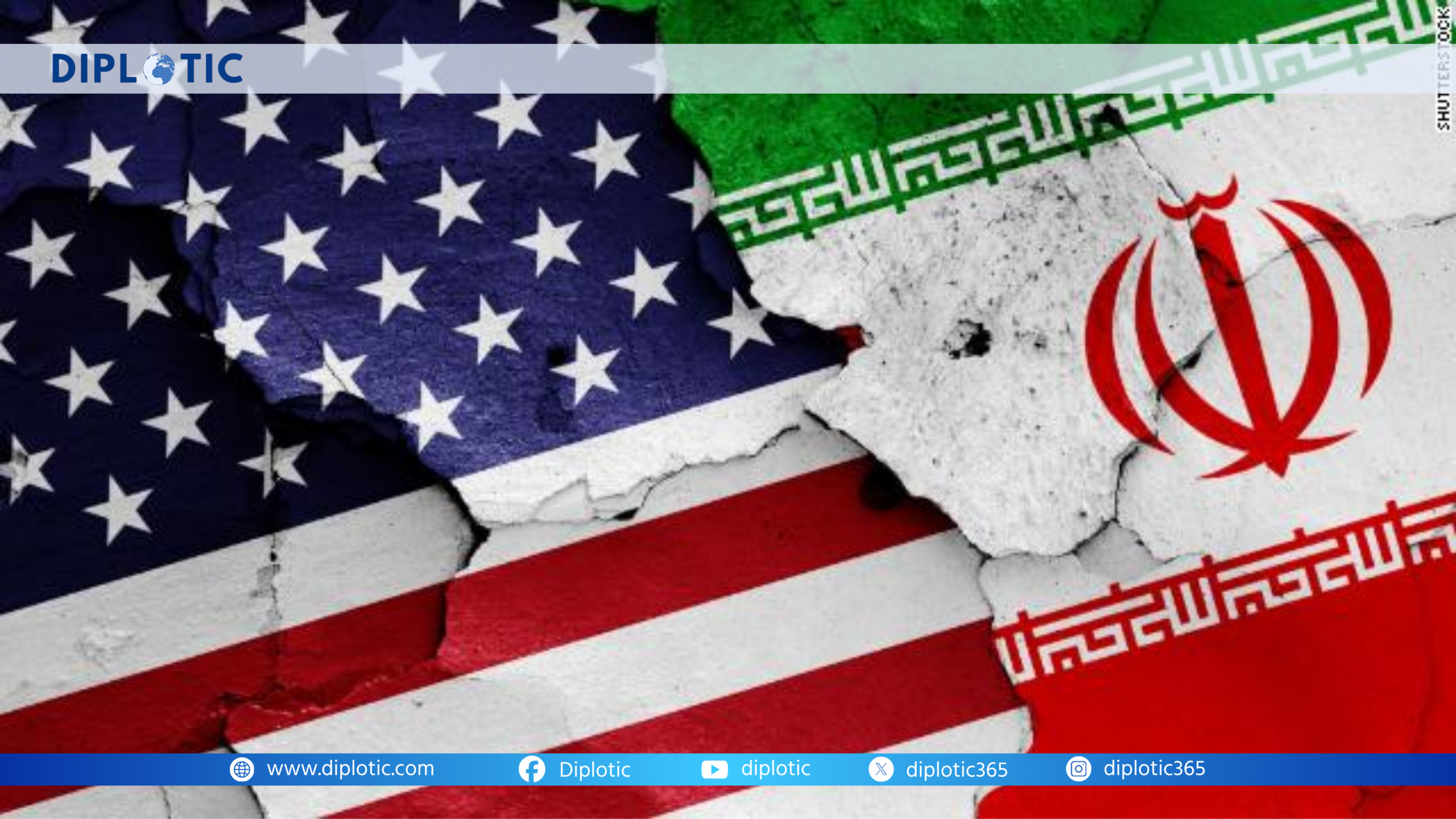
Every few years, Washington’s foreign policy establishment rediscovers its favorite bogeyman: a grand, coordinated coalition of adversaries hell-bent on dismantling the American-led world order . Today, the specter haunting think tanks and op-ed pages is the so-called “anti-American axis”—a sinister alignment of Russia, China, Iran, and North Korea, presumably plotting in unison to bring the United States to its knees . It is a compelling narrative, dramatic and simple, perfect for headlines and hearings. It is also mostly wrong.
Let us be clear about what does exist. There are states with serious grievances against American foreign policy. There are bilateral transactions—Russia buys Iranian drones, North Korea ships artillery shells to Moscow, China maintains economic ties with Tehran despite sanctions . These are real, and they matter. To dismiss them entirely would be naive. But a transaction is not an alliance. Shared resentment is not shared strategy. And conflating the two leads to exactly the kind of threat inflation that has consistently distorted American grand strategy since the end of the Cold War . This explainer examines why the axis narrative is analytically sloppy, strategically dangerous, and ultimately a poor guide to navigating the genuinely complex international landscape.
What Is the Anti-American Axis Narrative and Why Does It Persist?
The concept of an anti-American axis draws on familiar tropes from the Cold War, when the Soviet Union led a genuine ideological bloc with a universalist claim, a global network of client states, and a real institutional apparatus for coordinating strategy . Today’s narrative updates this framework for a new era, casting Russia, China, Iran, and North Korea as partners in a shared project to challenge American hegemony.
The evidence cited for this axis is not entirely fabricated. Russia has indeed purchased Iranian drones for use in Ukraine. North Korea has shipped artillery shells to Moscow. China maintains economic ties with Tehran despite US sanctions, and has deepened its strategic partnership with Russia since the Ukraine invasion . These are real developments, and they deserve attention.
But the leap from bilateral transactions to coordinated strategy is enormous and unsupported. What do these four states actually share? A dislike of American unilateralism. A preference that the US not station forces near their borders or fund opposition movements within their societies . That is, at its core, a defensive orientation—not an offensive coalition.
The narrative persists because it serves multiple purposes. For defense establishments, an axis requires a posture, a posture requires a budget, and a budget requires a narrative . For politicians, framing complex international challenges as a unified threat simplifies messaging and mobilizes public support. For commentators, the axis offers a dramatic storyline that captures attention. The beneficiaries are not the American taxpayer or the civilians caught in the conflicts this framing perpetuates, but the bureaucratic and industrial interests that profit from perpetual confrontation .
Who Are the Four Alleged Pillars and What Do They Actually Want?
Consider the four states separately, and their divergent interests become apparent.
Russia under Vladimir Putin is a declining regional power with a revanchist agenda focused almost entirely on its near abroad . Moscow’s primary concerns are maintaining influence in former Soviet republics, preventing NATO expansion, and securing its borders. Its intervention in Ukraine, whatever one thinks of its justification, is fundamentally about these proximate interests, not about challenging the United States globally.
China is a rising global economic power with interests in stability, trade, and long-term institutional influence . Beijing’s primary goals are sustaining economic growth, securing access to markets and resources, and gradually reshaping international institutions to reflect its weight. These goals are frequently undermined, not advanced, by Russia’s reckless adventurism in Ukraine, which disrupts trade, invites sanctions, and creates instability on China’s periphery . China does not want a destabilized Europe, does not want to inherit Russia’s pariah status, and is deeply uncomfortable with the nuclear saber-rattling that Moscow periodically deploys .
Iran is a regional theocracy navigating complex internal politics while projecting power through proxies in a neighborhood that has little to do with Beijing’s calculus . Tehran’s primary concerns are regime survival, regional influence, and relief from economic sanctions. Its relationships with Russia and China are transactional and historically fraught. Iranians have not forgotten that Russia was among the powers that carved up their country in the 19th and 20th centuries . Tehran uses Moscow when useful and views Beijing with a mixture of hope and wariness.
North Korea is essentially a hereditary monarchy with nuclear weapons, whose primary goal is regime survival—full stop . Pyongyang cooperates with whoever offers hard currency and security guarantees. It is not a strategic partner; it is a mercenary state.
These are not the same game. China’s long game is economic and institutional; Moscow’s is territorial and nostalgic; Tehran’s is regional and ideological; Pyongyang’s is survivalist and transactional. To bundle them together is to misunderstand each individually.
How Has American Policy Contributed to the Convergence It Fears?
Here is the uncomfortable question that official Washington refuses to ask: to what extent has American policy itself accelerated whatever convergence exists among these states? NATO expansion to Russia’s doorstep. Regime change in Libya—a lesson that Pyongyang and Tehran absorbed viscerally. The abrogation of the Iran nuclear deal. Tariff wars and technology decoupling with China .
These policies, whatever their individual justifications, collectively signaled to multiple major powers that the United States reserved the right to reshape the international environment in ways fundamentally threatening to their security and governance . When you treat diverse actors as members of a common axis, you create the incentives for them to become one. It is a classic self-fulfilling prophecy—and the neoconservative and liberal interventionist establishments have been running this experiment for three decades .
The mechanism is straightforward. When Washington imposes sanctions on Russia, Russia seeks alternative partners. When Washington withdraws from the Iran nuclear deal, Tehran looks elsewhere for economic engagement. When Washington launches trade wars with China, Beijing deepens ties with other powers facing American pressure. Each of these responses is individually rational. Collectively, they create a web of relationships that can be mistaken for an axis.
But these are relationships of convenience, not conviction. They fracture the moment interests diverge. Russia and China have structural tensions that no amount of shared resentment can erase. Iran and Russia have historical grievances that periodically resurface. North Korea is loyal to no one but itself.
Why Is the Axis Framing Strategically Dangerous?
The axis narrative is not merely analytically sloppy—it is strategically dangerous. It encourages the United States to treat every bilateral conflict as a theater in a global struggle, thereby foreclosing diplomatic off-ramps and demanding a level of commitment that American resources and public tolerance cannot sustain indefinitely .
If Russia’s invasion of Ukraine is framed as part of a coordinated assault by an anti-American axis, then any negotiation with Moscow becomes tantamount to appeasement. If Iran’s nuclear program is viewed through the same lens, then diplomacy is dismissed as weakness. If China’s economic rise is cast as a pillar of the axis, then engagement is replaced by confrontation.
This framing also encourages the United States to overextend itself. An axis requires a global posture, with forces deployed everywhere, commitments made everywhere, resources spent everywhere. The result is strategic exhaustion—exactly the outcome America’s adversaries might desire.
A more honest accounting would acknowledge that the United States faces several distinct strategic challenges: Chinese economic and military competition in Asia, Russian revisionism in Europe, Iranian regional destabilization, Iranian and North Korean nuclear proliferation . Each requires tailored diplomacy. Each is best addressed by differentiating rather than bundling them into a single existential frame.
Some of these challenges are amenable to negotiated accommodation; others require firm deterrence. But the two categories are not the same and should not be treated as such . Treating them as a unified threat eliminates the possibility of differentiated responses and commits the United States to a posture of permanent confrontation that may not serve its interests.
What Would a More Realistic Assessment Look Like?
A realistic reading of the current international landscape suggests something considerably more complex and, ultimately, more manageable than the axis narrative implies. The United States faces multiple challenges from multiple actors with multiple motivations. These challenges intersect at points but do not merge into a single stream.
On China, the challenge is managing competition while avoiding conflict. Beijing’s rise is real, and its ambitions are growing. But China is also deeply integrated into the global economy and has interests in stability that create shared stakes with the United States. The relationship is one of competition and cooperation, not existential struggle.
On Russia, the challenge is deterring further aggression while leaving open pathways for eventual accommodation. Moscow’s actions in Ukraine are unacceptable, but Russia will remain a permanent feature of the European landscape. Some modus vivendi will eventually be necessary.
On Iran, the challenge is preventing nuclear proliferation while managing regional competition. Tehran’s revolutionary ideology complicates engagement, but its interests in survival and relief from sanctions create potential leverage.
On North Korea, the challenge is containing a nuclear-armed state while preventing further proliferation. Pyongyang’s regime survival imperative is a constant, but it also creates opportunities for deals that serve both sides’ interests.
Each of these challenges is manageable. None requires a global crusade. All benefit from clear thinking about interests, capabilities, and priorities. The axis narrative obscures all of this.
What Acknowledgment Is Required?
The hardest truth of all is that American primacy, as exercised over the past three decades, has generated the very resentments and alignments that now concern Washington . The United States has reserved the right to intervene militarily, impose sanctions unilaterally, and reshape international institutions to suit its preferences. Other powers have responded by seeking to reduce their vulnerability to American pressure.
This is not to excuse their actions or to argue that American policy is the sole cause of current tensions. Russia’s invasion of Ukraine was a choice, not an inevitability. China’s domestic repression is its own responsibility. Iran’s support for proxies reflects its own strategic choices. But it is to acknowledge that the international environment is shaped by interaction, not monologue.
The question is not whether to defend American interests—of course one should. The question is whether the imperial overreach that passes for strategy in Washington actually serves those interests or merely serves the people paid to defend them .
Conclusion
There is no anti-American axis. There are several separate problems wearing the same label. The sooner Washington learns to read the map instead of the legend, the better positioned it will be to navigate what is, in fact, a genuinely complex and consequential moment in world affairs .
This is not an argument for complacency or unilateral disarmament. The challenges the United States faces are real and significant. But they are also manageable if approached with clarity, discipline, and a realistic assessment of interests and capabilities. The axis narrative offers none of these. It offers drama, simplicity, and the comforting illusion that all problems are one problem.
History suggests that empires that cannot distinguish between their enemies usually end up creating more of them. The anti-American axis is a myth, but it could become a reality if Washington continues to act as if it already exists. That is a risk worth avoiding.