

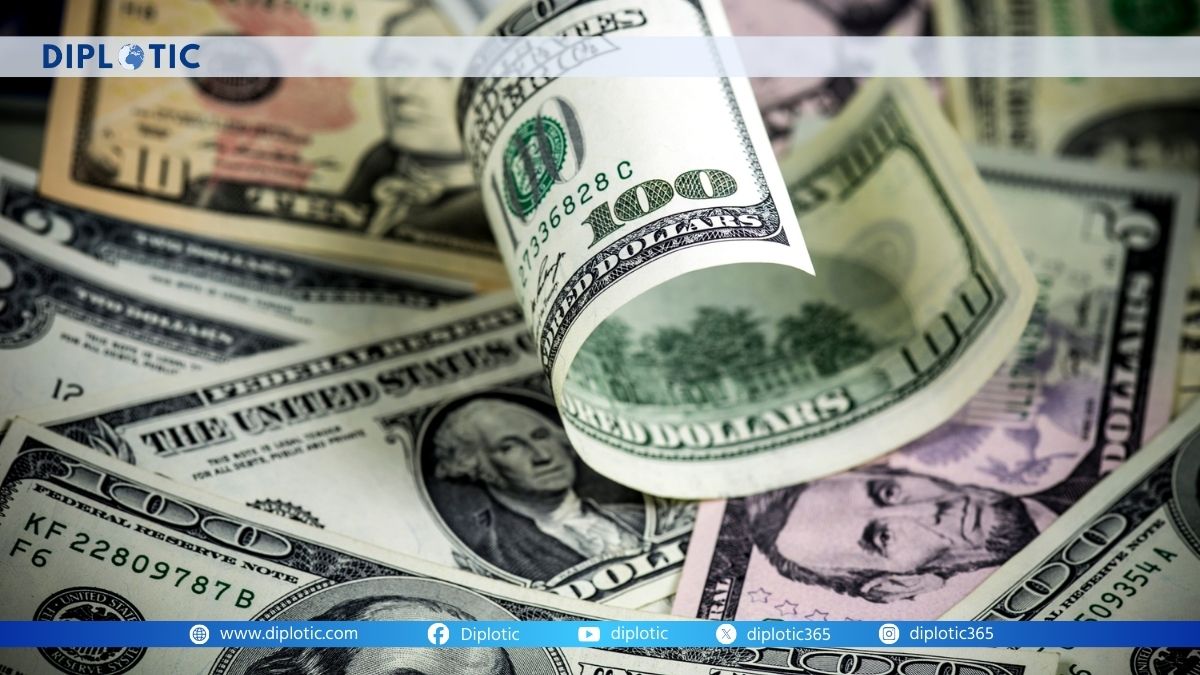
As conflict spreads in the Middle East, a familiar force has returned to dominate global markets: the strength of the US Dollar. At a time when uncertainty is rising and oil prices are climbing, investors are once again turning to the dollar as a safe place to store value. This shift is creating serious pressure across Asia, where many economies depend heavily on imported energy and stable capital flows.
The pattern is not new. During periods of global stress, money often moves toward the United States, seen as a stable financial center. But what makes the current situation notable is the speed and scale of this movement. Even with concerns about high debt and inflation in the US, the dollar is strengthening. This suggests that, in times of crisis, confidence in the dollar remains strong.
For Asian economies, this creates a double challenge. Rising oil prices increase import costs, while a stronger dollar weakens local currencies. Together, these forces push up inflation and strain financial systems. Countries that rely on external funding or maintain trade deficits are especially vulnerable.
The Iran conflict is amplifying these pressures. Disruptions near the Strait of Hormuz are driving energy prices higher. At the same time, global investors are pulling money out of emerging markets and moving it into dollar-based assets. This combination is placing Asia in a difficult position, caught between rising costs and weakening currencies.
The key question now is whether this is a temporary shock or the start of a deeper financial shift. To answer that, it is important to understand how the dollar regained its strength and why Asia remains so exposed to its movements.
Why Does the Dollar Always Rise in Times of Crisis?
The dominance of the US Dollar is rooted in its role as the world’s primary reserve currency. Global trade, especially in commodities like oil, is largely conducted in dollars. This creates constant demand for the currency, even outside the United States.
During times of uncertainty, investors look for safety. US financial markets are deep, liquid, and widely trusted. Government bonds, in particular, are seen as low-risk assets. As a result, money flows into the US, pushing the dollar higher.
This pattern has been observed in past crises. During the 1997 Asian Financial Crisis, a strong dollar played a major role in destabilizing Asian economies. Many countries had fixed or semi-fixed exchange rates, which became difficult to maintain as capital flowed out and the dollar strengthened.
A similar dynamic appeared during the 2013 Taper Tantrum, when expectations of tighter monetary policy in the US led to capital outflows from emerging markets. These episodes show that the dollar’s strength can have wide-reaching effects beyond the US itself.
Today, the Iran conflict is triggering another wave of demand for the dollar. Investors are moving away from riskier assets and toward what they see as safer options. This is happening even as the US faces its own economic challenges.
The result is a powerful cycle. As the dollar rises, it attracts more investment, which pushes it even higher. For countries outside the US, this creates a difficult environment, especially if their economies depend on stable exchange rates and external financing.
How Is Asia Being Squeezed by Oil and Currency Pressures?
The current crisis is not driven by currency movements alone. It is also shaped by rising energy costs linked to disruptions in the Strait of Hormuz. For many Asian economies, which import large amounts of oil, this creates immediate financial pressure.
When oil prices rise, countries must spend more to secure energy supplies. If their currencies are weakening at the same time, the cost increases further. This combination can quickly lead to higher inflation and trade deficits.
In Thailand, for example, the local currency has weakened significantly as oil prices surged. This has raised concerns about economic stability and triggered memories of past financial crises. While the situation today is different in many ways, the underlying vulnerabilities remain.
The same pressures are visible in Philippines, where rising energy costs and a weaker currency are pushing up inflation. Governments are being forced to respond with emergency measures to manage the impact on households and businesses.
In South Korea and Japan, the situation is also challenging. Both countries rely heavily on imported energy, making them sensitive to price increases. At the same time, their currencies are under pressure from the strong dollar, adding to inflation risks.
This “double shock” of rising oil prices and a stronger dollar creates a difficult policy environment. Governments must balance the need to control inflation with the need to support economic growth. Central banks may consider raising interest rates, but this can slow down the economy.
The result is a region under strain, where multiple risks are interacting at once. The Iran conflict has not created these vulnerabilities, but it has exposed and intensified them.
Are We Seeing a Repeat of Past Financial Crises?
The current situation has led many observers to draw comparisons with earlier crises, particularly the 1997 Asian Financial Crisis. That crisis began with a currency devaluation in Thailand and quickly spread across the region, leading to economic instability and large-scale financial support programs.
There are some similarities today. A strong dollar, rising interest rates, and capital outflows are once again putting pressure on Asian economies. However, there are also important differences. Many countries now have stronger financial systems, larger foreign exchange reserves, and more flexible exchange rates.
These changes provide some protection against external shocks. Governments are better prepared to manage volatility and respond to market pressures. However, this does not mean they are immune to risk.
One concern is the scale of global financial integration. Markets are more connected than ever before, which means shocks can spread quickly. A sudden shift in investor sentiment can lead to rapid capital movements, affecting currencies and asset prices across regions.
Another factor is the role of global institutions. In past crises, organizations like the International Monetary Fund played a key role in stabilizing economies. While these mechanisms still exist, the scale and complexity of today’s challenges may require new approaches.
The Iran conflict adds another layer of uncertainty. It is not just a financial issue but also a geopolitical one. This makes it harder to predict how markets will react and how long the current pressures will last.
Can the Dollar’s Strength Last or Will It Turn Again?
While the US Dollar is currently strong, its future is not guaranteed. The same forces that drive its rise during crises can also lead to declines when conditions change.
Concerns about US debt, inflation, and economic policy could affect confidence in the dollar over time. If investors begin to question the stability of US finances, they may look for alternatives. This could weaken the dollar and shift global capital flows once again.
For Asia, this creates a complex situation. A strong dollar brings immediate challenges, but a sudden decline could also create instability. Exchange rates might move quickly, affecting trade and investment decisions.
The key issue is uncertainty. The Iran conflict has added a new layer of risk to an already fragile global economy. Energy markets, financial systems, and geopolitical tensions are all interacting in ways that are difficult to predict.
For now, the dollar remains dominant. Its role as a safe haven continues to attract global capital, reinforcing its position. But this strength comes with consequences for other regions, particularly those that depend on stable currencies and affordable energy.
The current moment is a reminder of how interconnected the global economy has become. A conflict in one region can reshape financial conditions across continents. For Asia, the challenge is not only to manage the immediate impact but also to prepare for future shifts in the balance of global finance.




