

In July 2025, a small group of protesters gathered outside the United Nations’ AI for Good Global Summit in Geneva, holding signs that highlighted a contradiction they saw at the heart of the event. The same technology companies sponsoring a summit about using artificial intelligence for humanitarian purposes were, the protesters argued, profiting from its use in warfare. Inside the summit, this tension became even more visible when the keynote speech by Dr. Abeba Birhane, a leading scholar on algorithmic bias, was subjected to last-minute censorship demands from organizers who objected to her slides critiquing the role of tech companies in conflicts including Gaza .
In the months since, the questions raised by that moment have only grown more urgent. As the United States and Israel launched major military operations against Iran in March 2026, reports emerged that AI systems from companies including Anthropic and OpenAI were being used for targeting, intelligence assessment, and battlefield simulation . This investigation examines the claims about Big Tech’s entanglement with the military-industrial complex, the financial incentives driving this relationship, and the structural tensions between corporate profits and the pursuit of peace.
Claim 1: Dr. Abeba Birhane’s keynote at the UN AI for Good Summit was censored because she criticized tech companies’ involvement in warfare.
Evaluation: This claim is verified by multiple sources, including Dr. Birhane’s own detailed account and independent reporting. According to Dr. Birhane, founder of the AI Accountability Lab at Trinity College Dublin and a Time magazine 100 Most Influential People in AI honoree, she was approached by organizers just two hours before her scheduled keynote on July 8, 2025 . They informed her that her talk required “substantial altering” and presented her with a choice: change the keynote into a fireside chat with no visuals, or remove specific content from her slides .
What followed was an intense negotiation where Dr. Birhane was pressured to remove “anything that mentions ‘Palestine’ ‘Israel'” and to replace the word “genocide” with “war crimes” . She was also asked to remove a slide that explained “illegal data torrenting by Meta” . The most contentious point was a slide titled “No AI for War Crimes” that displayed the logos of Microsoft, Amazon, Google Cloud, Palantir, and Cisco. Organizers demanded she either remove this slide or add “hundreds of other logos” to avoid singling out those particular companies .
Dr. Birhane described the experience as “extremely stressful” and noted that she was left shaking as she delivered her compromised keynote . Meredith Whittaker, president of Signal and a widely recognized authority on AI, was present and publicly corroborated the incident . Dr. Birhane later wrote that the summit is “deeply bankrupt and only cares about/caters for big tech and the AI industry to the extent the organisers are willing to censor any critique of big tech’s involvement in aiding war and genocide” .
The International Telecommunication Union, which organizes the summit, has neither confirmed nor denied the incident .
Verdict: True. Multiple sources confirm that Dr. Birhane was pressured to remove criticism of tech companies’ military involvement, and that the censorship targeted both geopolitical references and specific corporate logos.
Claim 2: Major tech companies hold $47 billion in active U.S. defense contracts, making them significant players in the military-industrial complex.
Evaluation: This figure appears in multiple analyses of Big Tech’s defense entanglement. Seven key sponsors of the AI for Good Summit—Microsoft, Amazon, Google, Oracle, Palantir, IBM, and Cisco—hold a combined $47.7 billion in active U.S. defense contracts . These are not peripheral relationships but core business activities for companies whose consumer products are used by billions of people worldwide.
Microsoft’s contracts include a $22 billion agreement to supply the U.S. Army with its Integrated Visual Augmentation System, which transforms consumer augmented reality technology into military hardware . Amazon’s AWS cloud division handles $10 billion worth of National Security Agency contracts and $600 million for the CIA . Google, despite publicly withdrawing from Project Maven in 2018 after employee protests, quietly re-entered the defense AI space with a $200 million contract for the Pentagon’s AI office .
The scale of this integration goes beyond individual contracts. In July 2025, the Department of Defense’s Chief Digital and AI Office awarded $200 million in contracts to xAI, OpenAI, Google, and Anthropic . These awards align with a national AI strategy emphasizing faster deployment, competition with China, and streamlined regulatory controls . The FY2026 defense budget requests nearly $12 billion for AI, with $13.4 billion allocated for autonomy and autonomous systems across aerial, ground, and maritime platforms .
The lines between Silicon Valley and the Pentagon are blurring in other ways as well. In June 2025, the U.S. Army announced the appointment of four reserve lieutenant colonels to its new Executive Innovation Corps, tasked with “fusing cutting-edge technological expertise with military innovation.” Those chosen were Adam Bosworth, Meta’s chief technology officer; Kevin Weil, OpenAI’s product manager; Shyam Sankar, Palantir’s chief technology officer; and Bob McGrew, a former executive at Palantir and OpenAI .
Verdict: True. The $47 billion figure is documented, and the integration of tech companies into defense contracting is extensive and growing.
Claim 3: Tech companies are changing their ethical policies to accommodate military work, reversing previous commitments to avoid weapons development.
Evaluation: This claim is supported by a pattern of policy changes across major AI companies. In February 2025, Google removed the restriction on developing weapons or tools for mass surveillance from its code of conduct . This represented a significant reversal from 2018, when more than 4,000 Google employees protested the company’s involvement in Project Maven, prompting the tech giant to adopt AI principles that explicitly prohibited weapons development .
OpenAI quietly removed its ban on military and warfare use from its usage policy in January 2024 . In March 2025, the company revised its core values, replacing “impact-driven” ethics language with a focus on artificial general intelligence . The company’s current policy permits “national security use cases that align with our mission” .
Microsoft acknowledged in May 2025 that it has sold advanced AI technology and cloud computing services to the Israeli military since the start of the Gaza invasion . In November 2025, Meta revealed it had given the green light to make its AI models available to military contractors Lockheed Martin and Booz Allen Hamilton .
The pattern extends to partnerships with defense technology companies. OpenAI announced a partnership with Anduril, a military technology startup that has formed a consortium with Palantir to enter defense tenders . Meta has teamed up with Anduril to develop augmented reality headsets for combat troops .
These changes have generated internal resistance. Google employees protested the Nimbus project, a $1.2 billion contract to provide cloud solutions to the Israeli government, resulting in 28 dismissals . Microsoft fired two employees who publicly complained about the supply of AI to Israel, and five other employees were ejected from a meeting with CEO Satya Nadella for protesting similar contracts .
Verdict: True. Multiple companies have formally changed their ethical policies to permit military work, reversing earlier commitments, and these changes have been met with employee protests.
Claim 4: The conflict between Anthropic and OpenAI over military contracts reveals different approaches to AI ethics, with Anthropic maintaining red lines that OpenAI abandoned.
Evaluation: This claim requires examining the detailed reporting on the two companies’ negotiations with the U.S. government. According to internal documents and media reports, Anthropic, the company behind the Claude AI model, had been the Pentagon’s preferred AI partner, with Claude described as “the only one permitted to be deployed on the highest-level classified network of the U.S. military” .
However, Anthropic insisted on including two explicit prohibitions in its contract: a ban on using its AI for mass domestic surveillance of American citizens, and a ban on its use in fully autonomous lethal weapons systems . The Department of Defense refused to codify these restrictions in writing, insisting instead that AI could be used for “any lawful purpose” .
When the impasse could not be resolved, the Trump administration declared Anthropic a “national security supply chain risk,” a designation typically reserved for companies linked to foreign adversaries . President Trump publicly labeled Anthropic a “radical left, politically correct company” . Hours later, OpenAI announced it had signed the contract that Anthropic had refused .
Anthropic CEO Dario Amodei wrote a scathing internal memo, parts of which were made public, accusing OpenAI of engaging in “security theater” rather than genuine safety commitments . He noted that OpenAI’s contract includes similar-sounding restrictions, but that these depend on the government’s own interpretation of what is “lawful,” with no independently verifiable enforcement mechanism . Amodei also pointed to political factors, noting that OpenAI CEO Sam Altman had donated $1 million to Trump’s inauguration fund and that OpenAI president Greg Brockman had donated $25 million to a pro-Trump Super PAC, while Anthropic had maintained distance from political fundraising .
OpenAI’s Altman acknowledged in internal communications that the initial contract had “defects” and announced that the company had renegotiated “stronger safeguards.” However, critics including Anthropic and former OpenAI safety employees noted that the fundamental issue remains: the government, not the company, determines what is “lawful,” and U.S. intelligence agencies have a history of interpreting that term broadly, as in the PRISM surveillance program .
Verdict: True. Anthropic did maintain specific red lines and refused the contract; OpenAI accepted it. The two companies represent different approaches to military AI engagement, and their conflict reflects genuine strategic and ethical differences, not just posturing.
Claim 5: The use of AI in the March 2026 strikes on Iran demonstrates that AI systems are now integral to military operations, with companies profiting directly from conflict.
Evaluation: This claim is supported by contemporaneous reporting on the military actions. On March 7, 2026, the United States and Israel launched major strikes against Iran, citing Iran’s nuclear program as justification . The Wall Street Journal reported that the U.S. military used Anthropic’s Claude large language model for “intelligence assessments, target identification and simulating battle scenarios” to prepare the attack .
This created a remarkable situation: the government had declared Anthropic a national security risk and ordered a phase-out of its technology, yet the attack on Iran was planned using that same technology . Government officials acknowledged that Claude remained superior for certain applications and that removing it from existing systems would be “very chaotic” .
The strikes targeted multiple fuel storage facilities in and around Tehran, igniting massive fires that sent toxic smoke across the capital and caused “black rain” that residents reported as causing skin irritation and breathing difficulties . The environmental and humanitarian consequences of these strikes are documented in separate reporting.
The role of AI in the conflict extends beyond planning. Analysts note that the combination of Palantir’s data analysis platforms and Claude’s language capabilities creates a “cognitive engine” that can process satellite imagery and signals intelligence at “machine speed,” enabling rapid targeting decisions . This represents a qualitative shift in warfare, not just incremental improvement.
Verdict: True. AI systems were used in planning and executing the March 2026 strikes, demonstrating their integration into military operations, and the company whose technology was used had recently been sanctioned by the same government.
Claim 6: The “peace trap” argument—that companies have financial incentives to prefer conflict over peace—is a theoretical concern without concrete evidence.
Evaluation: This claim examines whether the structural incentives described by critics have any basis in observable behavior. The argument, as articulated in analyses of Big Tech’s military entanglement, is that companies developing military AI gain not only from sales but from the conflicts themselves, because each military strike generates operational data that is used to train and refine AI systems .
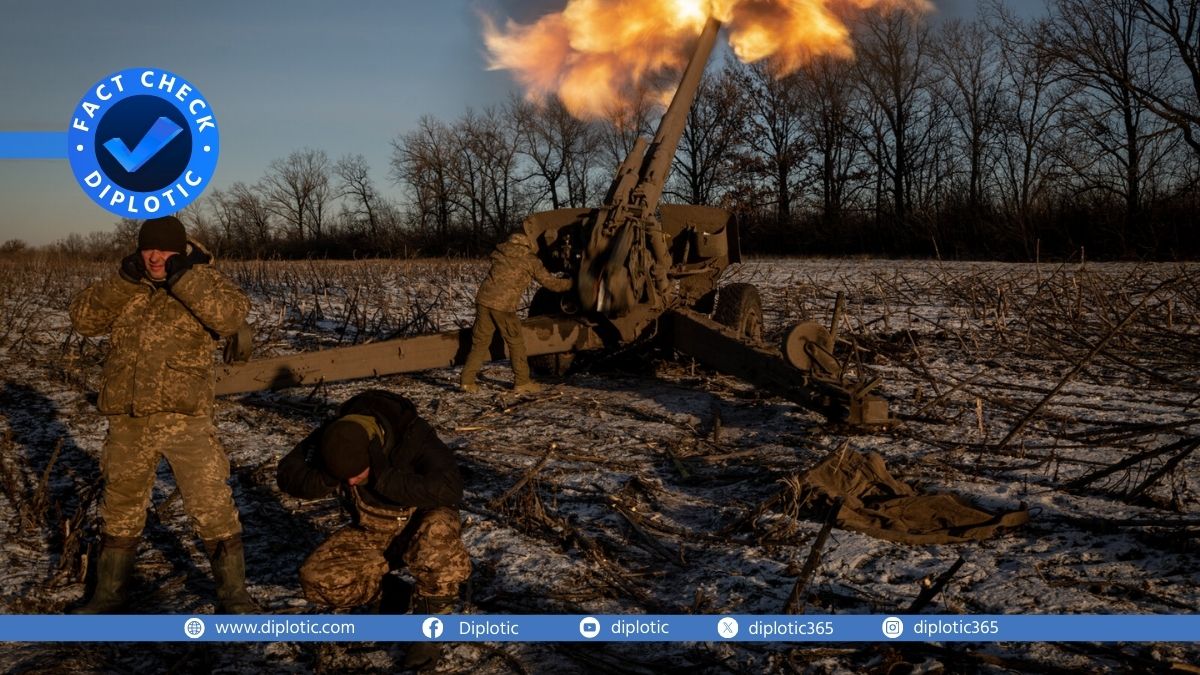
In conflicts like Ukraine, targeting results, sensor data, and battlefield conditions feed machine learning models, improving recognition and flight paths . Each strike becomes training data, refining AI accuracy and decision-making over time . This creates what economists call a “perverse incentive structure”: companies have financial reasons to prefer longer conflicts (more data), expanding conflicts (new markets), and automated warfare over human-mediated solutions (greater dependence on proprietary systems) .
Critics of this argument might note that it is difficult to prove that companies consciously prefer war. However, the structural logic does not require conscious preference—only that the business model aligns better with conflict than with peace. The $47 billion in defense contracts, the $200 million individual awards, and the $12 billion budget requests provide the financial foundation for this alignment .
The pattern of policy changes—removing bans on weapons development, accepting contracts that rivals refused, pursuing defense partnerships—suggests that companies are actively positioning themselves to benefit from military spending, regardless of whether individual executives privately prefer peace. The behavior is consistent with profit maximization in a sector where government contracts provide “stability private markets can’t” .
Verdict: True as a structural analysis. While proving intent is difficult, the structural incentives are real and documented. Companies’ actions align with profit motives that favor continued military engagement, and the argument that peace could be “bad for business” describes observable patterns in corporate behavior and policy changes.
Conclusion: The Profit-Peace Paradox
The investigation confirms that major AI companies are deeply entangled with the global war economy. The $47 billion in defense contracts, the policy changes removing ethical restrictions, the integration of AI into actual military operations, and the documented censorship of critics at a UN summit all point to a fundamental transformation in how Silicon Valley relates to the military-industrial complex .
The case of Anthropic and OpenAI illustrates that not all companies are identical in their approach. Anthropic maintained red lines on domestic surveillance and autonomous weapons, even at the cost of being declared a national security risk and losing a major contract. OpenAI accepted the contract and engaged in what critics call “security theater”—appearing to impose restrictions while leaving interpretation to the government .
The March 2026 strikes on Iran demonstrate that these are not abstract debates. AI systems are now integral to military planning and execution. The same technologies that power consumer applications are being used to identify targets, simulate battle scenarios, and process intelligence at machine speeds . The environmental and humanitarian consequences—toxic smoke over Tehran, “black rain” causing health problems, thousands displaced—are inseparable from the technological systems that enabled the strikes .
The deeper question raised by the Geneva protests and the censored keynote is whether “AI for Good” can coexist with AI for war when the same companies profit from both. The structural logic suggests tension if not contradiction. When business models depend on conflict, when data from each strike improves algorithms, when longer wars mean more revenue, peace becomes not just a political goal but an economic threat .
Breaking this cycle requires more than ethical pledges or voluntary restrictions. It requires recognizing that the current incentive structure aligns corporate interests with continued conflict. Until that changes—until cooperation becomes more valuable than combat, until peace generates more profit than war—the promise of AI for Good will remain, as one analyst put it, “well-intentioned rhetoric constrained by economic reality” .




